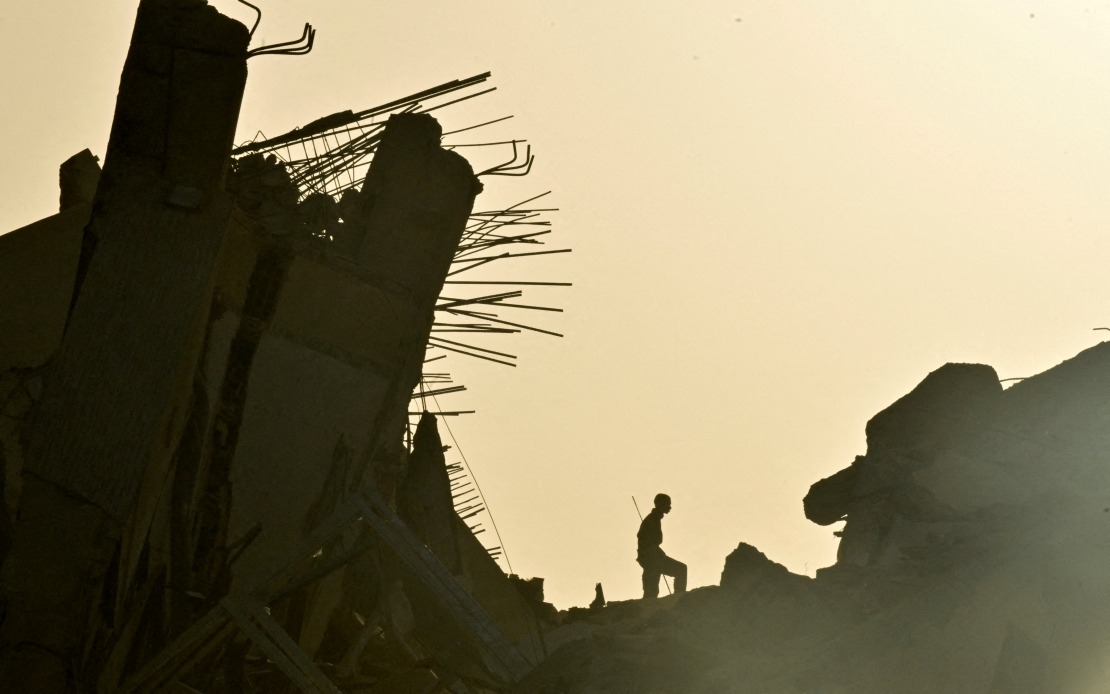
Venezuela is grappling with one of its worst natural disasters in recent memory following a devastating pair of earthquakes that have claimed at least 1,450 lives and left more than 3,200 people injured. The dual seismic events, measuring 7.2 and 7.5 magnitude, struck back-to-back on Wednesday, unleashing widespread destruction across the country's most densely populated regions. According to National Assembly President Jorge Rodríguez, thousands of individuals remain trapped beneath collapsed structures, though rescue authorities acknowledge that the chances of locating survivors diminish significantly as each day passes.
The twin tremors were succeeded by an alarming sequence of 430 aftershocks, compounding the dangers facing both rescue personnel and those still buried. The coastal state of La Guaira and the capital city of Caracas bore the brunt of the destruction, with entire city blocks of high-rise residential buildings reduced to rubble. The scale of physical devastation paints a sobering picture of the earthquake's intensity: more than 2,500 residential buildings and infrastructure facilities have either completely collapsed or sustained severe structural damage. Among the most troubling losses are approximately 780 residential homes and 38 medical facilities, leaving many communities without access to essential healthcare services precisely when medical assistance is most critical.
The international response has been swift and substantial, reflecting the gravity of the humanitarian crisis unfolding in Venezuela. Around 30,000 Venezuelan emergency personnel have been mobilized for search and rescue operations, supplemented by 2,700 specialist rescue workers dispatched from 24 foreign nations. This combined force of roughly 32,700 individuals represents an unprecedented mobilization of disaster response resources, underscoring both the catastrophic nature of the event and the global concern for Venezuelan citizens affected by the calamity.
However, rescue experts have issued urgent warnings about the critical timeframe limiting their efforts. The window for discovering living survivors typically closes after 72 hours from the initial impact, as individuals trapped without water, shelter, or medical intervention face diminishing prospects of survival. With the earthquakes having struck on Wednesday, rescue teams are acutely aware that each passing hour reduces the probability of finding people alive. Despite the grim reality, thousands of rescue workers from Venezuela and abroad continue methodically sifting through the debris, driven by the possibility that some individuals may still survive in air pockets or partially protected spaces within collapsed buildings.
For Malaysia and other Southeast Asian nations, this disaster serves as a sobering reminder of the vulnerability of densely populated urban areas to seismic activity. While Malaysia's location on relatively stable geological formations means major earthquakes are uncommon, neighboring regions including Indonesia and the Philippines are prone to significant seismic events. The Venezuelan tragedy underscores the importance of robust building codes, early warning systems, and well-trained emergency response infrastructure. Malaysian urban planners and policymakers can draw valuable lessons from both the Venezuelan government's response capacity and the critical need for earthquake-resistant construction standards in major cities.
The damage assessment reveals the indiscriminate nature of the earthquakes' destruction. Entire neighborhoods have been essentially erased, with residential blocks that once housed families now reduced to twisted steel and concrete. The destruction of 38 hospitals is particularly consequential, as medical institutions are essential for treating the thousands of injured survivors. Healthcare providers throughout Venezuela are now overwhelmed with casualties, straining an already fragile medical system. For injured survivors without access to nearby hospitals, the prognosis becomes increasingly dire, particularly for those requiring surgery or intensive care.
The psychological and economic impact on Venezuela extends far beyond the immediate casualty figures. The loss of 2,500 buildings represents not only the destruction of homes but also the erasure of businesses, livelihoods, and community infrastructure. Thousands of families have lost everything, joining Venezuela's already significant population of internally displaced persons. The reconstruction process will consume enormous financial resources and human effort over years or decades, placing additional strain on a nation already confronting severe economic challenges.
The international community's rapid deployment of rescue teams demonstrates the principle of global solidarity in times of natural disaster. However, such catastrophes also highlight disparities in disaster preparedness and response capacity. Wealthier nations typically possess superior early warning systems, more rigorous building standards, and greater financial reserves for reconstruction. Venezuela's experience underscores how natural disasters can disproportionately impact developing economies, where aging infrastructure and limited resources compound the initial damage.
As rescue operations continue against increasingly unfavorable odds, Venezuelan authorities and international partners face the transition from search and rescue toward recovery and reconstruction. The full extent of the human tragedy will likely become clearer in coming weeks as missing persons reports are processed and rubble is cleared. Beyond the immediate crisis, Venezuela must begin the long process of rebuilding not only physical infrastructure but also the social and economic systems that these earthquakes have disrupted. For the region and the world, Venezuela's catastrophe serves as a stark illustration of nature's power and humanity's fragile position in the face of geological forces beyond our control.

