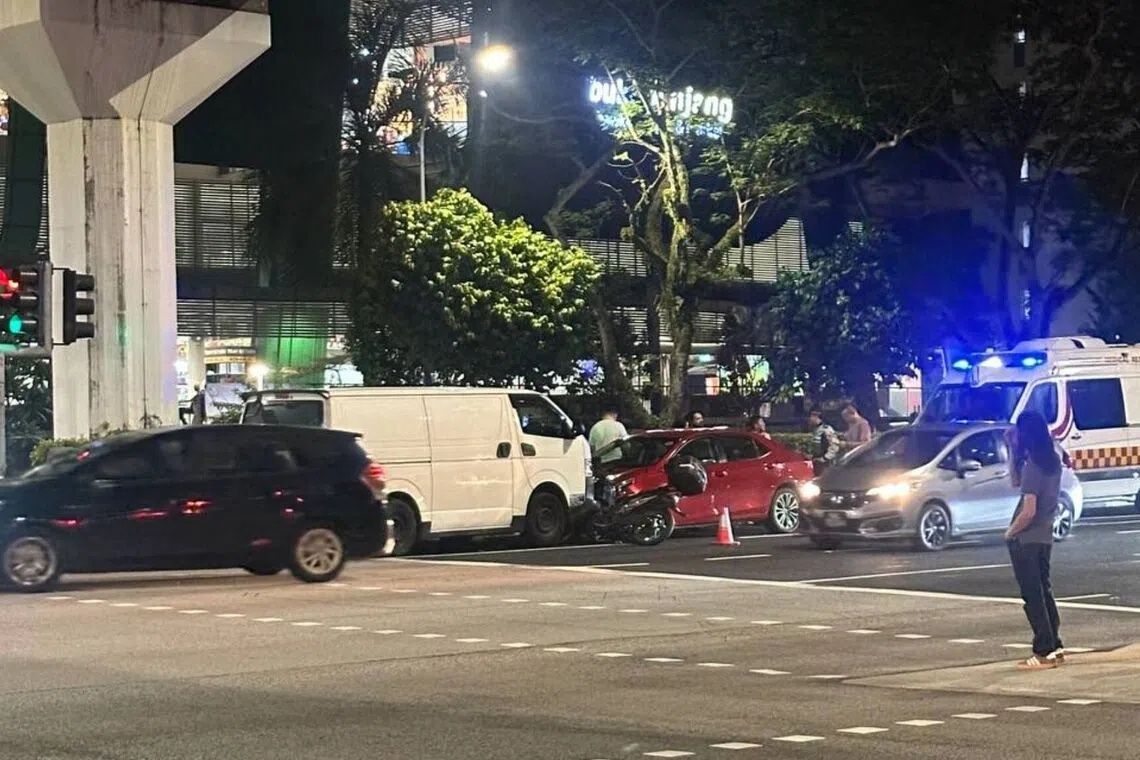
A 27-year-old van driver faces drug-related charges after a multi-vehicle collision on Bukit Panjang Road in Singapore's northern region left two people with minor injuries. The incident, which occurred on Friday night around 9pm, has drawn fresh attention to enforcement efforts against impaired driving on the island's roads and the growing concerns surrounding vaping-related substances in traffic safety contexts.
The collision involved four vehicles in total: the van, a motorcycle, and two cars. According to police statements provided to local media, responders arrived at the scene on Bukit Panjang Road near its junction with Bukit Panjang Ring Road after receiving alerts. The circumstances surrounding how the vehicles came into contact remain under investigation, though social media footage suggests the van may have been travelling against the normal flow of traffic, resulting in a frontal impact with a red sedan that subsequently trapped a motorcycle between the two larger vehicles.
Police seized two vaporising devices and three associated pods from inside the van during their initial response and evidence collection. The discovery of these items has introduced an additional investigative dimension to the case, as authorities now consider whether the vaping products and related substances contributed to the driver's impaired state. The substances found have been referred to Singapore's Health Sciences Authority for further analysis and classification, a standard procedure that allows authorities to determine the precise nature of materials involved in potential drug-related offences.
The arrest represents one of Singapore's ongoing efforts to combat driving under the influence, a persistent traffic safety challenge across Southeast Asia. Drug-impaired driving investigations have become increasingly sophisticated, with law enforcement agencies now trained to identify behavioural indicators and physical signs of narcotic or controlled substance use. The introduction of vaping products and synthetic substances into these investigations reflects evolving patterns of substance misuse that authorities must now factor into their enforcement strategies.
Both individuals who sustained injuries during the collision declined hospital treatment, suggesting the physical impact, while serious enough to cause the multi-vehicle involvement, remained relatively contained in terms of trauma severity. This outcome stands in contrast to the potential danger the incident represented, particularly given the apparent directional nature of the collision and the involvement of a motorcycle, which typically offers minimal protection to occupants during high-impact scenarios.
The incident carries implications for broader road safety discussions in the region. Singapore, despite its reputation for strict traffic enforcement and comprehensive road safety frameworks, continues to experience accidents linked to impaired driving. The case highlights how substances beyond traditional alcohol and conventional drugs now complicate the landscape of traffic enforcement. Vaping products, while sometimes perceived as less serious than other inhalants, can contain psychoactive compounds that affect cognitive function, reaction time, and motor control—all critical factors in safe vehicle operation.
For Malaysian observers and the wider Southeast Asian context, this incident underscores challenges that transcend national boundaries. Regional road safety statistics consistently identify human factors—including substance use—as primary contributors to serious collisions. The sophistication of Singapore's investigative response and the referral to specialist authorities demonstrates a comprehensive approach that other nations in the region may consider adopting or strengthening within their own enforcement frameworks.
The investigation's ongoing status means additional charges or findings may emerge as authorities complete their analysis. Police statements indicated that the vaporiser-related offence component remains under review, suggesting that depending on the Health Sciences Authority's findings, the driver may face charges extending beyond the initial driving under the influence allegation. This multi-layered investigative approach allows prosecutors to address both the immediate traffic offence and any associated drug-related violations that evidence may support.
The Bukit Panjang area, located in the northern part of Singapore's island, has experienced various traffic incidents over recent years. The specific location near the Ring Road suggests a complex traffic environment where multiple routes converge, potentially creating navigation challenges that compound risks when drivers operate vehicles while impaired. Traffic engineering and enforcement agencies typically pay particular attention to such intersection points, as accident frequencies and severity rates often concentrate in these areas.
For regional road users and policymakers, the incident serves as a practical reminder of how substance-related impairment manifests across different forms of substances and delivery mechanisms. As vaping and newer consumption methods proliferate, law enforcement agencies must continuously update training protocols and enforcement capabilities to identify and address impairment from these sources. The case also illustrates how a single impaired driving incident can involve multiple victims and create ripple effects through the community, affecting not just the driver but innocent road users who encountered the vehicle.
The investigation's progression will likely be followed closely by traffic safety advocates and enforcement agencies across Southeast Asia, particularly as jurisdictions grapple with similar challenges around emerging substances and their role in road safety incidents. The outcome may inform policy discussions regarding substance-related driving offences and the role that rapid, comprehensive investigation and multi-agency cooperation plays in building strong legal cases.

