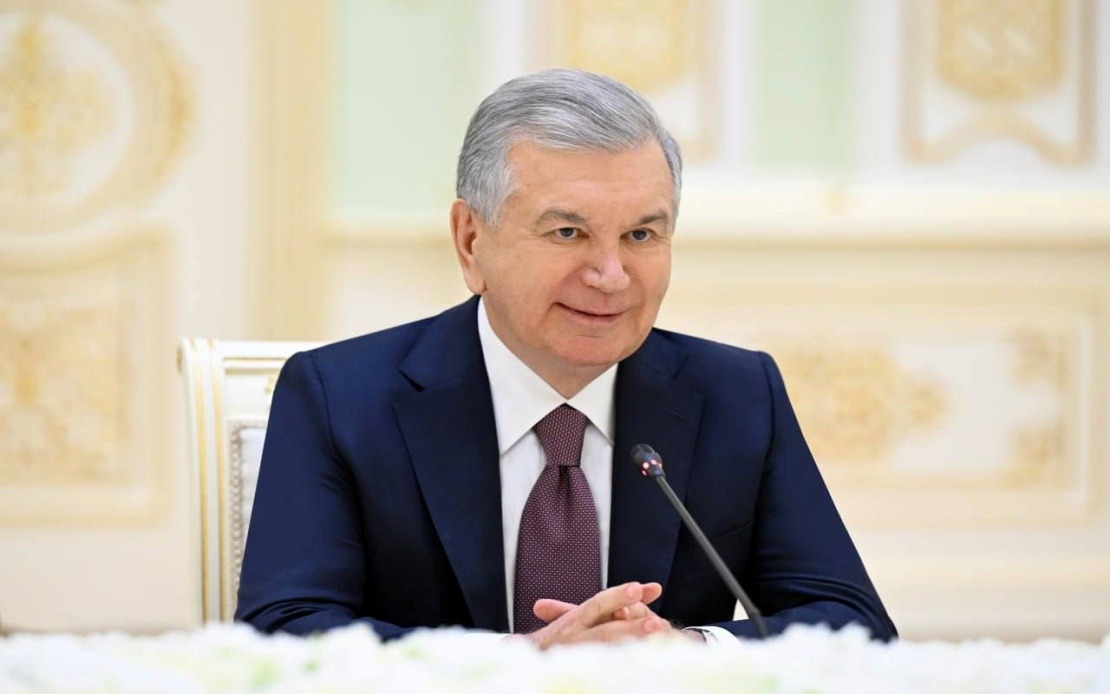
At the First International Islamic Civilisation Forum in Tashkent, Uzbekistan President Shavkat Mirziyoyev has articulated a compelling vision for addressing global fragmentation through the intellectual and spiritual traditions of Islamic civilisation. Speaking through his representative Khayriddin Sultanov, Mirziyoyev positioned science, education and the preservation of Islamic heritage as antidotes to the mounting conflicts, mutual suspicion and deliberate attempts to fracture relationships between cultures and religions that characterise the contemporary international landscape.
The president's intervention reflects a strategic Uzbek approach to positioning Central Asia as a bridge between civilisations rather than a flashpoint for ideological conflict. Mirziyoyev emphasised that Islamic values and principles, far from being relics of history, remain urgently relevant as foundational elements for constructing lasting peace, enabling social advancement and nurturing enlightenment across diverse societies. This framing represents a direct counterpoint to narratives that associate Islam primarily with conflict or extremism, instead recovering the region's historical identity as a crucible of scientific innovation and intellectual ferment.
Central to Mirziyoyev's appeal is Uzbekistan's "Enlightenment Against Ignorance" initiative, unveiled at the United Nations in 2017 and now serving as the conceptual anchoring point for the nation's civilisational agenda. The initiative situates science, learning, cultural production and ethical development as the genuine agents of social harmony, mutual respect and sustainable progress. By foregrounding these elements, Uzbekistan seeks to demonstrate that Islamic civilisation's greatest contributions lie not in military or political conquest but in intellectual and spiritual achievement that continues to nourish human knowledge systems worldwide.
Mirziyoyev's historical recitation of Central Asian scholarly titans underscores this intellectual lineage with particular force. The invocation of figures such as Muhammad al-Khwarizmi, whose mathematical innovations gave the world the algorithm; Abu Rayhan Biruni, the polymathic astronomer and geographer; Abu Ali ibn Sina, whose medical texts dominated European universities for centuries; and the religious scholars Imam al-Bukhari and Imam al-Tirmidhi grounds contemporary claims in documented historical achievement. These personages represent not merely regional pride but genuine foundational contributors to global intellectual traditions whose methodologies and discoveries remain embedded in modern science and philosophy.
The notion of Uzbekistan constructing a "Third Renaissance" builds on this historical momentum, positioning the nation not as a consumer of modernity imposed from without but as an active architect of its own future synthesis between scientific progress, educational innovation, spiritual cultivation and respect for cultural continuity. This framework allows Uzbekistan to engage with globalisation on its own terms, asserting agency rather than accepting subordination to external models of development. The emphasis on enabling individuals to realise their creative potential suggests an understanding of enlightenment not as abstract ideology but as concrete improvement in human capability and flourishing.
The Islamic Civilisation Centre itself functions as the institutional embodiment of these aspirations, serving according to Mirziyoyev as a metaphorical and literal bridge linking historical understanding with future possibility, Eastern perspectives with Western thought systems. By positioning the centre as a platform for scholars, researchers and religious leaders to pursue collaborative investigation and safeguard values transcending particular traditions, Uzbekistan constructs an institutional model for managing religious and cultural difference through scholarly engagement rather than political confrontation.
The five-day forum's architecture—conducted across three historic cities of Tashkent, Samarkand and Termez—itself carries symbolic weight. The choice of venues anchors intellectual discussion to places where Islamic civilisation achieved its greatest flowering, where institutions of learning accumulated knowledge systems that influenced Asia, the Middle East and eventually Europe. Bringing together approximately 300 participants representing scholars, religious authorities, government officials and cultural practitioners from more than fifty nations transforms the gathering from a regional assembly into a genuinely international convocation with the capacity to reshape how Islamic civilisation is understood and valued globally.
For Southeast Asian observers, particularly Malaysian policymakers and intellectuals, this Uzbek initiative offers instructive perspectives on how Muslim-majority nations can position religious heritage as a source of soft power and diplomatic influence. The emphasis on Islamic civilisation's scientific and educational dimensions provides a counternarrative to both Western depictions of Islam as fundamentally incompatible with modernity and to extremist interpretations that reject scientific knowledge as un-Islamic. The Malaysian Islamic development context, including efforts to mainstream Islamic finance, Islamic education and Islamic thought leadership, finds potential resonance in Uzbekistan's model of leveraging civilisational legacy as a platform for contemporary relevance and international standing.
The forum's substantive programming—encompassing eleven plenary sessions, four international scientific conferences, exhibitions of rare manuscripts and cultural artefacts, along with digital heritage projects and artificial intelligence applications for preserving Islamic manuscripts—demonstrates an integration of historical preservation with cutting-edge technological innovation. This combination rejects false dichotomies between tradition and modernity, instead proposing that authentic engagement with Islamic heritage requires deployment of contemporary tools and methodologies. The inclusion of artificial intelligence applications for manuscript preservation particularly signals that technological advancement and civilisational preservation are complementary rather than contradictory endeavours.
Mirziyoyev's closing emphasis on science and education as "the greatest unifying forces of our time" represents a deliberate pivot toward universalist language even within a framework explicitly centred on Islamic civilisation. By presenting these domains as transcultural resources available to all humanity, the president attempts to construct a space where Islamic heritage becomes not a particularist assertion but a contribution to shared human knowledge and values. This rhetorical strategy may prove significant for international acceptance of the forum's outcomes and for establishing Uzbekistan as a convener capable of bridging ideological divides.
The forum's anticipated conclusion through adoption of the Tashkent Declaration and a development roadmap extending through 2030 signals that these discussions aim to generate binding commitments and sustained institutional mechanisms rather than serving as ephemeral symbolic gatherings. The planned signing of cooperation agreements among international organisations, research institutions and cultural bodies indicates ambitions to translate intellectual consensus into concrete collaborative structures that will shape scholarship, cultural policy and educational content in participating nations and organisations over the coming years.
Uzbekistan's initiative arrives at a moment when global polarisation, sectarian violence and civilisational conflict narratives have intensified pressure on Muslim-majority societies to either defend Islam apologetically or marginalise religious identity in favour of secular nationalism. By instead positioning Islamic civilisation as a treasury of knowledge production and ethical wisdom relevant to contemporary challenges including sustainable development and peaceful coexistence, Mirziyoyev articulates an alternative pathway. Whether this vision gains traction among the international community and influences how Islamic heritage is taught, researched and valued will determine whether the forum represents a genuine inflection point in global intellectual discourse or a significant but ultimately contained regional initiative.

