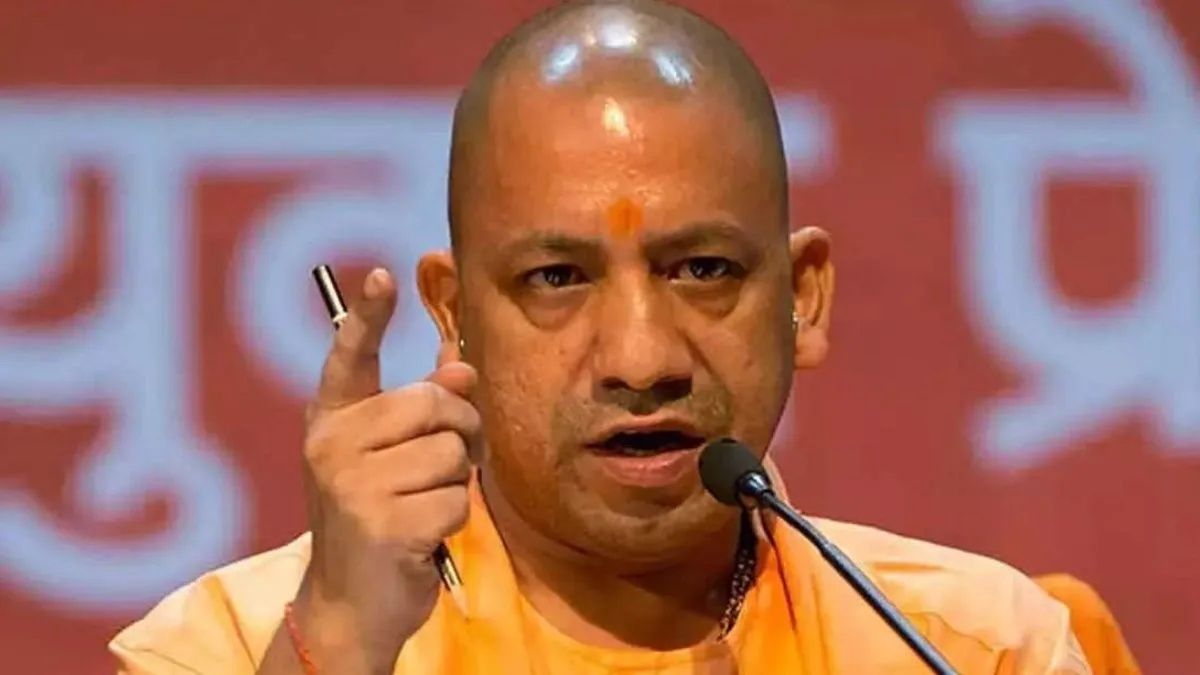
India's Uttar Pradesh Chief Minister Yogi Adityanath has responded sharply to the emerging donation fraud scandal at the Shri Ram Janmabhoomi Teerth Kshetra in Ayodhya, declaring that deliberate attempts to erode public confidence in the temple's administration constitute an intolerable breach of collective devotion. Speaking during a development project inauguration ceremony in Deoria on Friday, the Chief Minister emphasised that investigative findings have now triggered formal government intervention, with an assurance that perpetrators of financial misconduct will face legal consequences regardless of their standing.
The controversy centres on misappropriated donations collected at the newly consecrated Ram temple complex, a matter that has prompted the formation of a Special Investigation Team (SIT) to examine the scope and nature of the alleged theft. Adityanath underscored that his government acts swiftly upon receiving credible investigative reports, signalling zero tolerance for any diversion of funds entrusted by pilgrims and devotees. His language framed the issue not merely as financial wrongdoing but as a violation of sacred trust, positioning governmental response as a defence of collective spiritual sentiment rather than routine criminal procedure.
The Chief Minister invoked his recent visit to Ayodhya on June 19, during which he had already cautioned against casting doubt on the temple's integrity. He reiterated that Ayodhya represents a unifying symbol of Hindu civilisation and the enduring values of Sanatan Dharma across India. This rhetorical positioning transforms the donation scandal into a broader cultural narrative, wherein financial safeguards become intertwined with defence of religious sentiment itself. Such framing carries significant implications for how the investigation may be perceived—not as a standard inquiry into embezzlement but as a struggle between protectors and desecrators of faith.
Adityanath directed withering criticism at opposition parties, particularly the Indian National Congress and the Samajwadi Party, characterising their historical positions on the Ram temple movement as evidence of fundamental hostility toward Hindu interests. He accused Congress of having categorically denied the historical existence of Ram and having filed numerous legal challenges to obstruct temple construction, whilst characterising the Samajwadi Party as complicit in historical communal violence targeting religious processions and celebrations. By drawing these historical contrasts, the Chief Minister positioned his administration as the authentic guardian of faith against opponents whose motives he deemed intrinsically compromised.
His critique extended to specific incidents that he argued demonstrated the opposition's inimical record on religious matters. He referenced violent episodes including the Larkana riot, restrictions imposed on Kanwar Yatra pilgrimages, bans on Krishna Janmotsav celebrations, and communal disturbances during Durga Puja festivities. Through enumeration of such grievances, Adityanath constructed a historical narrative in which Congress and Samajwadi Party governance systematically undermined Hindu religious expression, thereby disqualifying them from commentary on the current donation controversy. This argumentative strategy effectively pre-emptive frames opposition criticism as originating from parties lacking moral standing on matters of faith.
The Chief Minister characterised the opposition's current criticism of the donation theft as opportunistic rather than principled. He suggested that having lost electoral advantage and material benefits under previous administrations, opposition parties now resort to allegations against the temple administration as a mechanism for political rehabilitation. This interpretation converts legitimate questions about financial governance into symptoms of partisan desperation, a rhetorical move that risks deflecting scrutiny from substantive investigative findings. Such framing may complicate public discourse by intermingling criminal inquiry with electoral calculations.
Adityanath positioned his government's investigation as properly insulated from political pressure and capable of distinguishing truth from falsehood. He called upon the public to distinguish between those genuinely concerned with protecting the temple's sanctity and those deploying faith-based rhetoric for narrow electoral advantage. The emphasis on the SIT's role as an independent body carrying objective investigative authority reflects an attempt to establish procedural credibility whilst simultaneously delegitimising opposition commentary as inherently partisan. However, given the Chief Minister's prominent role in publicly framing the investigation within a larger political and religious narrative, questions regarding investigative independence may inevitably persist.
For Malaysian and Southeast Asian observers, this episode illustrates the intersection between religious sentiment, political authority, and institutional accountability in Indian governance. The Ram temple controversy exemplifies how infrastructure projects bearing profound religious significance remain embedded within competitive political ecosystems where construction, consecration, and administration become sites of ideological struggle. Temple donation scandals in Hindu-majority regions typically trigger intense scrutiny precisely because these institutions represent not merely religious spaces but symbols of community identity and political legitimacy.
The Chief Minister's warning against tampering with faith carries implications extending beyond individual criminal accountability. His rhetoric suggests that investigations themselves might be evaluated not primarily through forensic rigour but through alignment with religious and political narratives. This poses challenges for transparent, impartial inquiry—the very foundation upon which public confidence in institutions rests. When investigative processes become secondary to broader cultural and political messaging, the factual resolution of specific allegations risks subordination to larger ideological frameworks.
Adityanath's appeal to Ram devotees to refrain from testing the patience of the faithful represents an attempt to mobilise religious sentiment as a defensive shield against scrutiny. This rhetorical strategy acknowledges potential reputational damage whilst attempting to preempt critical questioning by framing such questioning as aggression against collective belief. The warning carries implicit pressure on investigators and commentators to conclude investigations swiftly and favourably, lest extended inquiry be construed as faith-tampering by external actors.
Moving forward, the investigation's public reception will likely depend upon the transparency of its findings and the credibility of its processes. Should the SIT produce detailed, verifiable conclusions regarding the donation irregularities, public confidence may stabilise. Conversely, if investigative outcomes appear predetermined or obscured, doubts regarding institutional independence will intensify. The Chief Minister's prominent public positioning ahead of investigative completion raises questions about whether findings might be evaluated primarily through political compatibility rather than factual merit.
For temple governance across India and the broader Hindu diaspora, this controversy underscores the necessity for robust financial controls, transparent accounting practices, and independent oversight mechanisms. Religious institutions managing substantial donations require administrative architecture that prevents both actual malfeasance and perceptions of inadequacy. The Ram temple's status as a national symbol and pilgrimage destination demands exceptional governance standards capable of withstanding scrutiny from multiple stakeholder communities.
The donation scandal ultimately reflects tensions between institutional accountability and religious sentiment that characterise governance of culturally significant spaces in plural societies. Balancing rigorous investigation with respect for faith communities requires careful navigation, yet the Chief Minister's current framing suggests that separation between these domains may prove difficult. How authorities manage this investigation will carry implications far beyond Ayodhya, potentially shaping approaches to temple governance and investigative independence across India and affecting perceptions of institutional credibility among Hindu communities across Southeast Asia.

