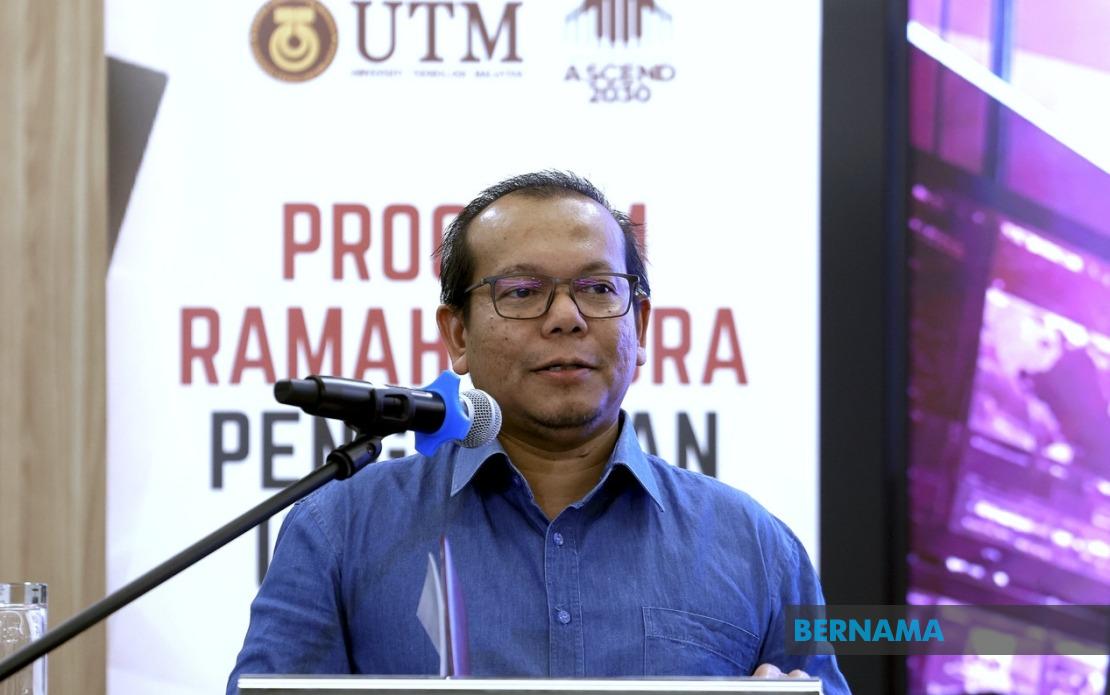
Universiti Teknologi Malaysia is moving to deepen its engagement with news organisations as a strategic response to the growing challenge of misinformation and reputational damage facing higher education institutions across the region. Vice-Chancellor Prof Dr Mohd Shafry Mohd Rahim outlined the university's rationale at a media networking session, emphasising that accurate, timely communication between universities and journalists serves a critical public interest function in an era when false narratives can spread rapidly and undermine decades of institutional credibility.
The core tension Prof Mohd Shafry highlighted reflects a vulnerability facing Malaysian universities: the gap between the time required to establish academic excellence and reputation—often spanning many years of consistent achievement—and the speed with which misinformation or misleading portrayals can erode public trust. This asymmetry has become particularly acute as social media amplifies unverified claims and sensationalism. By formalising relationships with traditional media gatekeepers like Bernama, UTM aims to ensure that factual counter-narratives and authoritative university perspectives reach the public through credible channels before false information calcifies into public perception.
Under the partnership framework, UTM intends to facilitate journalist access to its faculty expertise and research findings, transforming the university into a readily available reference source for reporters covering education, technology, and policy issues. This approach recognises that journalists operating under time pressure and deadline constraints often lack immediate access to qualified academic voices, creating a vacuum that sensationalism or incomplete reporting can fill. By removing friction from the process of sourcing expert commentary, UTM aims to make evidence-based reporting the path of least resistance for media practitioners.
The university has also committed to organising specialised training programmes for journalists focused on artificial intelligence and emerging technologies—domains where both public understanding and accurate reporting remain nascent in Malaysia. Such initiatives address a genuine capacity gap: most newsrooms lack in-house expertise to evaluate AI-related claims critically, making them vulnerable to hype or misrepresentation from interested parties. By upskilling media professionals, UTM contributes to raising the overall quality of technology journalism in the country, with downstream benefits for public literacy and informed policy debate.
Meanwhile, UTM is developing institutional mechanisms to actively package and disseminate its research output through media channels rather than relying on passive media interest. This represents a shift from the traditional academic model where discoveries are published in scholarly journals and await journalistic discovery. Instead, the university is adopting a proactive communications strategy analogous to corporate public relations but rooted in research integrity. Such mechanisms might include regular research briefings, digestible summaries of complex studies, or coordinated media embargoes that allow journalists preparation time while ensuring simultaneous, accurate reporting.
The presence of Bernama's leadership at the networking session—including Chief Executive Officer Datin Paduka Nur-ul Afida Kamaludin and Acting Deputy Editor-in-Chief (Economic News Service) Harlina Samson—signals institutional commitment from Malaysia's national news agency to participate in this partnership. Bernama's involvement is particularly significant given its role as the official national news source and its reach across government, business, and international audiences. Such partnerships at this level can establish templates that other Malaysian universities might emulate, gradually reshaping how higher education institutions engage with media infrastructure.
The initiative also carries implications for Malaysia's competitive positioning in global university rankings and soft power. International perception of Malaysian universities depends significantly on how their research contributions and institutional quality are communicated globally. By ensuring that domestic media accurately and comprehensively cover local university achievements, UTM creates content that circulates internationally, shaping perceptions among prospective international students, research collaborators, and funding bodies. In this sense, improving domestic media coverage becomes an indirect investment in global reputation.
However, the success of such partnerships ultimately depends on maintaining clear boundaries between institutional advocacy and journalistic independence. Universities providing training, access, and expertise to journalists must do so without expectations of favourable coverage or editorial control. The most credible outcome occurs when journalists develop genuine expertise in university research and operations, enabling them to report with both accuracy and critical perspective. If media partnerships devolve into public relations arrangements, they risk undermining the very credibility that makes media coverage valuable in the first place.
For Malaysian readers and policymakers, UTM's initiative reflects a broader recognition that institutions cannot rely solely on the quality of their work to secure public understanding and support. In an information environment crowded with competing narratives and limited journalistic resources, the relationship between universities and media has become a strategic domain requiring intentional cultivation. As misinformation becomes increasingly sophisticated and institutional trust erodes across sectors, the model UTM is advancing—where universities invest in journalist capacity and media access while respecting editorial independence—may prove increasingly essential for maintaining informed public discourse about higher education's role in society.

