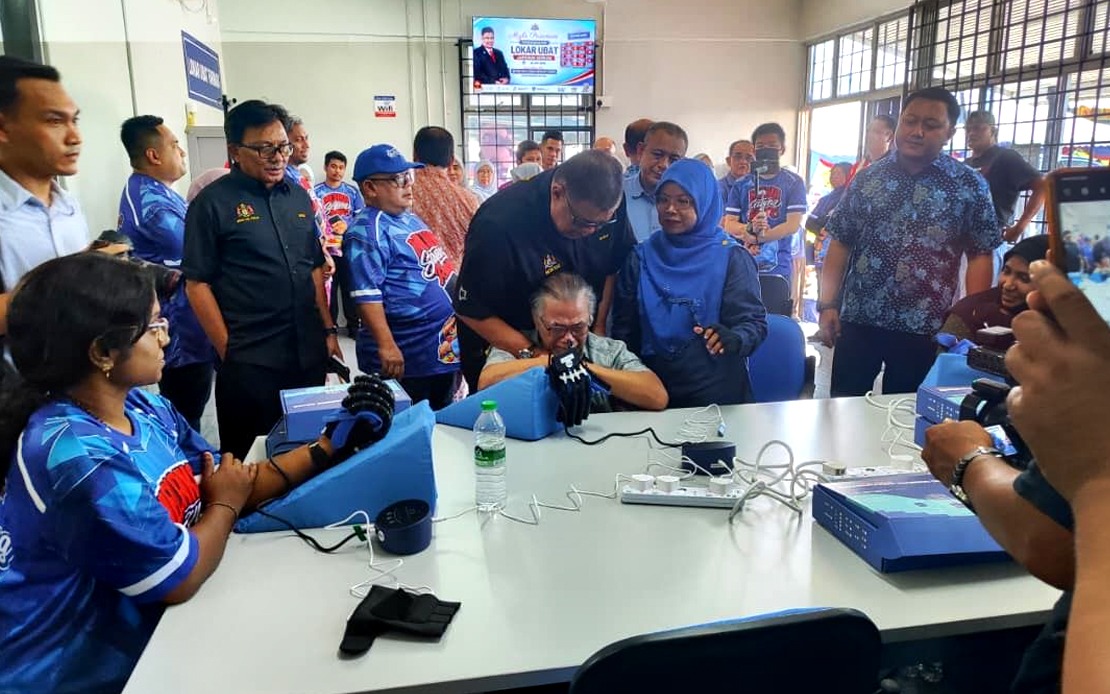
Universiti Teknikal Malaysia Melaka (UTeM) has inaugurated a state-of-the-art rehabilitation facility in Serkam, Jasin, that integrates cutting-edge technologies developed by the institution's research teams to deliver physiotherapy and recovery services to the surrounding community. The MADANI Community Rehabilitation Centre and Gymnasium, officially opened by Melaka Chief Minister Datuk Seri Ab Rauf Yusoh, represents a significant step forward in bringing university research directly into clinical and therapeutic practice, moving rehabilitation care beyond traditional methods into the realm of advanced engineering solutions.
Funded through the Finance Ministry's UniMADANI 2024 Grant, the centre targets stroke survivors, individuals recovering from injuries, and patients dealing with chronic mobility constraints and muscular weakness. The facility's foundation rests upon three proprietary technologies developed within UTeM's laboratories, each addressing specific aspects of motor function recovery. Roboglove, the first innovation, provides automated and consistent hand rehabilitation exercises, allowing therapists to standardise treatment protocols while freeing clinical staff to focus on patient monitoring and personalised adjustments. The Assistive Lower Limb Chair (ALLC) represents the second component, automating lower limb exercise routines to prevent muscle atrophy and maintain joint mobility during recovery phases. Complementing these devices is an exoskeleton system designed to enhance the effectiveness of movement training by providing external support and resistance, thereby allowing patients to perform exercises that might otherwise remain beyond their physical capacity during early rehabilitation stages.
The significance of this initiative extends beyond the immediate therapeutic benefits to individual patients. For Malaysia's healthcare landscape, the centre demonstrates a viable model for addressing rehabilitation capacity constraints that typically plague public health systems across Southeast Asia. Stroke represents one of the leading causes of disability in the region, and rehabilitation services remain severely undersupplied relative to demand. By automating certain therapeutic interventions through technology, institutions like UTeM can amplify the reach of limited physiotherapy staff, allowing therapists to supervise more patients simultaneously whilst maintaining therapeutic quality.
The project's collaborative structure reveals important insights into how Malaysian universities can function as community assets beyond their traditional teaching and research mandates. UTeM partnered with the Serkam State Constituency Development and Coordination Committee (Japerun), the Kampung Pulai Village Development and Security Committee, the Social Welfare Department, and the Social Security Organisation (PERKESO) to establish, operate, and sustain the centre. This multi-stakeholder approach distributes operational responsibilities and ensures that the facility remains responsive to community needs whilst grounding it in government health and social infrastructure.
Professor Datuk Dr Massila Kamalrudin, UTeM's vice-chancellor, positioned the centre as a prototype for expanded rehabilitation access across Malaysia. She emphasised that the collaboration model—integrating university innovation capacity, government coordination, and community engagement—could be replicated in other localities, potentially creating a distributed network of technology-enabled rehabilitation hubs. This vision aligns with Malaysia's broader push toward digitalisation and automation across public services, though it raises important questions about resource allocation, staff training requirements, and whether technological solutions adequately account for the holistic nature of rehabilitation, which encompasses psychological support, social reintegration, and family involvement alongside physical recovery.
The project was led by Associate Professor Dr Mariam Md Ghazaly, whose research focus evidently bridges engineering innovation with healthcare delivery. The involvement of dedicated academic leadership suggests sustained institutional commitment rather than ad-hoc implementation, which typically determines whether pilot projects achieve scalability. For patient outcomes, consistent oversight ensures that technological systems remain calibrated to therapeutic standards and that data generated through device usage contributes to evidence-building for Malaysian rehabilitation science.
Malaysia's position within Southeast Asia makes this development particularly relevant regionally. Thailand, Indonesia, and Vietnam face similar rehabilitation capacity challenges, and if UTeM's model proves successful—both clinically and financially—it could inform health technology adoption across neighbouring countries. The affordability and maintenance requirements of these systems will prove critical; technologies that require expensive spare parts or specialised technician training may face barriers to wide adoption despite their therapeutic promise.
The centre's opening coincides with broader government initiatives promoting university-community engagement through programmes such as the Public University Community Empowerment Programme (Komuniti @UniMADANI). This suggests that the MADANI centre fits within a larger strategic framework rather than operating as an isolated initiative, potentially indicating sustained policy support and future funding pathways. However, the long-term viability will depend on demonstrating clear patient outcome improvements, cost-effectiveness relative to conventional physiotherapy, and acceptance among both healthcare providers and patients themselves.
Looking forward, the centre's success will generate valuable data about technology adoption in rehabilitation settings within the Malaysian context. Questions remain about accessibility—whether such facilities can serve rural populations or whether they risk concentrating advanced care in urban centres—and about equity, particularly regarding which patient populations receive priority access. These operational details will ultimately determine whether the MADANI centre becomes a replicable model for healthcare innovation or remains an impressive but isolated showcase of Malaysian technical capability.

