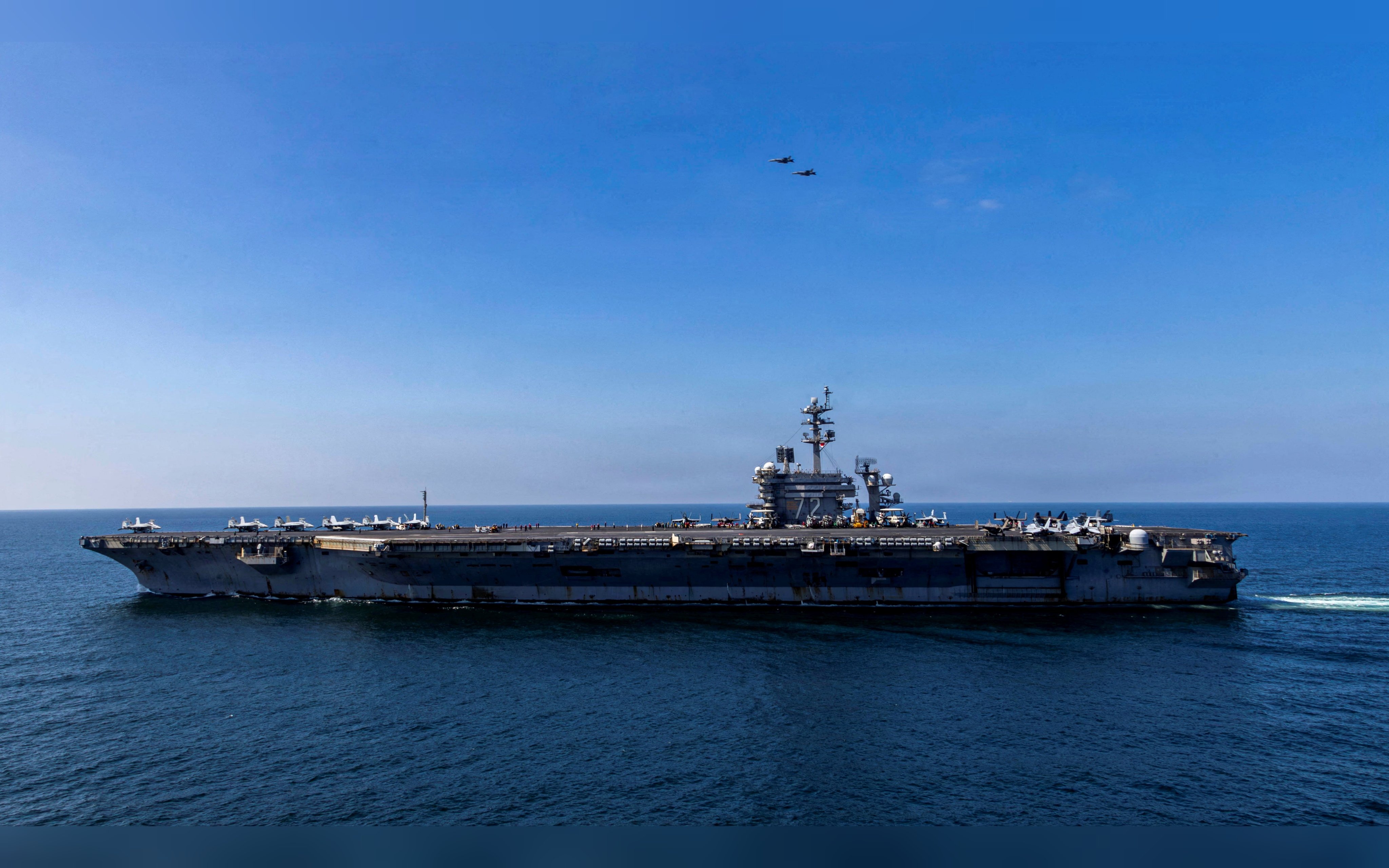
The United States Navy will relieve the USS Abraham Lincoln from its position in West Asia, confirmed President Donald Trump on Friday, ending an extended deployment that has raised significant questions about sailor welfare and operational tempo in the region. The carrier replacement will occur as part of a regularly scheduled rotation cycle, with the USS George Washington designated to assume the station previously held by the Lincoln. The announcement follows growing concerns from military families and lawmakers regarding the extended deployment duration and reported deteriorating conditions aboard the vessel.
Trump characterised the carrier rotation as a routine operational adjustment, stating that the replacement would occur imminently. When questioned about whether the deployment had extended beyond acceptable parameters, Trump remarked that the duration had not been excessive, a response that stands in contrast to mounting concerns raised by relatives of service members and congressional representatives. The shift reflects broader tensions within the defence establishment between maintaining forward operational presence and addressing quality-of-life issues affecting military personnel stationed far from home.
The Lincoln commenced operations in November and received orders to redirect toward West Asia in January amid escalating tensions with Iran. Since that redeployment, the carrier has remained continuously at sea for more than 250 days, with the most recent 200-day stretch occurring without a single port visit for crew rest and resupply. This operational tempo represents one of the more demanding deployment schedules in recent carrier battle group rotations, creating significant strain on personnel across the vessel's complement of sailors and Marines.
Senator Richard Blumenthal from Connecticut initiated formal inquiry into conditions aboard the Lincoln after receiving reports from military families describing serious logistical and health challenges. His correspondence to Defence Secretary Pete Hegseth and acting Navy Secretary Hung Cao documented a range of concerns spanning from contaminated water supplies and plumbing failures to shortages of essential provisions. Mental health deterioration among crew members received particular emphasis, alongside documented safety hazards on flight operations decks and significant delays in mail delivery that extended care package arrivals by months.
Acting Navy Secretary Hung Cao provided an official statement acknowledging the deployment challenges while defending the operational necessity that extended the carrier's station beyond the original schedule. Cao emphasised that the Lincoln accomplished its assigned mission while conducting extensive combat operations, noting that the vessel's aircraft executed more than 10,000 sorties and delivered approximately 1.5 million pounds of ordnance against targets in the region. He underscored that both troop welfare and mission accomplishment represent equally important priorities within Navy operational philosophy, though the statement implicitly recognised that these objectives occasionally conflict during extended deployments.
The 266-day deployment figure released by Cao encompasses the full operational period, with 200 days specifically spent in designated combat zones where the carrier conducted its primary mission activities. This extended operational commitment substantially exceeds typical peacetime deployment cycles and approaches the upper limits of sustainable deployment schedules without degrading personnel performance and morale. The decision to extend the deployment beyond originally planned parameters reflects strategic imperatives regarding maintaining forward presence and supporting coalition operations in a volatile region.
While Cao acknowledged that sailors and Marines required mental health treatment during the deployment, he provided assurance that no fatalities occurred among affected personnel. This distinction, though important from a statistical perspective, does not necessarily diminish the broader welfare concerns raised by military families and congressional oversight committees. The acknowledgment itself represents a departure from earlier denials of significant personnel challenges and signals greater transparency regarding the human cost of extended naval operations in contested waters.
The rotation cycle involving the Lincoln and George Washington represents routine carrier force management, yet the transition carries particular significance given regional geopolitical dynamics and ongoing tensions with Iran. Malaysia and Southeast Asian nations maintain significant maritime commerce passing through the Persian Gulf and surrounding waters, making US Navy carrier operations relevant to regional stability calculations. Extended American naval presence affects regional security dynamics that extend beyond the immediate bilateral US-Iran relationship.
The deployment experience aboard the Lincoln provides a instructive case study regarding the sustainability of current operational tempos within the US Navy. Extended deployments without adequate port visits create cascading effects on personnel retention, recruitment, and overall force readiness that extend well beyond the immediate deployment cycle. Navy leadership faces growing pressure from congressional representatives and military advocacy organisations to restructure deployment schedules that better balance operational requirements with personnel welfare considerations.
The replacement rotation affirms that the US commitment to maintaining continuous carrier presence in West Asia remains substantive despite the personnel challenges documented during the Lincoln's extended deployment. The USS George Washington will continue forward-deployed operations, ensuring that American carrier strike group capabilities remain positioned to respond to emerging crises and maintain freedom of navigation operations throughout the region. This continuity reflects broader strategic calculations regarding great power competition and regional security commitments that transcend individual deployment cycles.
For Malaysian defence and foreign policy analysts, the carrier rotation illustrates the operational demands that extended great power engagement in contested regions imposes. The incident underscores how domestic personnel welfare concerns within major military powers sometimes create tensions with strategic commitments, a dynamic relevant to understanding broader patterns of great power behaviour in maritime Southeast Asia. The US Navy's management of carrier rotations and personnel welfare will influence the broader strategic framework governing regional naval operations for years to come.

