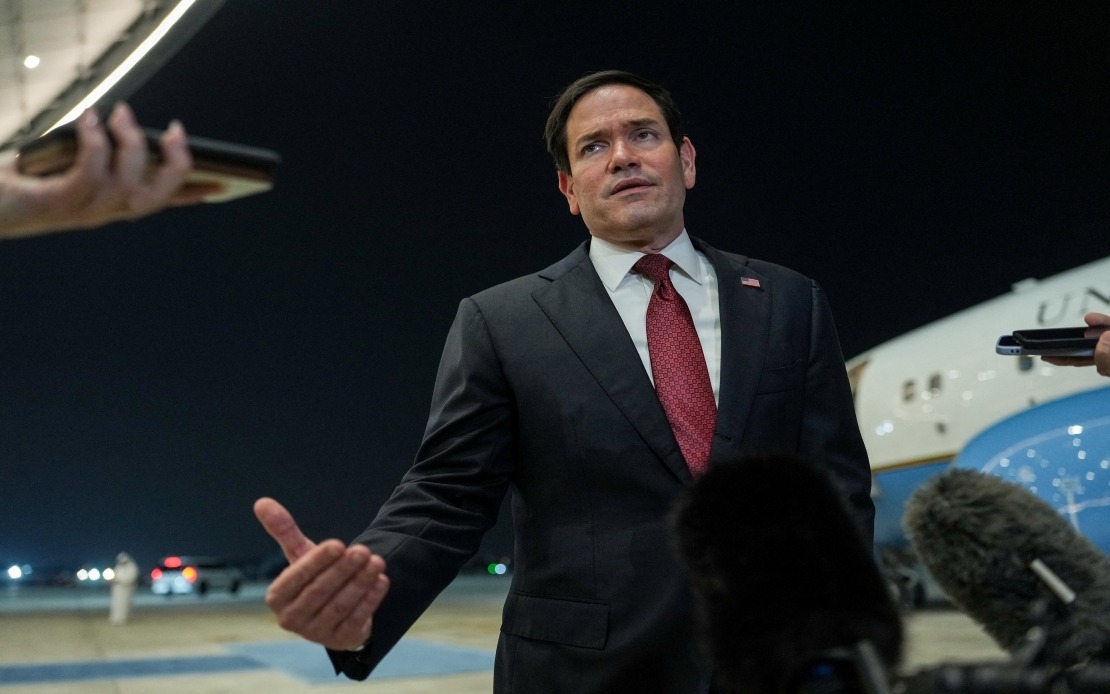
United States Secretary of State Marco Rubio has definitively stated that the American government will not be bankrolling any reconstruction fund for Iran, despite recent reports suggesting such a possibility. Speaking to journalists on Tuesday in Washington, Rubio made clear that while various contributors might eventually participate in financing Iranian reconstruction efforts, the US treasury will remain firmly on the sidelines. The statement represents a significant clarification of Washington's position on Iran economic matters as diplomatic engagement between the two nations has intensified in recent weeks.
Rubio's comments came in response to questions about whether Gulf states, including wealthy monarchies across the Arabian Peninsula, might step forward with investment capital for Iran's economy. The Secretary of State acknowledged that such contributions were theoretically possible and had featured in broader discussions about potential post-conflict arrangements. However, he emphasised repeatedly that any such endeavour would not involve direct American government funds or what he termed "our investment." His language suggested a fundamental policy decision by the Trump administration to maintain distance from direct financial commitments to Iran's economic rehabilitation.
The timing of Rubio's remarks follows recent international media reporting that had circulated claims about a proposed $300 billion reconstruction fund for Iran. President Donald Trump himself had dismissed these reports in the preceding week, suggesting they were either premature or inaccurate characterisations of ongoing negotiations. The repeated denials from senior US officials underscore how sensitive the question of American financial involvement in Iran remains, even as diplomatic channels between Washington and Tehran have reopened.
Despite the US government's refusal to contribute directly, Rubio indicated that Iran itself possesses capacity to develop economic opportunities internally. His remarks suggested that such development would depend heavily on Iran's performance on various security-related matters that remain on the diplomatic agenda. The Secretary of State declined to specify which security issues he referenced, but the comment hints at ongoing concerns about Iran's military capabilities, regional influence, and compliance with international agreements.
The diplomatic backdrop to these comments involves substantial recent movement between American and Iranian representatives. Just days before Rubio's statement, delegations from both nations held formal talks in Burgenstock, Switzerland, with Qatar and Pakistan serving as mediators. The American delegation was headed by Vice President JD Vance, while Iran sent Mohammad Bagher Ghalibaf, the speaker of its parliamentary body, to lead its negotiating team. Both sides subsequently announced that meaningful progress had been achieved during these discussions.
Further underlining the accelerating diplomatic pace, Iran and the United States had remotely signed a memorandum in the week preceding these latest developments. The agreement represents a significant breakthrough, formally ending the military conflict that had erupted on February 28. The document establishes specific timelines for American action to remove its naval blockade of Iran and commits Tehran to restoring maritime traffic through the strategically vital Strait of Hormuz, one of the world's most critical energy transit routes.
The memorandum also includes provisions addressing Iran's nuclear ambitions, with Tehran making explicit commitments not to pursue nuclear weapons development. Rather than settling this matter through the current agreement, the parties have designated nuclear issues for separate, more detailed negotiations. They have set a 60-day window for these specialist talks, suggesting that both sides view nuclear programme resolution as complex enough to require dedicated discussion.
For Malaysia and Southeast Asian nations, these developments carry multiple implications. The region's economies are deeply dependent on the uninterrupted flow of hydrocarbons through the Strait of Hormuz, making any agreement that ensures maritime stability directly relevant to regional prosperity. An end to military tensions between the US and Iran should theoretically reduce risks to shipping in these waters. Additionally, any economic stabilisation in Iran could eventually open new trade and investment opportunities for Malaysian and other Southeast Asian businesses, even if the initial reconstruction financing comes from Gulf investors rather than Western sources.
Rubio's clarification also reflects broader American strategic thinking about Iran engagement. By explicitly removing the US government from direct financial participation, Washington preserves flexibility in its Iran policy while potentially encouraging Gulf allies to take a more active economic role. This approach may serve American interests by deepening Gulf state investment in Iranian stability without committing American taxpayer resources. The distinction between what private American companies might do and what the US government itself will finance remains important, though Rubio did not elaborate on private sector possibilities.
The framework emerging from these negotiations appears to prioritise security and military de-escalation over immediate economic reconstruction. Rubio's insistence that any economic opportunity for Iran depends on progress on unspecified security matters reinforces this sequencing. The implication is that Washington views sustained diplomatic compliance and security cooperation as preconditions for any normalisation of economic relationships, even those financed by third parties rather than American sources.
Looking forward, the 60-day nuclear negotiations timeline suggests an intense period of diplomatic activity ahead. Success in these talks could fundamentally alter the trajectory of US-Iran relations and reshape Middle Eastern geopolitics more broadly. Failure could rapidly reverse the goodwill apparently generated by recent breakthroughs. For regional observers including those in Southeast Asia, monitoring these nuclear discussions will prove essential for understanding whether the current diplomatic thaw represents a durable shift or merely a tactical pause in long-running tensions.