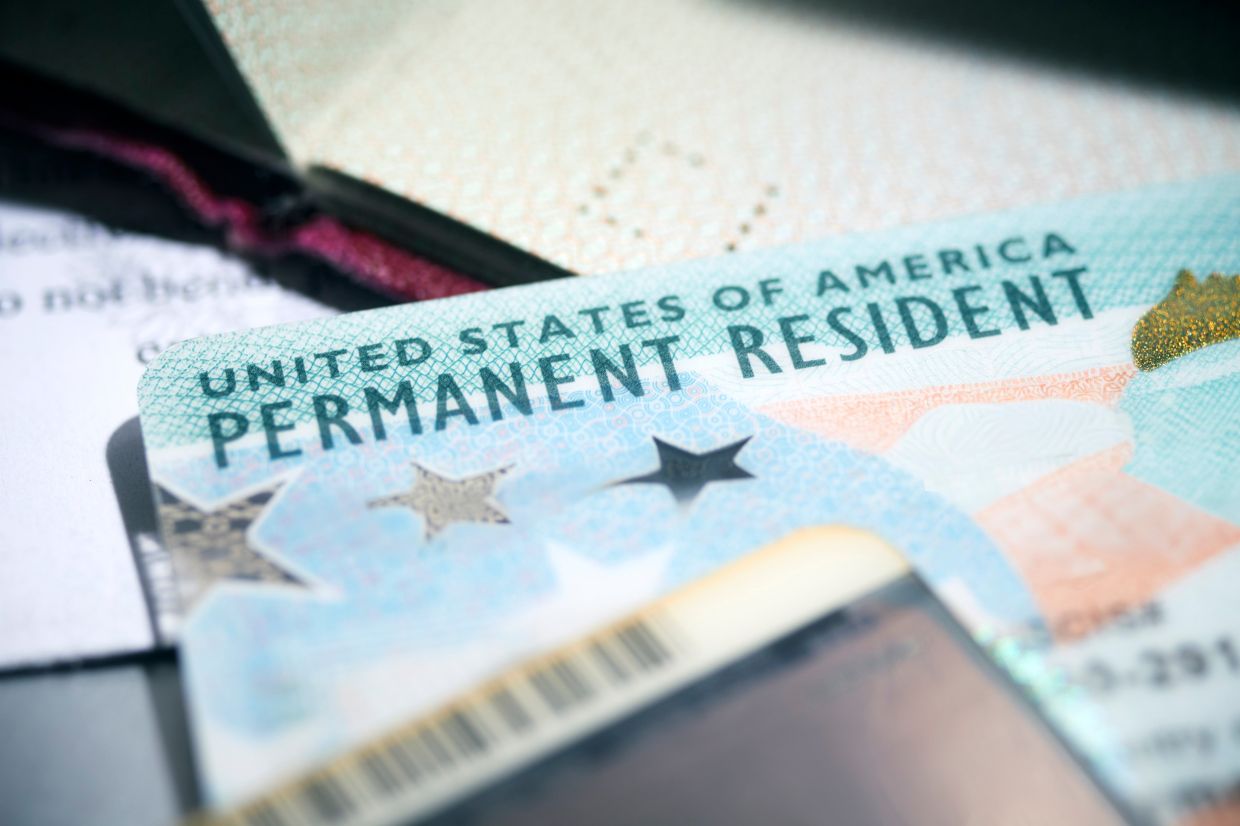
The United States has suspended immigrant visa interviews at its diplomatic missions across the globe, instructing officers to apply a more stringent evaluation framework for determining whether applicants might become dependent on government assistance. This freeze comes as the Trump administration moves to enforce what it calls the "public charge" test with greater rigour, fundamentally reshaping how officials assess the eligibility of foreign nationals seeking permanent residence through family sponsorship, employment pathways, or diversity visa programmes.
The timing of this policy shift is significant. Just days before the embassy training initiative began, a federal court invalidated a separate 75-nation visa restriction programme that had relied on the same underlying principle of limiting entry to those deemed unlikely to access public benefits. Rather than retreating, the administration has opted to embed the public charge doctrine more deeply into the visa adjudication process itself. The State Department has mandated that officers apply the standard "comprehensively and consistently" across all posts, suggesting this represents a coordinated, long-term enforcement strategy rather than an isolated administrative adjustment.
What distinguishes this latest push from previous applications of the public charge rule is the shift in emphasis and methodology. While the factors themselves—age, health, family size, income, education, skills, and employment prospects—have existed in immigration law for decades, officials are now instructed to weigh them more aggressively. In certain instances, they may require applicants to post bonds as a condition of approval, a practice that adds both financial and procedural complexity to cases that previously proceeded relatively smoothly. For Malaysian applicants, many of whom rely on family-based immigration pathways, this recalibration carries immediate practical consequences.
Immigration policy experts observing this development characterise the rollout as deliberately disruptive. Sarah Pierce, director of social policy at the Washington-based Third Way think tank and a former analyst at the US Citizenship and Immigration Services, argues that the administration "chose the most disruptive possible way to roll this out." The sudden postponement of interviews without clear guidance on rescheduling timelines has left thousands of applicants in limbo. Those who have already booked flights, sold properties, or undergone required medical examinations now face indefinite delays with no official statement on when normal processing will resume. For family members separated across continents, the uncertainty compounds the emotional and financial burden of immigration already fraught with complexity.
Attorney Charles Kuck, who has represented over 100 individuals challenging immigration restrictions, warns that training materials explicitly focus on "how to deny cases under public charge rules." This framing suggests the interpretive direction officials will take when confronted with borderline circumstances. Family-based applicants—traditionally the backbone of American immigration flows and a significant pathway for Malaysian households—will encounter substantially higher barriers. Diversity visa hopefuls, who represent another avenue for Malaysian citizens, face similar headwinds. The convergence of these changes narrows multiple immigration pathways simultaneously, restricting rather than redirecting migration flows.
A critical distinction emerges between the suspension of interviews and the revocation of underlying approvals. When the State Department postpones an interview, it does not automatically invalidate a petition or reset an applicant's priority date within the visa queue. This technical distinction offers some protection: applicants who have already received approval from USCIS retain their place in line. However, the practical harm is significant and immediate. The delay itself—measured in months or potentially longer—disrupts life plans. Applicants who have resigned from jobs, withdrawn children from schools, or committed financially to relocation face mounting pressure. For those pursuing diversity visas, which must be issued by September 30 each fiscal year, even moderate delays risk missing the annual deadline entirely.
The scope of this freeze applies specifically to immigrant visa interviews conducted abroad, the pathway through which most legal permanent residents ultimately obtain their status. By contrast, temporary visa categories—H-1B work visas for skilled professionals, student visas, and tourist documentation—remain unaffected by the current suspension. However, this apparent exemption offers limited comfort. Immigration attorneys note that the public charge test, as a matter of law, could technically be applied to non-immigrant visa determinations as well. The administration has refrained from doing so thus far, but the legal architecture now exists for such expansion. For Malaysian professionals considering H-1B sponsorship or academic exchange, this latent threat warrants careful monitoring.
The individuals facing the greatest exposure under these new standards are those who have already initiated the immigration process and now require consular processing—the final stage where they must travel abroad to a US embassy or consulate to obtain their immigrant visa stamp. This group cannot simply wait indefinitely; visa numbers have expiration dates, and delays erode the window of opportunity. The assessment criteria themselves favour applicants with substantial financial resources, advanced education, and robust job offers. For many Malaysian families relying on chain migration—where one relative sponsors the next—the cumulative effect is exclusionary. An affidavit of support from a US-based relative, historically sufficient to overcome public charge concerns in family cases, now faces heightened scrutiny unless the supporting relative's finances are substantially above minimum thresholds.
The opacity surrounding implementation creates what legal practitioners characterise as a dangerous vacuum. Charles Kuck emphasises that "there is no guidance in the statute," a silence that "allows for a great deal of mischief." When officers lack clear metrics for how aggressively to apply standards, case outcomes become unpredictable. Some applicants with comparable financial circumstances may receive approval while others face denial. This inconsistency—far from the promised "comprehensive and consistent" application—means that Malaysian applicants cannot easily calibrate their own eligibility or prepare adequately for interviews. The subjective nature of officer decision-making, combined with reduced institutional oversight, creates an environment where bureaucratic discretion eclipses transparent rules.
For those whose interviews have been cancelled, the appropriate response depends on their immigration status and visa category. Applicants without existing US legal status should remain in their home countries until interviews resume; departing for the United States on a temporary visa creates legal jeopardy and may jeopardise the underlying immigrant petition. Those already in the United States with lawful status face a different calculation. International travel requires careful consideration, as re-entry depends on possessing valid documentation and the willingness of a consular officer to grant a new visa upon return. An approved petition does not guarantee re-entry; consular officers retain independent authority to deny visa issuance, and travel outside the US creates a gap in status that must be overcome through the very process now subject to heightened scrutiny.
Malaysian professionals and families should carry meticulous documentation of their financial circumstances, family relationships, and educational credentials. Proof of status—whether a green card, an I-94 arrival record accompanied by an I-797 notice or employer letter—should be maintained in multiple locations. For those seeking to enter the United States, pay stubs and recent job offer letters demonstrating employment prospects strengthen applications. However, the most reliable protection remains staying informed. Immigration law is undergoing rapid change, and the permissive standards that governed green card issuance a year ago no longer apply. Applicants must understand precisely what was filed in their names and be prepared to answer questions accurately rather than speculating—a misstatement, however innocent, can provide grounds for denial or petition revocation.
The longer-term implications extend beyond individual cases to the character of American immigration itself. By weaponising the public charge doctrine across the entire visa adjudication apparatus, the administration is effectively conducting a policy experiment: testing whether legal immigration can be substantially restricted through aggressive administrative enforcement rather than legislative change. For Malaysian applicants contemplating the American dream, the narrowing pathway reflects a fundamental reorientation of US immigration philosophy. Where the system once presumed approval absent disqualifying factors, it now presumes scrutiny. This inversion, implemented through training rather than legislation, transforms how thousands of applicants experience the final stages of their journey to permanent residence.

