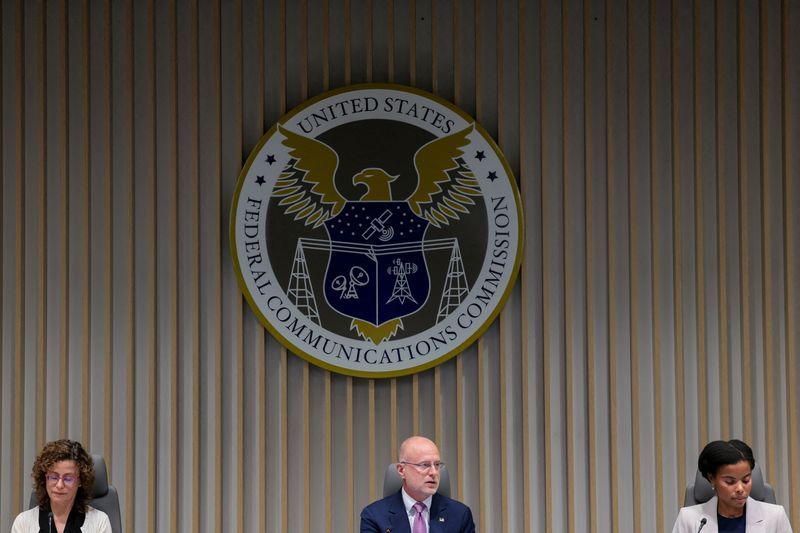
American telecommunications regulators have moved to significantly strengthen their oversight of Chinese technology in domestic markets, voting this week to prohibit the sale of any device containing key hardware components manufactured by firms on the nation's security risk list. The action represents a substantial escalation in Washington's ongoing technological separation from Beijing and has implications for global supply chains that Southeast Asian manufacturers and importers depend on.
The Federal Communications Commission maintains a curated list of Chinese technology companies whose equipment faces restrictions due to national security considerations. This roster includes Huawei Technologies and ZTE Corporation, both prominent names in telecommunications infrastructure and consumer devices. The regulatory apparatus has previously banned these specific companies from selling finished products into the United States market, yet a significant gap remained in enforcement that the FCC has now moved to address.
FCC Chair Brendan Carr characterised the new ruling as eliminating what officials termed a "component part loophole" that had permitted manufacturers to circumvent the spirit of existing restrictions. Prior to 2022, companies that appeared on the restricted list could technically still receive authorisation to market devices into America provided those devices incorporated only component-level parts from the blacklisted firms rather than complete finished products. The revised framework now extends the prohibition to any device containing logic-bearing hardware components manufactured by entities like Huawei, fundamentally altering the compliance landscape for device makers globally.
The distinction between finished products and component parts proved crucial in previous regulatory frameworks. Manufacturers could engineer workarounds by assembling devices from restricted components sourced from listed Chinese firms, technically avoiding a ban on finished equipment. This created a situation where the regulatory intent—preventing compromised technology from entering American infrastructure—could be undermined through technical compliance. The new rules effectively eliminate this classification distinction by treating any hardware component manufactured by restricted entities as subject to the same prohibitions.
National security experts and government officials have articulated the underlying rationale for these expanded restrictions. Chris McGuire, formerly serving as a national security official within President Joe Biden's White House administration, explained to international media that compromised semiconductor or communications components could propagate vulnerabilities throughout entire devices and potentially the broader networks into which they are integrated. This technical reality underpins the FCC's expansion from product-level to component-level oversight, reflecting a deeper understanding of how supply chain vulnerabilities can manifest as systemic risks.
The Trump administration has pursued an aggressive comprehensive campaign targeting Chinese technology sector participation in American markets. These restrictions form part of a broader strategic initiative to create technological distance between American infrastructure and Chinese manufacturing or supply capabilities. The policy reflects longstanding concerns about the integration of potentially vulnerable technology into critical telecommunications networks that underpin economic and security functions.
The FCC's enforcement activity has accelerated markedly in recent months. Last month alone, the Commission prohibited the importation of additional equipment manufactured by various Chinese technology companies, with those restrictions taking effect on July 16. Simultaneously, American regulators proposed banning the import of most militarily-configured drone systems from Chinese manufacturers, signalling an expansion of restricted product categories beyond traditional telecommunications hardware.
Beyond component-level restrictions, the FCC has moved against specialised equipment and network infrastructure. The Commission has previously prohibited imports of certain foreign-manufactured drone models and internet routers, establishing precedents for expanding the restricted category list. Proposed regulations would further require that American telecommunications service providers cease interconnecting their networks with Chinese telecommunications firms that regulators deem to present national security concerns.
Regulatory attention has also focused on the operational footprint that Chinese telecommunications companies maintain within American borders. The FCC is examining whether to restrict Chinese telecom firms that operate data centres or Points of Presence—the specialised equipment and facilities positioned at internet exchange points that function as critical interconnection infrastructure—from maintaining these operational assets in the United States. Implementation of such restrictions would effectively compel Chinese telecommunications operators to cease operating American data centre facilities, fundamentally restructuring their American presence.
For Southeast Asian technology importers and manufacturers, these American regulatory decisions carry profound implications. Many regional companies incorporate components or finished devices into their own product lines destined for export, and American market access remains strategically important. The expansion of restrictions from finished products to all component-level inputs requires supply chain recalibration and documentation across the region, increasing compliance costs and potentially reshaping sourcing relationships that have developed over decades.
The restrictions also illuminate the emerging bifurcation of global technology markets into competing standards and supply ecosystems. Southeast Asian manufacturers and importers must navigate increasingly divergent regulatory requirements between American and Chinese markets, complicating the previously straightforward option of selling identical products across both regions. This fragmentation creates both operational challenges and potential opportunities for regional companies to specialise in particular market ecosystems.
Huawei, the primary company affected by the initial restrictions and now subject to expanded component-level prohibitions, has not publicly commented on the FCC's decision. The silence may reflect the company's assessment that formal responses carry limited practical utility given the regulatory trajectory, or alternatively, a diplomatic decision to avoid further escalating tensions with American authorities through public statements.
The cumulative effect of these regulatory measures demonstrates American determination to technologically decoupled critical infrastructure from Chinese manufacturers and components, regardless of the broader economic disruptions this separation entails. For Southeast Asian stakeholders in technology sectors, understanding these restrictions and their evolution remains essential to maintaining viable supply chains and market access strategies in an increasingly fragmented global technology landscape.

