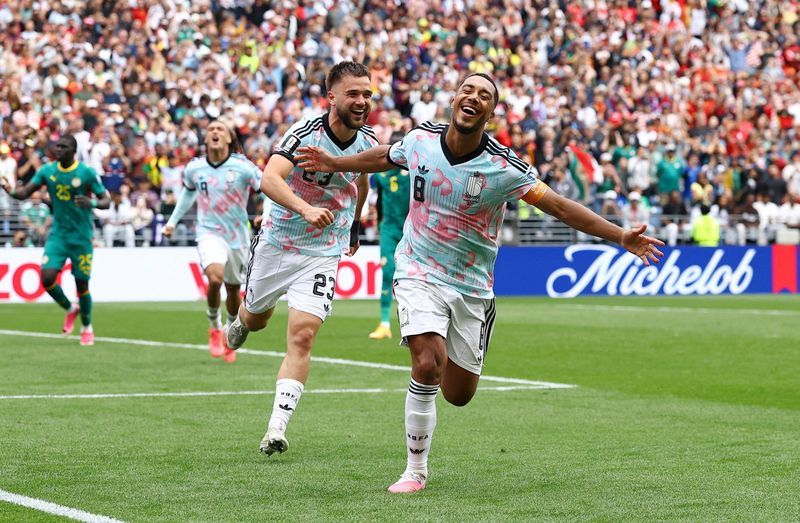
The United States and Belgium will collide in a World Cup knockout fixture at Seattle's Seahawks stadium on July 4, a contest that carries far greater weight than many observers anticipated before the tournament began. What was once viewed as a respectable campaign merely reaching the final 16 has transformed into something altogether more ambitious, with the American soccer public sensing a genuine opportunity for a deep tournament run on home soil. The European opposition presents a formidable test, yet the momentum accumulated by Mauricio Pochettino's squad through the group stage suggests this clash will be fiercely competitive rather than one-sided.
The venue itself presents an intriguing dimension to proceedings. Seattle's Seahawks home ground ranks among the NFL's noisiest stadiums, and the acoustic advantages for the home team in a soccer context could prove psychologically significant. The Americans will benefit from energetic crowd support at a time when such backing can influence outcomes in tight matches. For Belgium, accustomed to playing in established European venues, adapting to this unfamiliar environment while managing elite-level opposition requires additional mental preparation and tactical discipline.
America's pathway to this juncture has been genuinely impressive by recent standards. The opening group-stage assignments against Paraguay and Australia yielded victories, results that validated the coaching strategy and player selection. However, the performance against Bosnia elevated confidence substantially higher. Playing the final 36 minutes with only ten players following a red card, the US still managed a 2-0 triumph, demonstrating tactical maturity and resilience that had been questioned in previous international competitions. This defensive solidity, once considered a significant vulnerability heading into the tournament, has instead emerged as a foundation upon which attacking ambitions can safely rest.
Belgium arrives with different circumstances entirely. The squad, often described as Europe's Golden Generation because of players like Kevin De Bruyne, Romelu Lukaku and Thibaut Courtois, may be confronting what could represent their final World Cup opportunity to deliver a championship. The tournament could mark the last hurrah for this exceptional collection of talent. Yet their path through the group phase revealed uncertainty and unconvincing performances. Against Senegal, they fell behind for substantial periods, requiring a dramatic late flourish with two goals to level before prevailing through a VAR-assisted penalty decision in extra time. This narrow escape suggests vulnerabilities that a focused American team might exploit.
The tactical chess match will revolve partly around managing Belgium's attacking threats. Jeremy Doku, the winger, has underperformed thus far in the tournament relative to his club form and reputation, creating both an opportunity and a danger for the Americans. Should Doku enter a breakout performance at this stage, his directness and technical proficiency could trouble a US backline still building its collective experience at this level. Conversely, if the American defenders can maintain the standards demonstrated against Bosnia, they can limit his impact and frustrate Belgium's creative output more broadly.
One complication facing the American coaching staff involves personnel availability. Striker Folarin Balogun, who netted against Bosnia before receiving a red card in the closing stages, faces suspension for this clash. The absence of a goal-scoring option creates selection headaches for Pochettino as he balances attacking ambition with tactical safety. The decision regarding how to configure the forward line could prove decisive, particularly given Belgium's defensive vulnerabilities evident during their Senegal encounter.
Historical precedent adds another layer of narrative texture. These teams previously met in Brazil during the 2014 World Cup round-of-16, a match remembered as much for American goalkeeper Tim Howard's remarkable 16-save performance as for the ultimate Belgian victory in extra time. That encounter represented a hard-fought contest ultimately decided by marginal differences. The current iteration carries different dynamics, with both squads arriving from distinct trajectories. The Americans enter with upward momentum; Belgium seeks to rediscover form before knockout football intensifies further.
From a regional perspective, this match resonates across Southeast Asia where American soccer has cultivated growing grassroots popularity. A US victory would represent a symbolic moment for the sport's development in markets where the sport traditionally competed against established football cultures. The prominence of American players in European club competitions has similarly raised the profile of the national team throughout the region.
The broader implications for American soccer extend beyond this single fixture. A tournament run to the quarter-finals or beyond would validate investment in coaching infrastructure and player development systems. Success would demonstrate that the country possesses institutional capacity to compete consistently at the highest level, shifting discourse from occasional tournament optimism to sustained competitive positioning. Pochettino's appointment and the squad's early performances suggest such a trajectory is conceivable.
Tyler Adams, the American midfielder, articulated the team's mindset when discussing legacy and impact. The statement encapsulates how the squad views this opportunity not as merely participating but as creating a lasting impression on the sport's landscape. The further the Americans advance, the greater the amplification of domestic interest and international recognition. Against Belgium, they possess the talent, tactical framework and crowd advantage to progress. Execution across 90 minutes will determine whether rising expectations transform into tangible achievement.

