As negotiators gathered in Washington this week to draft the joint declaration for the Group of Twenty's upcoming summit, behind-the-scenes tensions revealed a fundamental shift in the American approach to multilateral economic cooperation. Two delegation members, speaking anonymously because the negotiations remain confidential, described a concerted effort by the United States to strip the communiqué of references to poverty reduction, energy transition, and gender issues—core concerns for developing economies that have long anchored the G20's agenda. Instead, Washington is pressing the group to focus narrowly on immigration, transnational crime, terrorism, foreign investment, and what it characterises as "fair trade," a redefinition that signals a retreat from the broader development mandate that has defined the G20 since its elevation to leaders' level in 2009.
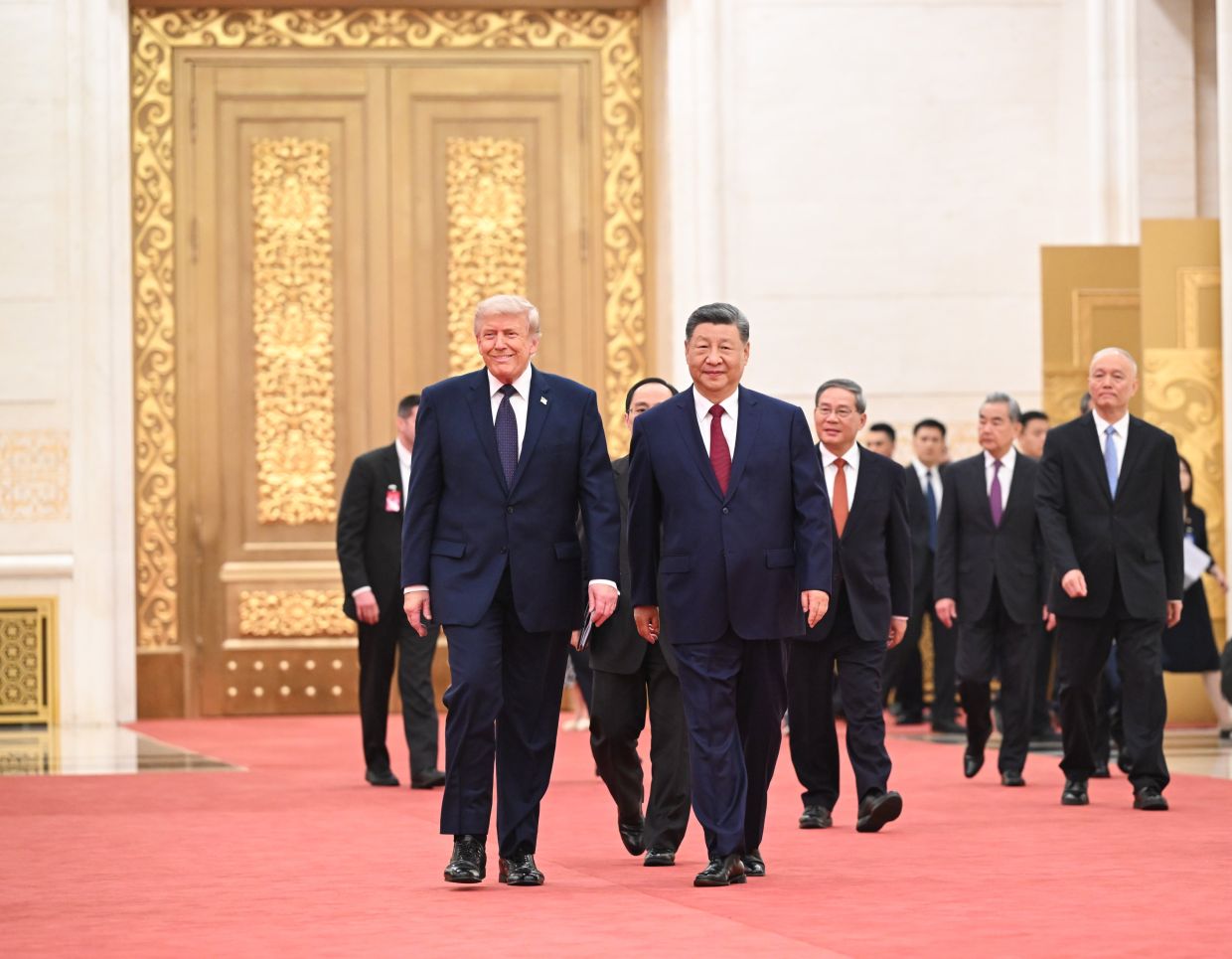
This pivotal reshaping of the G20's priorities reflects a longer pattern of American repositioning that began in December when the group first convened to plan the Miami summit. According to one delegation source, the United States has systematically worked to advance language that favours its own economic and political interests at the expense of the concerns of smaller and developing nations. The characterisation that emerged from these sources—that the Americans view the December 14-15 gathering at Trump National Doral, the president's Miami golf resort, primarily as "a pretty backdrop for a photo of Trump and Xi"—suggests that bilateral optics between Washington and Beijing may be overshadowing the multilateral agenda that the G20 was designed to address. This framing raises uncomfortable questions about whether a forum meant to coordinate responses to global economic challenges is being subordinated to great-power diplomacy.
Russia has publicly echoed these frustrations, with Ambassador-at-Large Marat Berdyev voicing concerns about the direction of negotiations. Yet despite these reservations, Russian negotiators continued participating in this week's talks, with a sherpa delegation led by Denis Agafonov. This willingness to remain engaged, even while criticising the process, reflects the bind facing many nations within the G20: withdrawal or protest risks further marginalisation, while participation offers at least a seat at the table as fundamental decisions are made. Berdyev told state news agency Tass that Moscow expects the Miami meeting to centre on trade, energy, and finance tracks, suggesting that Russia, like other major developing economies, still views these traditional G20 concerns as non-negotiable.
China's response to these negotiations remains opaque and strategically calculated. The Chinese embassy in Washington declined to clarify whether parallel bilateral talks between Chinese and American officials were occurring alongside the sherpa meetings, a silence that itself speaks volumes about the real negotiations happening beyond public view. When asked about Beijing's apparent acquiescence to the removal of energy transition language—a matter that should theoretically command Chinese attention given the centrality of renewable energy policy to Xi Jinping's governance agenda—the embassy offered no substantive explanation. Instead, it recited statements about China's renewable energy capacity and carbon reduction efforts, a rhetorical deflection that contradicts both China's stated climate commitments and its historical assertiveness in G20 forums on development issues.
The sidelining of energy transition from the G20 agenda carries particular significance for Southeast Asian nations, many of whom are caught between pressure to meet climate targets and the immediate need for economic growth and energy security. Vietnam, Indonesia, Thailand, and the Philippines have all made commitments to renewable energy expansion, yet the region remains heavily dependent on coal and natural gas. A G20 that weakens its collective voice on energy transition removes crucial international support for these transitional economies. The withdrawal of American leadership on this issue—traditionally a consensus point across the group—signals that Washington may be recalibrating its climate diplomacy to align with domestic political considerations, a shift that could embolden fossil fuel interests globally and complicate regional efforts toward decarbonisation.
The American approach to development issues reflects a broader reassessment of multilateralism itself. By pushing to remove poverty reduction language, the United States appears to be signalling that the G20 should cease acting as a forum for addressing global inequality and instead function primarily as a mechanism for protecting American commercial interests. For nations like India, Indonesia, and South Africa—all G20 members with significant populations living in poverty—this reorientation represents a fundamental betrayal of the group's original purpose. The irony that these discussions occur amid rising global inequality and growing middle-class instability in many developed economies underscores how disconnected the negotiating positions have become from on-the-ground realities.
Gender equality's removal from the G20 agenda similarly reflects a retreat from commitments made across multiple summits over the past decade. Women's economic empowerment, workplace participation, and entrepreneurship support have been consistent themes in G20 declarations, yet their elimination from Miami discussions suggests these priorities are now deemed expendable. This erasure has particular implications for Southeast Asia, where women comprise a substantial proportion of the informal economy and where gender-based economic exclusion remains pronounced. The signal being sent is that the G20 will no longer prioritise mechanisms for addressing gender-based economic disparity at the global level.
The handling of South Africa's temporary suspension from this sherpa meeting—the first exclusion of a full member in G20 history—compounds the sense that American dominance is reshaping the group's norms and procedures. While the White House and State Department did not respond to requests for comment on the negotiating positions described by the delegation sources, their silence itself constitutes a form of tacit acknowledgment that the shift is indeed occurring. The absence of official explanation or justification suggests confidence that the procedural fait accompli will stand unchallenged.
The broader context for these negotiations includes the failed G20 finance ministers' meeting in April, which concluded without a joint statement or customary press conference—the first such failure of its kind. That breakdown occurred despite China's participation through Finance Minister Lan Fo'an, suggesting that deep structural disagreements now characterise G20 deliberations. The inability to reach consensus on basic economic governance issues indicates that the group's utility as a coordinating mechanism has substantially diminished, even as its symbolic importance for legitimising global economic decisions remains intact.
For Malaysian readers and policymakers, the unfolding dynamics within the G20 carry direct implications. As a major Southeast Asian economy and a nation increasingly engaged in global supply chains and multilateral forums, Malaysia's interests align more closely with those of developing economies seeking to maintain poverty reduction, energy transition, and gender equity on the global agenda. The American effort to hollow out these components removes tools that developing nations might otherwise leverage to advance their development priorities. Moreover, the apparent downgrading of energy transition language directly affects Malaysia's own renewable energy transition, which relies on international policy coordination and financing mechanisms that function best within a robust multilateral framework.
The Miami summit in December will likely expose these tensions more openly, particularly if the Trump-Xi bilateral meeting does indeed overshadow the collective G20 discussion. The outcome may demonstrate whether the G20 can adapt to American prioritisation of bilateral relationships and narrower economic concerns, or whether the resulting declarations will be so watered down as to render the summit largely ceremonial. Either way, the current trajectory suggests that the era of the G20 functioning as a forum for addressing global development challenges may be coming to an end, replaced by an institution that serves primarily to ratify decisions made between the world's largest economies.

