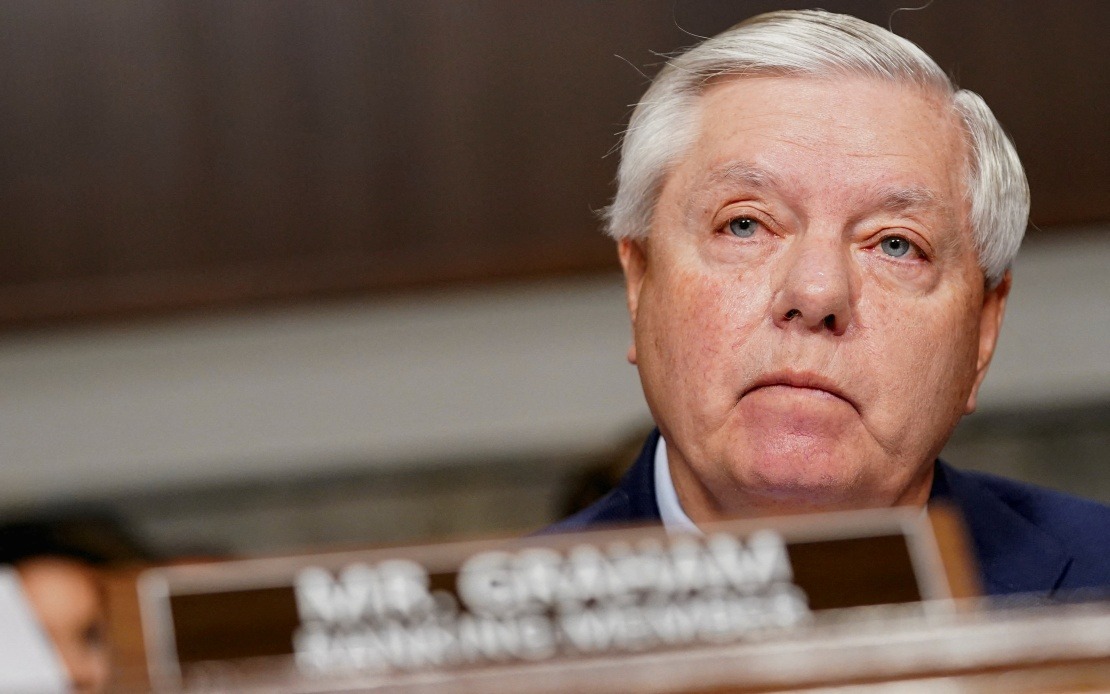
US Senator Lindsey Graham, a prominent Republican figure and long-serving legislator from South Carolina, has died at the age of 71 following what his office described as a brief and sudden illness. The senator passed away on the evening of Saturday, July 11, with his office releasing a formal statement the following day. His family requested privacy and prayers during what they characterised as an incredibly difficult period.
Graham's three-decade career in the Senate began in 2002, when South Carolina voters first elected him to the upper chamber. His political longevity was demonstrated through successive reelection victories in 2008, 2014, and 2020, securing his position as one of the state's most durable political figures. At the time of his death, he held significant institutional power, chairing the influential Senate Budget Committee, which oversees federal spending priorities and fiscal policy.
The senator's prominence in recent years stemmed largely from his close association with President Donald Trump. Graham emerged as one of Trump's most steadfast Republican allies, particularly during contentious periods of the Trump presidency and after. This alliance shaped much of his legislative agenda and public positioning within the Republican Party, making him a recognisable figure in American political discourse.
Graham's death comes as he was preparing to seek reelection in November, a campaign that would have represented his fifth consecutive six-year Senate term. His potential candidacy would have underscored his continued political influence despite changing dynamics within the Republican Party. The timing of his passing removes a significant voice from Senate deliberations on major policy matters, particularly those involving budget priorities and foreign affairs.
Notably, Graham had been actively engaged in international diplomacy in his final days. He had recently returned from a visit to Kyiv, Ukraine's capital, where he met with President Volodymyr Zelenskyy on Friday. This engagement reflected Graham's sustained interest in Ukraine policy and his role in shaping American responses to the ongoing conflict. His meetings in Kyiv positioned him as an intermediary in discussions between the US government and Ukrainian leadership, highlighting the diplomatic dimensions of his Senate role beyond domestic legislative matters.
For Malaysian and Southeast Asian readers, Graham's passing represents a significant shift in the American political landscape at a critical juncture. His close relationship with Trump and his hawkish approach to international affairs had implications for regional security dynamics, particularly regarding US engagement in Asia-Pacific matters and attitudes towards China. Graham's consistent backing of robust military support for allies aligned with broader American strategic interests in the region.
The senator's death also raises questions about succession and continuity within the Republican Party's foreign policy establishment. His successor will likely differ in priorities and approach, potentially influencing how the United States engages with allies and adversaries alike. This transition occurs against a backdrop of ongoing debates about American military commitment levels, defence spending, and the country's role in regional conflicts.
Graham's legislative record encompassed positions that alternated between confrontational and pragmatic stances on various international issues. His recent diplomatic engagement in Ukraine suggested an active role in shaping America's response to ongoing geopolitical challenges. The abruptness of his death has caught the political establishment unprepared for a significant void in Senate leadership, particularly within the Budget Committee and on matters involving defence and international relations.
The South Carolina seat will likely be filled through mechanisms established by state law, with implications for Republican control of the Senate and the direction of party leadership. How his successor approaches both domestic policy and international engagement remains uncertain, though the sudden nature of his passing has created an unexpected reshuffling of congressional priorities and committee assignments.
Graham's tenure embodied a particular strand of Republican internationalism that emphasised American military strength and strategic engagement abroad. His absence from the Senate eliminates a consistent voice on matters of defence spending, military assistance to allies, and America's global posture. For observers tracking American political developments and their regional implications, his death marks a turning point in Senate composition and international affairs discussions.

