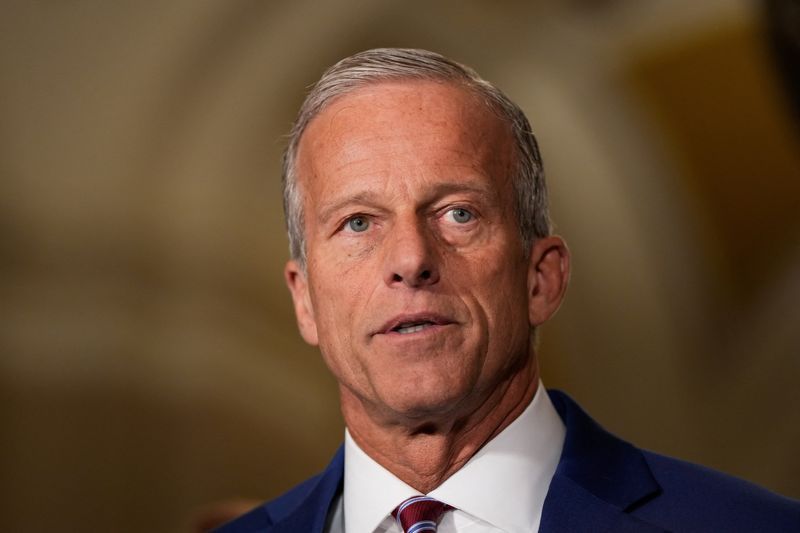
The Republican-led US Senate has signalled its determination to push through transformative cryptocurrency legislation before lawmakers break for the August recess. Senate Majority Leader John Thune filed motions on Saturday morning to schedule a key procedural vote on the Clarity Act for mid-September, when the chamber reconvenes. The filing represents a significant procedural step that could clear the path towards a full floor debate and vote on what would be the most comprehensive federal regulatory framework for digital assets ever enacted in the United States.
The Clarity Act represents a watershed moment for the cryptocurrency industry in the United States. For years, digital asset companies have complained about operating in a regulatory grey zone where multiple federal agencies claim overlapping jurisdiction. The proposed legislation would establish clear boundaries, defining which digital tokens qualify as securities or commodities and explicitly assigning regulatory responsibilities to specific agencies. By creating this legal certainty, proponents argue the bill would unlock innovation and investment in the sector while protecting consumers and market integrity.
Senate Republican leaders are banking on their ability to secure the 60 votes required under chamber rules to advance the bill, a threshold that necessitates bipartisan support. Currently, Republicans control 53 seats, meaning the legislation needs backing from at least eight Democrats to reach the 60-vote mark. This mathematical reality underscores the stakes involved—Democrats hold considerable leverage in negotiations, yet many remain opposed to what they view as regulatory capture by an industry seeking to escape existing safeguards. The pressure to deliver results before the recess window closes creates time-sensitive momentum that both parties must navigate.
The timing is not coincidental. President Donald Trump has made cryptocurrency reform a cornerstone of his second administration's economic agenda, and the White House has been actively lobbying Senate members to support passage. Trump's personal financial ties to the crypto industry have deepened substantially since his first term, with the president reporting over $1.4 billion in income derived from his family's cryptocurrency ventures during the previous year alone. This substantial financial stake has intensified debate about whether the administration's enthusiastic backing of the Clarity Act represents a conflict of interest that compromises the objective regulation of a sector from which the president directly benefits.
The crypto sector has mobilised considerable resources to influence the legislative outcome. Industry groups and crypto-aligned political committees deployed more than $119 million supporting pro-cryptocurrency candidates during the 2024 election cycle, a sum that dwarfs typical spending on technology policy issues. This investment reflects the stakes involved—comprehensive federal regulation could unlock trillions in potential market capitalisation and legitimacy for digital assets. Conversely, failure to pass the legislation would leave the industry in continued limbo, subject to conflicting state-level rules and varying federal agency interpretations.
The financial services industry presents the most potent organised opposition to the Clarity Act, particularly the banking sector. Banks have mobilised to resist provisions that would permit cryptocurrency companies to offer yield-bearing products on customer stablecoin deposits, effectively allowing crypto platforms to compete for retail deposits that currently flow to traditional banks. This conflict illustrates how regulatory clarity does not favour all market participants equally—greater latitude for crypto companies necessarily constrains opportunities for incumbent financial institutions to maintain their traditional advantages in customer deposit gathering.
Democrats have signalled willingness to negotiate, but with conditions that directly address conflict-of-interest concerns. Party members want stricter restrictions on cryptocurrency ventures conducted by government officials, preventing situations where policymakers write rules for industries in which they hold personal financial stakes. These negotiations remain fluid, suggesting that final legislative language could include guardrails around officials' crypto holdings. Such provisions would represent a significant concession that could assuage Democratic concerns while potentially making the legislation more palatable to voters concerned about ethical governance.
Trump's prior crypto policy victory provides both precedent and momentum. Last year, the president signed legislation supporting stablecoins—cryptocurrencies pegged to the US dollar—into law. That breakthrough demonstrated that comprehensive federal crypto regulation was achievable even when it benefited a sector historically opposed by parts of the Democratic coalition. The Clarity Act builds on that foundation, aiming for more sweeping powers over the entire digital asset ecosystem rather than focusing narrowly on dollar-backed tokens.
For Malaysian and Southeast Asian observers, the American legislative moves carry significant implications. The region has emerged as a major cryptocurrency hub, with Singapore, Malaysia, and other countries developing sophisticated digital asset regulatory frameworks. A comprehensive US federal standard could influence how other major economies approach crypto oversight, either by establishing an international baseline that other nations adopt, or by creating a competitive dynamic where jurisdictions differentiate themselves. Malaysia's position as a fintech hub increasingly exposed to crypto flows means understanding American regulatory direction remains strategically important.
The procedural vote scheduled for mid-September will not resolve the matter definitively but represents a critical checkpoint. Passage in the Senate would shift focus to the House of Representatives, where a separate crypto bills package has already advanced. Even if both chambers pass legislation, reconciling differences between House and Senate versions would require further negotiation. The momentum evident in Thune's Saturday filing suggests Republican leaders believe victory is achievable, though the arithmetic and Democratic leverage create genuine uncertainty about whether the 60-vote threshold can actually be cleared when negotiations intensify post-recess.

