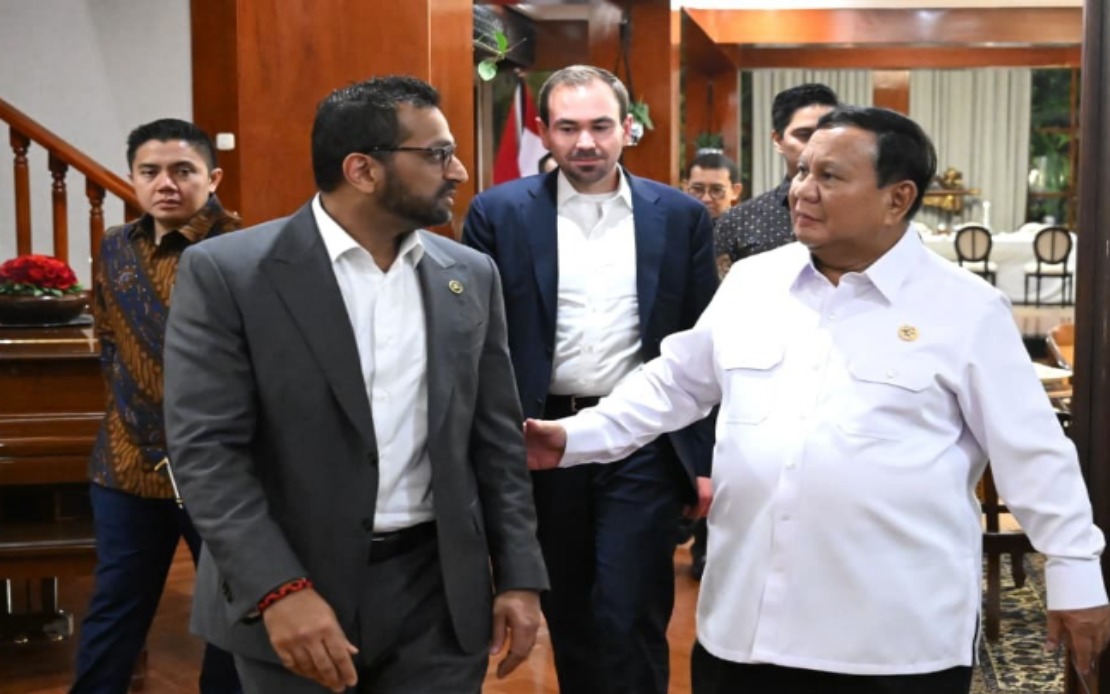
The Federal Bureau of Investigation has handed over a collection of illegally smuggled Indonesian cultural artefacts to the government in Jakarta, underscoring the shifting momentum in efforts to reclaim Southeast Asian heritage held in Western repositories. FBI Director Kash Patel presented the items personally to President Prabowo Subianto during an official visit to the presidential palace in Kertanegara on Wednesday, a symbolic gesture that elevated what might otherwise be a routine administrative transfer into a statement of bilateral commitment. The handover represents the latest tangible result of an expanding partnership between Washington and Jakarta on cultural recovery, a domain where diplomatic gains can be measured in reclaimed objects and restored heritage.
Culture Minister Fadli Zon framed the repatriation within a broader narrative of cultural sovereignty, characterising the return of these artefacts as essential to Indonesia's efforts to reassert control over its dispersed heritage. The minister outlined an ambition to deepen the relationship with the FBI beyond this single transaction, suggesting that Indonesian officials view the Bureau as a potential institutional ally in the larger project of locating and recovering culturally significant items held across American museums, private collections, and storage facilities. This framing matters because it positions the bilateral relationship not merely as law enforcement cooperation but as a partnership rooted in shared recognition that cultural objects carry intrinsic value to the societies from which they originate.
The returned items trace their origins to Papua and the surrounding regions, encompassing artefacts connected to the Dani and Asmat communities as well as populations centred around Lake Sentani. These geographic and cultural anchors are significant, as they ground the repatriation in the lived heritage of specific Indonesian societies rather than treating the items as abstract historical curiosities. The provenance research that preceded the return established a clear chain of illegal trafficking, a process that Fadli characterised as foundational to Indonesia's assertion of legitimate ownership claims. Such forensic work on provenance has become increasingly sophisticated globally, allowing authorities to distinguish between legally acquired collections and those obtained through illicit channels, and Indonesia's willingness to engage in this labour underscores its institutional capacity in heritage recovery.
The FBI's involvement in this process reflects a broader American commitment to addressing cultural property crimes, a domain where the Bureau has developed specialised expertise over decades. Previous collaborations between the Indonesian government and the Bureau have yielded recoveries of bronze statues and other artefacts looted from archaeological sites and cultural repositories. These successes have accumulated into a track record that Fadli referenced in his public statements, suggesting that each recovery builds institutional confidence in future collaborative efforts. The consistency of FBI engagement signals that such partnerships are not one-off diplomatic gestures but rather embedded in American law enforcement priorities, which has implications for other Southeast Asian governments seeking to recover their own dispersed heritage.
The decision to display the repatriated artefacts at the National Museum carries pedagogical significance for Indonesia's cultural narrative. By making these items publicly accessible, the government transforms them from abstract legal claims into tangible evidence of national heritage visible to millions of visitors annually. This curatorial choice also reinforces a message about the state's role in protecting and presenting its cultural patrimony, a particularly important symbolic function in a country where education about indigenous and regional heritage remains contested terrain. The National Museum's status as an official institution lends governmental authority to the objects' significance and their narrative place within Indonesian history.
Indonesian officials' expressed hope for strengthened cooperation reflects a recognition that the work of cultural recovery remains far from complete. Substantial collections of Southeast Asian artefacts remain dispersed across American and European institutions, held in contexts that often lack transparent documentation of their acquisition histories. The Indonesian government's mobilisation of the State Secretariat and Ministry of Foreign Affairs alongside the Culture Ministry in this endeavour suggests a whole-of-government approach that treats cultural repatriation as a matter of diplomatic and national importance. This institutional coordination has become increasingly common among Southeast Asian states seeking to recover heritage, indicating a regional shift in how governments prioritise cultural property claims.
The repatriation dynamic also intersects with broader questions about historical justice and the legacy of colonialism in Southeast Asia. Many artefacts now held in Western institutions were collected or acquired during periods of colonial administration or in its immediate aftermath, when power asymmetries between Western collectors and local populations were pronounced. The return of these items can be understood as part of a long-delayed reckoning with those historical power imbalances, though the process remains gradual and dependent on the institutional willingness of holding countries to engage in restitution. Indonesia's success in securing the cooperation of a major US law enforcement agency may serve as an encouraging precedent for other Southeast Asian nations pursuing similar claims.
The FBI's institutional capacity to investigate trafficking networks and recover stolen cultural property extends beyond repatriation alone, potentially offering technical assistance and intelligence-sharing that could help Indonesian authorities identify and intercept other smuggled items before they enter Western collections. Such capacity-building dimensions of the bilateral relationship may prove as significant as individual artefact recoveries, as they strengthen Indonesia's domestic ability to combat illicit cultural property trafficking at source. The involvement of senior officials like Patel in the handover ceremony also signals that the FBI leadership views these issues as sufficiently important to merit executive-level attention, which can translate into sustained institutional priority and resource allocation.
Looking forward, the Indonesian government's articulation of intentions to expand this cooperation suggests the beginnings of a more systematic approach to heritage recovery. Rather than treating repatriations as episodic successes, Jakarta appears intent on establishing frameworks and mechanisms that could facilitate ongoing returns. This shift in approach aligns with international trends toward formalised repatriation agreements and permanent mechanisms for addressing historical claims, seen in similar arrangements negotiated by other nations with major museum-holding countries. The presence of diplomatic infrastructure and political will on both sides creates conditions potentially conducive to broader bilateral collaboration on cultural property issues.

