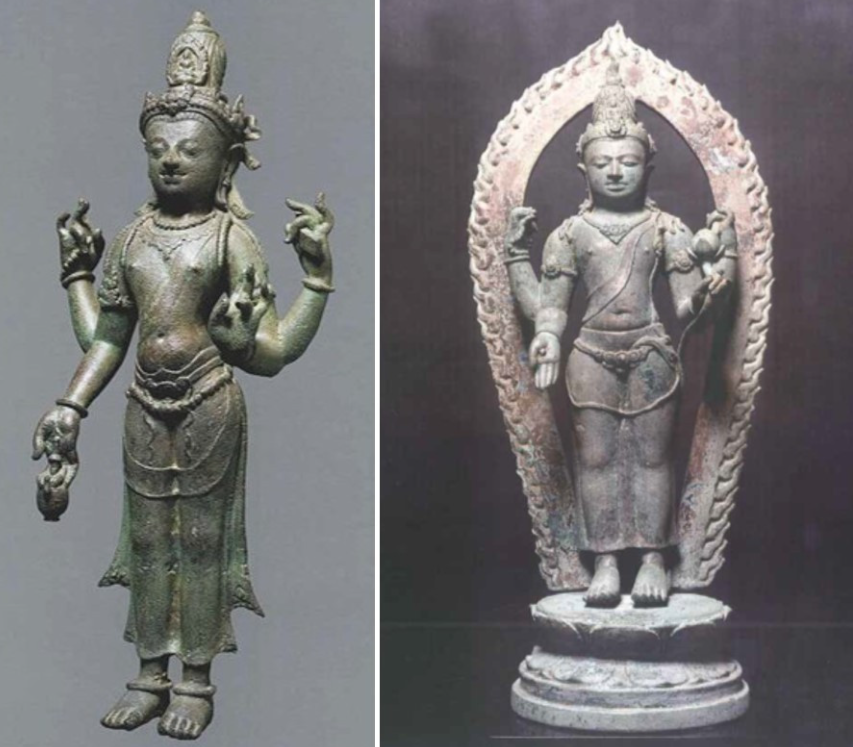
Indonesia has received two priceless eighth-century bronze statues that were looted from its archaeological sites decades ago, marking another significant victory in the ongoing battle against international antiquities trafficking. The repatriation, which took place at a formal ceremony at the Indonesian Consulate in New York last week, represents a triumph for law enforcement agencies working to dismantle sophisticated networks that have systematically pillaged Southeast Asia's cultural heritage and channelled stolen artefacts to wealthy collectors and institutions worldwide.
The two sculptures depict Avalokiteshvara, a four-armed bodhisattva revered in Buddhist traditions as a symbol of compassion and mercy. Their recovery traces back to investigations into Douglas Latchford, a British antiquities dealer whose decades-spanning career became intertwined with the systematic looting of Cambodian temples and Southeast Asian archaeological sites. Although Latchford passed away in 2020 before facing trial on trafficking charges filed in 2019, his network continued to operate as a focal point for stolen cultural property entering the international art market. The statues had been trafficked to the United States through Latchford's operations based in Bangkok, where he had established himself as a central figure in the illicit Khmer antiquities trade.
Latchford's operation involved a calculated deception strategy to obscure the criminal origins of stolen objects. Between 2003 and 2007, he sold the Indonesian bronze statues alongside other looted Southeast Asian pieces to an American collector, deliberately withholding information about their true provenance and fabricating documentation to legitimise their presence in the legitimate art market. This methodical concealment allowed stolen artefacts to circulate among private collectors and major museums with apparent legitimacy, transforming looted cultural property into seemingly legitimate acquisitions. The US Attorney for the Southern District of New York pursued the case vigorously, viewing antiquities trafficking as a form of organised crime that enriches criminals while devastating source countries deprived of irreplaceable heritage.
The breakthrough came when a US collector, presumably the individual who had acquired the statues from Latchford, voluntarily surrendered the works in 2021 along with 33 other Cambodian and Southeast Asian antiquities. This voluntary cooperation represents an important development in enforcement efforts, suggesting growing awareness among collectors that purchasing looted artefacts carries legal and ethical risks. The collector's decision to surrender the objects avoided prolonged legal proceedings and demonstrated the effectiveness of combining prosecution with public education about the consequences of trading in stolen cultural property. Such voluntary returns have become increasingly common as museums and private holders reassess their collections and withdraw items with questionable provenance.
US Attorney Jay Clayton emphasised at the repatriation ceremony that antiquities trafficking represents a form of cultural theft that demands sustained law enforcement attention. His remarks reflected the American government's commitment to deploying resources alongside international partners to track looted property, pursue perpetrators, and facilitate the return of stolen cultural heritage to source nations. The partnership between the US Attorney's Office and Homeland Security Investigations has proven particularly effective, combining investigative capacity with the ability to pursue civil and criminal remedies against traffickers and their accomplices. This approach acknowledges that antiquities trafficking rarely operates in isolation but typically forms part of broader organised criminal networks involving money laundering, fraud, and other transnational offences.
Latchford's case illuminates the mechanics of systematic cultural looting that characterised the illicit Khmer antiquities market for over four decades. His transformation from dealer to central figure in one of Southeast Asia's largest antiquities trafficking operations reveals how individual entrepreneurs with expertise in art history and international trade can orchestrate the wholesale plunder of archaeological heritage. His death in 2020 did not end the recovery process; instead, his daughter eventually agreed to return his collection—valued at more than US$50 million—to Cambodia, a decision that unlocked investigations into numerous institutions and collectors holding objects originally acquired through his network. The ripple effects of this case continue expanding as museums and private collectors across the United States, Europe, and Australia conduct provenance reviews and repatriate Khmer artefacts.
For Indonesia specifically, this repatriation follows an earlier 2024 return of three important cultural objects valued at approximately Rp6.5 billion that had similarly been trafficked through American networks. That earlier repatriation involved a distinct trafficking operation centred on Indian-American dealer Subhash Kapoor and his associate Nancy Wiener, whose Manhattan-based Art of the Past gallery served as a distribution point for looted antiquities sourced from multiple countries across Asia. The objects returned in 2024 included a Majapahit-period stone relief, a seated bronze Buddha, and a standing bronze Vishnu statue, demonstrating that Indonesia's cultural losses extend across multiple religious traditions and historical periods. The Kapoor investigation also resulted in the recovery of 27 Cambodian artefacts, illustrating how trafficking networks operating under different management often source stolen property from multiple countries, maximising profit through geographic diversification.
The broader Kapoor investigation represents an unprecedented scale of antiquities trafficking disruption. Between 2011 and 2023, investigators from the Manhattan District Attorney's Office and the US Department of Homeland Security recovered more than 2,500 antiquities allegedly trafficked through Kapoor's network, with a combined estimated value exceeding $143 million. These figures underscore the enormous financial stakes involved in the illicit antiquities trade and explain why sophisticated criminals continue investing resources in looting, trafficking, and laundering stolen cultural property despite legal risks. The concentration of such wealth in a single trafficking operation suggests that enforcement efforts, while significant, have intercepted only a portion of total illegal flows.
These repatriations carry particular significance for Southeast Asia, where rapid economic development and ongoing political instability in some regions have created conditions favouring systematic archaeological looting. The region's extraordinary archaeological heritage—encompassing ancient kingdoms, temple complexes, and cultural sites spanning millennia—attracts international demand from wealthy collectors, museums seeking to build comprehensive collections, and investors viewing antiquities as alternative assets. However, looting destabilises archaeological contexts, destroying irreplaceable historical information and depriving communities of physical connections to their ancestral past. When objects are removed through illicit excavation, the loss extends beyond the artefacts themselves to the broader understanding of cultural and historical development that proper archaeological documentation provides.
Malaysia and other Southeast Asian nations should view these repatriations as models for pursuing their own stolen cultural property and strengthening legal frameworks against trafficking. The success of American law enforcement reflects dedicated specialised units, cooperation between federal and local agencies, and willingness to pursue cases requiring sustained investigation and international coordination. Many Southeast Asian countries lack equivalent investigative infrastructure, creating vulnerabilities that traffickers exploit. Building capacity for provenance research, establishing alert systems for artefacts entering international markets, and training law enforcement on antiquities trafficking techniques would enhance regional ability to protect cultural heritage. Additionally, Southeast Asian governments should strengthen partnerships with Western law enforcement, recognising that stolen artefacts typically flow toward wealthy markets in North America, Europe, and increasingly East Asia.
The voluntary nature of the collector's 2021 return demonstrates how public transparency regarding looted objects can encourage holders to regularise their positions without facing criminal prosecution. When museums and auction houses publish information about recovered artefacts and their trafficking histories, collectors holding similar objects from questionable sources face pressure—both legal and social—to cooperate with authorities. This dynamic has contributed to an acceleration in repatriations across major Western institutions, as boards and curators reassess collections and withdraw objects with problematic provenance. For source countries like Indonesia, this trend offers opportunities to recover cultural property through negotiation and public diplomacy, supplementing formal legal proceedings that often prove lengthy and expensive.
Moving forward, sustained enforcement against antiquities trafficking requires recognising it as a serious transnational crime deserving resources comparable to drug trafficking or human smuggling investigations. The financial scale of the Kapoor operation and the multi-decade span of the Latchford network demonstrate that trafficking represents a significant criminal enterprise, not merely the activities of rogues or unscrupulous collectors. Law enforcement agencies, customs authorities, and financial intelligence units must share information across borders and coordinate investigations targeting trafficking networks at multiple points—from looting at source sites through transit countries to final destinations in wealthy markets. Only through such comprehensive approaches can Southeast Asian nations effectively protect their irreplaceable cultural heritage from the sophisticated networks that have systematically plundered it for generations.

