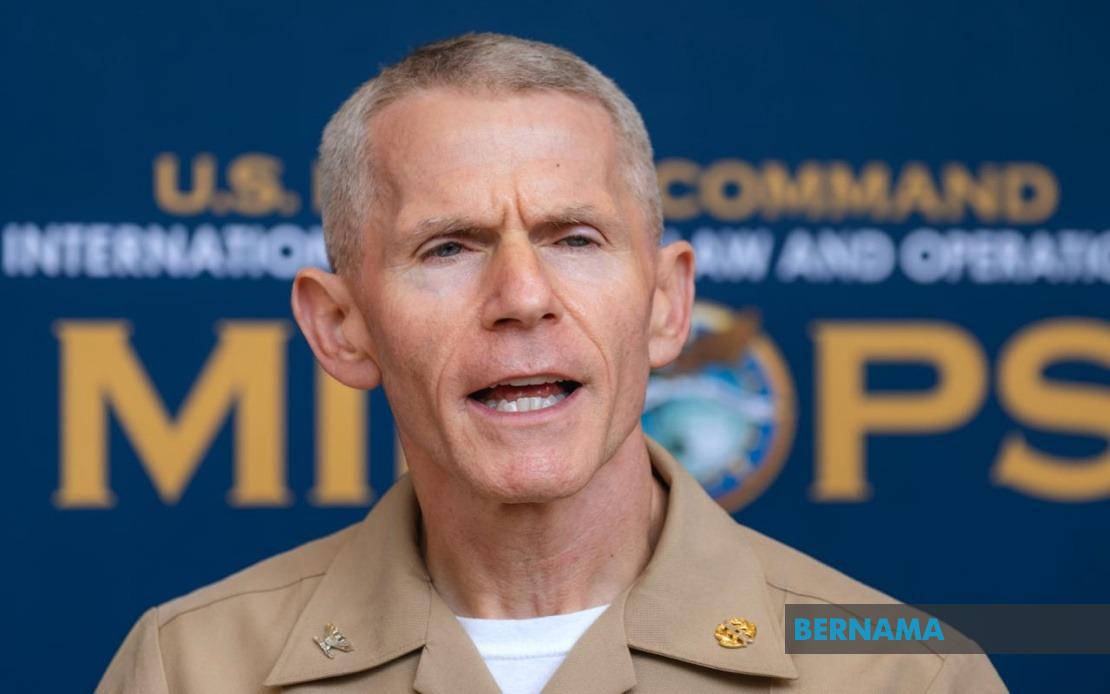
The United States Pacific Command has doubled down on its security commitments in the South China Sea, signalling that American military presence in the strategically vital waterway will remain a cornerstone of its Indo-Pacific strategy. Speaking at an international military law conference in Kuala Lumpur, USPACOM's Staff Judge Advocate Navy Captain Dustin Wallace outlined the command's determination to preserve regional stability through sustained engagement and deterrence of potentially destabilising activities that could threaten the rules-based international order.
Wallace's remarks underscore Washington's view that peace and security in the South China Sea are not merely peripheral concerns but central to broader American strategic interests across the Indo-Pacific. The command frames its role as a guarantor of principles that have underpinned regional prosperity for decades: freedom of navigation and freedom of commerce. These principles, Wallace emphasised, are foundational to maintaining the sovereign equality and sovereign rights that all nations, large and small, depend upon for their security and economic wellbeing. This framing represents a deliberate effort to position American military operations as protective rather than provocative, designed to preserve an open international system rather than challenge any particular nation.
What distinguishes USPACOM's current approach is its emphasis on differentiated engagement across Southeast Asia. Rather than adopting a one-size-fits-all policy toward ASEAN, Wallace indicated that the command recognises each member state possesses distinct strategic priorities, geographic concerns, and national interests. This tailored approach acknowledges that Vietnam, the Philippines, Malaysia, Indonesia, and other ASEAN nations face different maritime challenges and harbour varying perspectives on great power competition in the region. By pledging to identify and respond to each country's specific sovereign interests, USPACOM appears to be attempting to build a more resilient coalition of partners rather than demanding unified positions on contentious issues.
The emphasis on ASEAN centrality in regional security architecture reflects a broader American strategy to maintain the bloc's relevance and agency amid growing Chinese assertiveness. Wallace's declaration that USPACOM "strongly supported ASEAN centrality" carries particular weight given rising concerns that the grouping's consensus-based decision-making processes have been tested by Beijing's efforts to prevent unified ASEAN positions on South China Sea disputes. By positioning itself as a defender of ASEAN's central role rather than a challenger to it, Washington seeks to align its interests with those of Southeast Asian governments concerned about maintaining their own space for manoeuvre in an increasingly competitive strategic environment.
The context for these statements includes the 37th International Military Law and Operations Conference, a gathering that brings together over 300 military leaders, legal experts, policymakers and scholars from more than 30 nations. Hosted by USPACOM in cooperation with Malaysia's Defence Ministry and armed forces, the conference's theme—"From the Seabed to Space: Advancing Security, Freedom, and Prosperity for All Across the Indo-Pacific"—reflects the expanding scope of regional security challenges beyond traditional maritime concerns. The inclusion of space-related security issues signals recognition that future competition in the Indo-Pacific will extend far beyond surface vessels and coastal disputes.
For Malaysian readers, USPACOM's statements hold particular relevance given Malaysia's complex position in South China Sea geopolitics. As a coastal nation with maritime interests extending into contested waters, Malaysia must balance relationships with the United States, China, and its ASEAN peers. The American commitment to freedom of navigation directly relates to Malaysian shipping interests and energy security, given Malaysia's dependence on regional trade routes. Similarly, Malaysia's hosting of this military law conference underscores its diplomatic role in bringing regional and international stakeholders together to discuss rules-based approaches to maritime security.
The invocation of international law and the rules-based order represents more than rhetorical flourish. For Southeast Asian nations locked in maritime disputes with larger powers, international legal frameworks provide the primary mechanism through which smaller countries can assert their rights and seek redress. USPACOM's emphasis on sovereign equality and sovereign rights thus carries concrete implications for how disputes over maritime boundaries, fishing rights, and resource extraction in the South China Sea should be resolved. The implicit message is that military might alone should not determine outcomes; instead, international law and negotiated settlements should prevail.
Yet the tension between this idealistic framing and strategic reality remains evident. USPACOM's commitment to deterring "aggression" and "destabilising activity" in the South China Sea must be understood against the backdrop of Chinese naval modernisation and increasing assertiveness in claiming and controlling disputed features. American military operations in the region—including freedom of navigation exercises that transit near features claimed by China—are itself viewed by Beijing as destabilising interference. This fundamental disagreement over what constitutes stability versus aggression underscores the complexity of maintaining regional peace when major powers hold contradictory views of the legitimate use of force and military presence.
The emphasis on building partnerships and strengthening existing relationships reflects recognition among American strategic planners that military superiority alone cannot sustain long-term regional stability without the cooperation and consent of regional powers. By seeking to understand and accommodate the sovereign interests of each ASEAN nation rather than imposing uniform policies, USPACOM signals a degree of flexibility that may help sustain American partnerships even as regional states navigate their own relationships with Beijing. However, this approach also carries risks: if ASEAN nations perceive themselves as being offered insufficient support for their maritime interests, or if American commitment wavers, the strategic fabric holding the current order together could rapidly unravel.
The convergence of military lawyers, operational planners, and policymakers at MILOPS 26 reflects a broader international effort to establish norms and principles governing military conduct in contested spaces. These discussions matter because they shape how states interpret international law, justify military operations, and negotiate disputes. For Malaysia and other Southeast Asian nations, participation in such forums offers opportunities to influence the development of these norms at a time when the rules governing great power competition remain fluid and contested.
Looking forward, USPACOM's sustained commitment to the South China Sea suggests that American military presence in the region will remain a defining feature of Indo-Pacific geopolitics for the foreseeable future. Whether this presence ultimately contributes to stability or intensifies great power tensions will depend significantly on how effectively the command implements its stated intention to work with individual ASEAN nations according to their interests, and how skillfully regional powers manage the inherent contradictions between wanting American security assurances while avoiding entanglement in great power competition. The success of this balancing act will have profound implications not just for the South China Sea, but for the entire region's prosperity and security.

