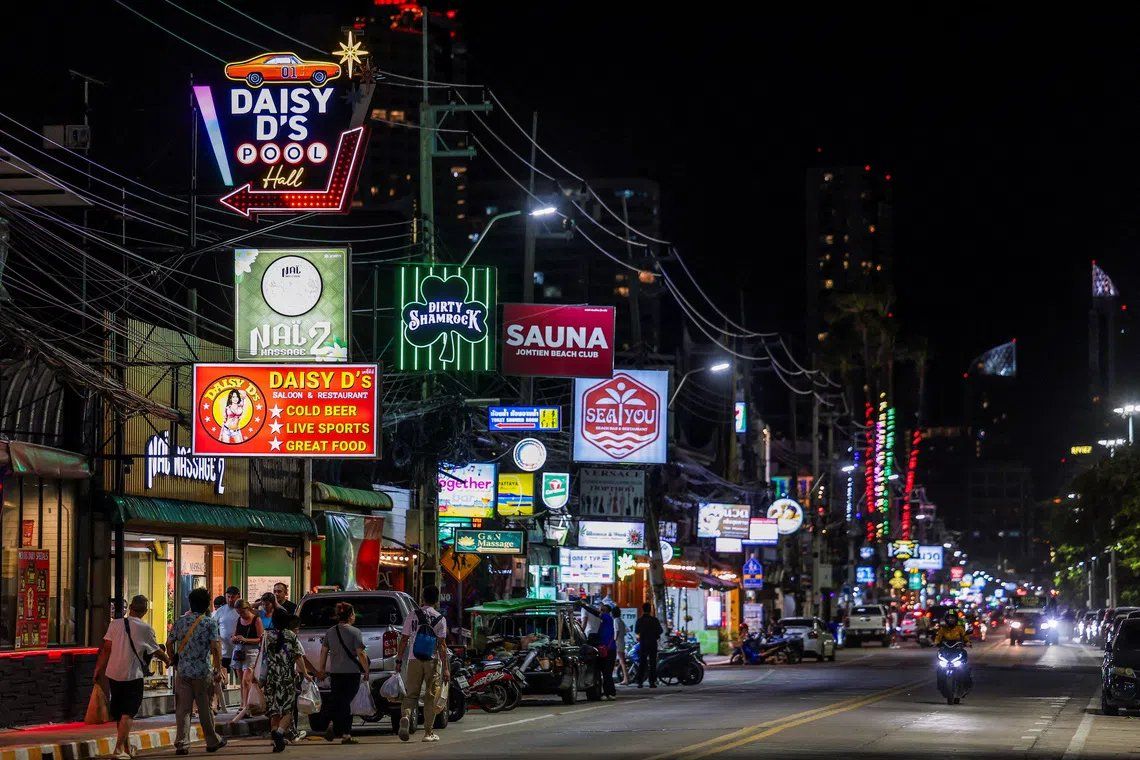
Thailand's resort city of Pattaya is bracing for the arrival of the USS Abraham Lincoln this week, expecting an influx of nearly 5,000 sailors and Marines seeking shore leave after an extended operational deployment spanning over 200 days. The aircraft carrier and its two accompanying vessels will dock at Laem Chabang, adjacent to Pattaya, offering the crew respite from their gruelling mission supporting military operations in the Middle East. For a destination struggling with tourism recovery, the prospect of substantial military spending has generated cautious optimism among local business operators and city authorities.
Yet this anticipated economic windfall carries troubling implications that extend beyond simple commerce. Thai police have intensified enforcement operations ahead of the carrier's arrival, conducting weekend raids that resulted in detention of between 40 to 50 suspected sex workers. Additional patrols will saturate Pattaya's main beachfront and entertainment quarters throughout the sailors' shore leave. Pattaya police chief Anek Srathongyoo acknowledged the fundamental challenge inherent in such crackdowns, noting that sex workers operate with sophistication that frequently evades official detection, often transacting in spaces and through methods authorities cannot easily monitor.
Prostitution remains technically illegal throughout Thailand, yet the sex industry operates with remarkable openness across major tourism destinations including Pattaya and parts of Bangkok. This disconnect between law and practice reflects decades of tacit tolerance that has transformed these cities into what the FBI once described as among the world's most prominent sex tourism destinations. The industry has become so entrenched within local economies that authorities face structural obstacles to enforcement, particularly when foreign military personnel with spending power arrive in concentrated numbers.
The USS Abraham Lincoln's journey itself reflects the intensifying strategic competition shaping the Indo-Pacific region. Departing San Diego in November, the carrier was subsequently redirected to support Washington's military posture regarding Iran and Israeli operations in the Middle East, setting a modern record for consecutive days at sea according to Democratic lawmakers. This extended deployment, however, has extracted a human cost. Military-focused reporting this month documented concerning trends aboard the vessel, including suicide attempts and declining morale among personnel, suggesting that crew wellbeing has deteriorated under the strain of prolonged operations without adequate shore leave.
Pattaya's history intertwines directly with American military presence. The city itself evolved from a fishing village into a tourism centre during the Vietnam War, when American servicemen sought recreation during their deployments throughout Southeast Asia. This legacy continues to shape the city's character and economic structure. Mayor Poramase Ngampiches projects that individual sailors could expend between 1,000 to 3,000 baht daily, translating to approximately $30 to $91 per person, contingent on the duration of shore leave and accommodation choices. Shore leave will be staggered, preventing the entire complement from departing vessels simultaneously, which should distribute economic impact across several days.
For a city with over 300,000 hotel rooms, the arrival represents a significant opportunity. Lisa Hamilton, president of the Pattaya Nightlife Business Association, expressed the desperation underlying local enthusiasm, observing that current conditions represent the worst tourism year she has witnessed during her two decades residing in the city. Such statements underscore the genuine economic distress that local operators experience, making the carrier visit a potentially transformative event for hospitality and entertainment businesses dependent on visitor spending.
However, academicians studying the phenomenon caution against viewing the economic stimulus in isolation. Pipatpong Fakfare, an associate professor at Bangkok University's School of Humanities and Tourism Management, emphasised that increased customer flows into Pattaya's sex industry create conditions that facilitate sexual exploitation and sexually transmitted disease transmission. The concentration of military personnel with disposable income and limited time ashore historically correlates with heightened vulnerability among sex workers and increased incidence of coercion and trafficking.
These concerns acquire additional weight given documented mental health challenges among personnel aboard the Abraham Lincoln. The psychological strain evident in reports of suicide attempts suggests that some sailors arriving in Pattaya may be experiencing heightened vulnerability themselves. This convergence—stressed military personnel seeking escape, vulnerable sex workers under economic pressure, and minimal enforcement capacity—creates an environment where exploitation can flourish with reduced accountability.
Thanет Supornsahasrungsi, president of the Association of Chonburi Tourism Federation, noted that overall commercial benefit depends partly on where military personnel direct their spending, as some may travel to Bangkok rather than remain in Pattaya. This uncertainty complicates revenue projections for local businesses. The tourism federation's hedged optimism reflects realistic acknowledgment that while carrier visits offer near-term economic stimulus, the sustainability and qualitative nature of that benefit remain contested questions.
For Malaysian observers and regional policymakers, Pattaya's situation illustrates broader tensions emerging across Southeast Asia's tourism-dependent economies. As military partnerships deepen and force deployments increase, host communities face pressure to accommodate large concentrations of service personnel while simultaneously managing social costs including human trafficking, exploitation, and deteriorating public health outcomes. The Abraham Lincoln's visit, framed by authorities as a mutually beneficial military and commercial arrangement, thus exemplifies the complex calculations that tourism-reliant nations must navigate when balancing economic necessity against social and humanitarian concerns.

