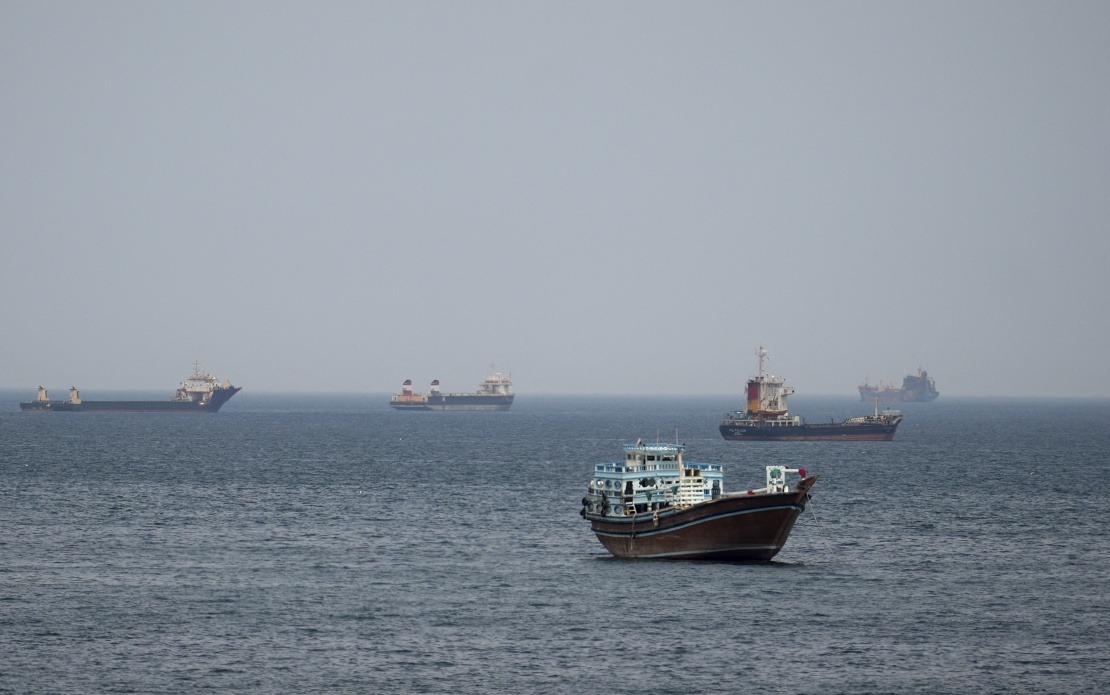
The United States military has maintained an active escort operation through one of the world's most critical maritime chokepoints, with American forces shepherding over 800 commercial vessels through the Strait of Hormuz since early May, according to a statement from US Central Command released Thursday. The successful transits have included the movement of approximately 380 million barrels of crude oil through the waterway, underscoring the strategic importance of keeping this vital international trade route operational even as geopolitical tensions in the region mount.
For Southeast Asian nations, particularly those dependent on stable energy supplies and global trade connectivity, this operational commitment carries significant implications. Malaysia, along with other regional economies heavily reliant on oil imports and international maritime commerce, faces direct consequences from any disruption to Hormuz traffic. The strait serves as a gateway through which roughly one-fifth of the world's petroleum passes annually, making uninterrupted transit essential for regional economic stability and energy security across Asia-Pacific markets.
The announcement emerged at a moment when the fragile understanding between Washington and Tehran appeared increasingly strained. Tensions escalated sharply over the preceding 48 hours, with Iran conducting attacks against three commercial vessels operating within the strategic waterway. The incidents prompted swift American military responses, creating a cycle of tit-for-tat strikes that heightened concerns about potential wider conflict in the Gulf region.
Iran's response came in the form of coordinated military strikes targeting American installations across multiple countries in the region. Military infrastructure in Bahrain, Kuwait, Qatar and Jordan came under Iranian attack Thursday, framed as retaliation for previous overnight American bombardments. This pattern of escalating exchanges demonstrates how quickly the situation can deteriorate, despite the continuation of commercial shipping operations through the contested waters.
The operational success in maintaining vessel transits reflects substantial American military resources deployed to manage maritime security in the Gulf. The magnitude of the escort operation—facilitating over 800 passages in roughly two months—illustrates the scale of naval commitment required to sustain commerce through waters threatened by sporadic hostile actions. For regional observers, this American presence represents both a stabilising force and a potential flashpoint, depending on how future confrontations develop.
The crude oil volume transported, reaching 380 million barrels, underscores the economic stakes involved in keeping shipping lanes secure. Any significant disruption to these flows would reverberate through global energy markets and particularly impact Asian economies, where energy demand remains robust and alternative supply sources are limited. Malaysia's petrochemical industry, refineries, and energy-dependent manufacturing sectors would feel immediate pressure from any extended closure or significant slowdown in Hormuz traffic.
While the US military has successfully managed to prevent major shipping disruptions thus far, the sustainability of this approach faces growing uncertainty. The recurring incidents, though contained to relatively isolated attacks on individual vessels, signal the underlying volatility that could escalate into broader confrontation. The willingness of all parties to continue military operations despite commercial traffic suggests a calculated approach to avoiding catastrophic escalation, yet the margin for miscalculation remains dangerously narrow.
From a Southeast Asian perspective, the region's strategic interests lie in maintaining the status quo of open maritime passage. Economic growth across ASEAN depends significantly on unimpeded energy access and the ability to participate in global trade networks. Any fundamental disruption to Hormuz operations would necessitate alternative routing—potentially through Indonesian straits and other Southeast Asian waterways—placing additional burden on regional chokepoints and complicating maritime governance in an area already facing competing territorial claims and security challenges.
The US Central Command's public documentation of these escort operations serves multiple purposes: demonstrating capability and commitment to regional allies, signalling resolve to adversaries, and reassuring global energy markets of continued transit capacity. This communication strategy reflects Washington's investment in maintaining both the physical security of shipping lanes and the broader strategic perception of American ability to manage regional stability.
Looking forward, the sustainability of current arrangements depends on whether the underlying political tensions between Washington and Tehran can be managed without allowing tactical incidents to trigger wider conflict. For Southeast Asian nations monitoring these developments, the stability of Hormuz operations remains a critical variable in their own economic planning and energy security strategies. Any future escalation that genuinely threatens transit capacity would force regional policymakers to confront uncomfortable choices about energy alternatives, supply diversification, and strategic alignment.

