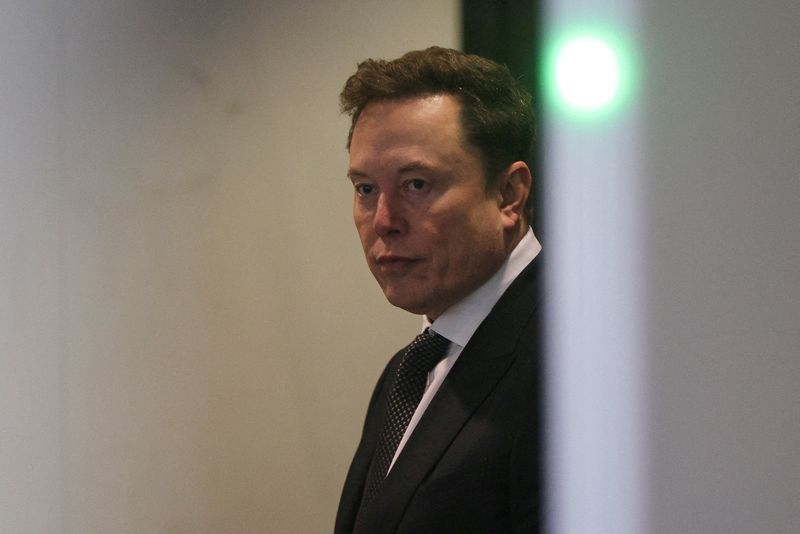
A federal judge in Washington, D.C., has formally approved the U.S. Securities and Exchange Commission's settlement with Elon Musk regarding his 2022 Twitter share purchases, yet the decision was delivered with unmistakable reservations. U.S. District Judge Sparkle Sooknanan on Wednesday signed off on the accord while simultaneously flagging what she characterized as troubling "red flags," signalling that her approval was reluctant rather than wholehearted endorsement of the arrangement.
The settlement requires a trust established in Musk's name to pay $1.5 million to resolve allegations that he delayed disclosing his early Twitter acquisitions during March and April 2022—a delay the SEC contends lasted eleven days longer than required by securities law. The regulator estimated that this disclosure lag enabled Musk to purchase shares at suppressed prices, potentially netting him approximately $150 million in gains before the market adjusted to his significant shareholding. Musk has maintained that the delay was inadvertent rather than deliberate market manipulation, a position that appears to have carried weight in negotiations leading to the settlement.
Judge Sooknanan's written decision articulated a fundamental tension inherent in judicial review of regulatory settlements. She noted that while courts cannot simply rubber-stamp such agreements without scrutiny, neither do they function as comprehensive ombudsmen capable of second-guessing every enforcement decision made by executive agencies. This tension proved particularly acute in Musk's case, given his extraordinarily high public profile and his wealth—currently estimated by Forbes at $927.2 billion—which renders him arguably the world's most prominent businessman and one of its most polarizing figures.
The judge's most pointed criticism focused on what she characterized as potentially preferential treatment afforded to Musk. Sooknanan questioned why the SEC abandoned its traditional demand that defendants disgorge unlawful profits to compensate harmed investors, a standard enforcement tool in similar securities cases. The agency's explanation that it had not historically pursued disgorgement in comparable situations drew skeptical scrutiny from the judge, who suggested this rationale raised serious questions about the settlement's fundamental propriety.
Another dimension of Sooknanan's concerns involved the mechanics of the settlement structure itself. Rather than requiring Musk personally to acknowledge wrongdoing or pay penalties, the arrangement designated a trust in his name as the financial vehicle for the $1.5 million payment. This structure allowed Musk to publicly maintain that he had been exonerated, a distinction that troubled the judge. She expressed explicit wonder whether other securities law violators could expect comparable treatment or whether Musk had negotiated what amounted to a bespoke arrangement unavailable to ordinary defendants.
The timing of the settlement adds another layer of context relevant to Malaysian and Southeast Asian readers assessing regulatory capture concerns. The deal was announced on May 4, following the departure of Margaret Ryan, the SEC's enforcement chief, who had vacated her position after merely six months in office. Ryan's departure reportedly stemmed from disagreements with agency leadership over the direction of enforcement priorities, raising questions about whether regulatory will to pursue Musk more aggressively shifted after her exit. The judge pointedly asked whether SEC lawyers conducting the actual litigation had been adequately involved in settlement negotiations or whether political considerations had superseded normal enforcement protocols.
The underlying factual dispute, while seemingly technical, carries implications for how major shareholders must disclose their accumulating stakes in public companies. Securities regulations require timely disclosure precisely to protect market efficiency and ensure retail investors possess equivalent information to sophisticated insiders. Musk's eleven-day delay, however characterized, compressed the window during which ordinary investors could adjust their positions based on knowledge that a billionaire was quietly accumulating Twitter shares at significant scale. That the delay potentially generated $150 million in gains underscores why disclosure rules exist and why their violation matters.
Musk's subsequent acquisition of Twitter—which he completed in October 2022 for $44 billion before rebranding it as X—has proven consequential far beyond financial markets. The platform has become central to global information flows, political discourse, and public debate. His ownership has triggered both fierce criticism over content moderation decisions and vigorous defense of his free speech absolutism. For Malaysian readers, Musk's control of this influential communication channel carries particular significance given Malaysia's own complex relationship with digital speech regulation and online platform governance.
The judge's decision, while technically approving the settlement, essentially invited public and electoral accountability for what she hinted may have been a regulatory failure. By noting that citizens should "decide at the ballot box" whether executive officials have adequately held Musk accountable, Sooknanan acknowledged that courts possessed limited tools to remedy potential enforcement inadequacy. This observation proves particularly relevant given that Musk maintains close associations with the Trump administration—he served as an adviser to the president—while the judge herself was appointed by former President Joe Biden, adding potential partisan dimensions to the underlying dispute.
The SEC defended its settlement by emphasizing that the $1.5 million penalty represented the largest of its type and that the agreement included an injunction effectively binding Musk when acting through the trust structure, described by the agency as an investment vehicle through which he manages substantial wealth. The regulator specifically denied that collusion influenced the settlement terms, though the judge's skepticism suggested such denials carried limited persuasive force in her assessment.
For investors and regulators throughout Southeast Asia, this case illustrates enduring challenges in policing powerful billionaires whose influence extends across industries and continents. Musk's simultaneous leadership of Tesla, SpaceX, and X—each operating in regulatory environments ranging from automotive to aerospace to digital communications—creates unprecedented concentration of power in a single individual. The SEC settlement's apparent leniency may embolden other wealthy executives to calculate that regulatory enforcement, particularly regarding disclosure violations, carries manageable costs relative to potential financial gains.
The decision also reflects broader institutional anxieties about regulatory authority in an age of billionaire entrepreneurs who accumulate influence matching or exceeding that of nation-states. Judge Sooknanan's expressed discomfort with the settlement, despite her formal approval, suggests that American courts themselves feel constrained by legal frameworks that may inadequately address cases involving figures of Musk's stature and political connections. Whether other democracies, including Malaysia, will develop more robust mechanisms for holding such individuals accountable remains an open question with significant implications for global capital markets and digital governance.

