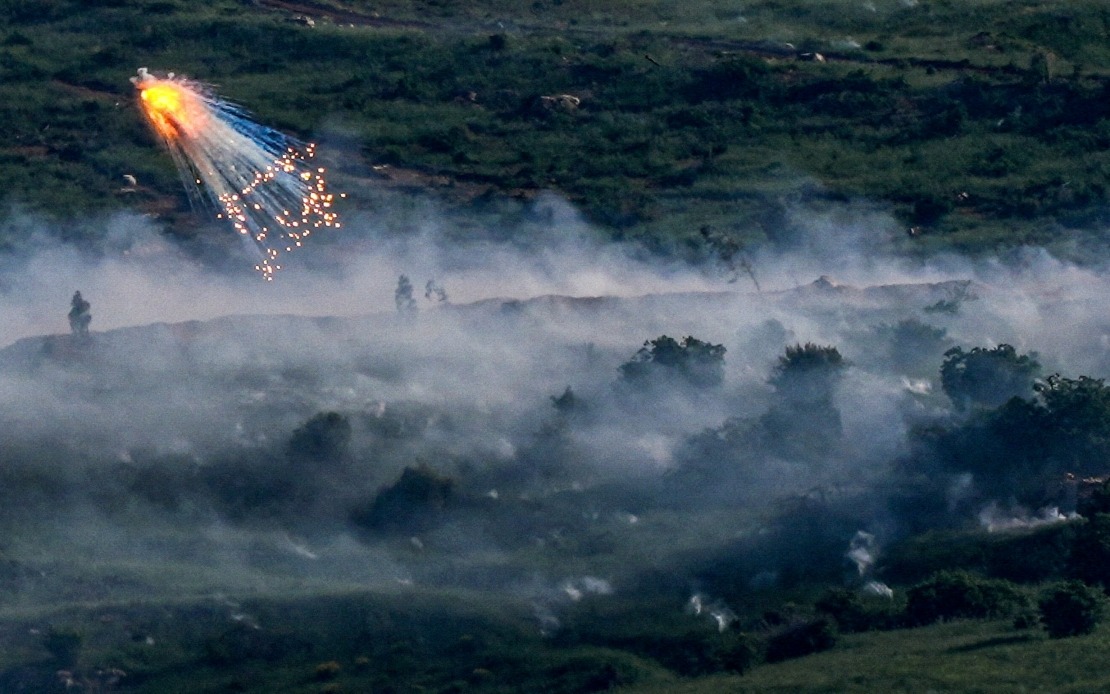
The United States has issued formal travel advisories cautioning its nationals against visiting Lebanon and the northern regions of Israel, citing what officials describe as "high tensions" and an unpredictable security landscape across West Asia. The warning, delivered through diplomatic channels in both Beirut and Jerusalem on Saturday, represents a significant step in escalating public health and safety alerts for Americans in one of the world's most politically fraught regions.
The US Embassy in Beirut framed the advisory in notably stark terms, emphasizing that "due to high tensions in the West Asia, the security environment remains complex with the potential for unforeseen escalation." This language signals deep concern among American diplomatic officials that the current situation could deteriorate rapidly without warning, leaving civilians exposed to sudden violence or military action. The embassy's decision to issue such a formal statement underscores Washington's assessment that conditions have crossed a critical threshold requiring immediate public notification.
The Jerusalem embassy simultaneously issued parallel guidance, instructing Americans to refrain entirely from travel to Gaza and northern Israel, while also recommending against movement through West Asian territories more broadly. However, the advisory made a narrow exception for the Taba crossing on the Egyptian border, suggesting that American diplomatic staff have assessed this particular crossing point as relatively secure compared to other regional transit routes. The distinction indicates a granular understanding of security conditions across the territory, with officials identifying specific chokepoints where risk remains manageable.
These warnings arrive amid a broader pattern of deteriorating security conditions throughout the Middle East, where escalating friction between the United States and Iran has created an environment of mutual suspicion and periodic military confrontations. The two powers have exchanged attacks in recent months, raising concerns among regional analysts and international observers that miscalculation or deliberate provocation could trigger a wider conflict involving multiple state and non-state actors.
In a potential stabilizing development, Pakistan brokered a memorandum of understanding between Washington and Tehran in June, intended to de-escalate tensions and establish foundations for a durable peace framework. However, the ongoing pattern of hostile actions despite this agreement suggests that substantive implementation remains problematic, and both capitals continue to regard the other with deep mistrust. The discrepancy between diplomatic agreements and ground-level security realities highlights the fragility of current regional arrangements.
For Malaysian travellers and businesses with interests in these regions, the American advisory carries significant implications. As a major regional economic power with substantial expatriate communities throughout the Middle East, Malaysia must carefully monitor how escalating conditions might affect its own citizens and commercial operations. Several thousand Malaysians work in Lebanon, Israel, and surrounding areas, primarily in healthcare, education, and service industries, and their safety depends partly on early warning systems and clear guidance from both their own government and that of regional powers.
The timing of this warning also reflects broader concerns about the intersection of Israeli-Palestinian tensions, the ongoing Syrian conflict, and Iran-US rivalry. All three conflict zones maintain active presence in Lebanon, which has become a flashpoint where these regional competitions frequently manifest in localized violence. The presence of Hezbollah, Israeli military forces, and various proxy militias creates a combustible mix where diplomatic miscalculations can quickly transform into kinetic conflict.
For regional stability, the American warning serves as a public signal that Washington views the security situation as having deteriorated beyond acceptable thresholds for civilian presence. Such statements carry weight because they influence not only individual travel decisions but also corporate risk assessments and insurance underwriting practices. International companies operating in these territories often suspend non-essential activities when major powers issue formal travel warnings, effectively creating economic pressure on affected communities.
The advisory also reflects practical concerns about evacuation capabilities and diplomatic resources. If conditions deteriorate into armed conflict, Western embassies become overwhelmed with nationals seeking assistance to leave. By discouraging unnecessary travel beforehand, American officials reduce the scale of potential evacuation operations while simultaneously acknowledging that existing security infrastructure cannot reliably protect American citizens in deteriorating circumstances.
Governments throughout Southeast Asia, including Malaysia, should view this American advisory as an early indicator of potential spillover effects. Regional airlines, shipping companies, and financial institutions operating throughout the Middle East will likely adjust their risk calculations based on these warnings. Insurance premiums for operations in affected areas may increase, and some multinational corporations might reduce their physical presence or redirect investment capital toward less volatile jurisdictions.
The broader strategic implication is that despite diplomatic mechanisms intended to reduce tensions, the underlying structural conflicts driving hostility between regional and international actors remain fundamentally unresolved. The Pakistan-brokered memorandum, while potentially valuable, does not address the underlying competition for influence, the Israeli-Palestinian dispute, or the sectarian tensions that continue fueling conflict. Until these deeper issues receive meaningful attention, travel warnings and military escalation cycles will likely persist.
For Malaysian nationals currently in Lebanon or northern Israel, the advisory suggests reassessing whether remaining in these locations remains prudent. Those with flexibility should consider temporary relocation or departing the region entirely until conditions improve. Business operations should evaluate whether maintaining staff presence serves strategic objectives or simply exposes personnel to unnecessary risk. The American warning, while directed at US citizens, carries clear implications for all foreign nationals in these volatile territories.

