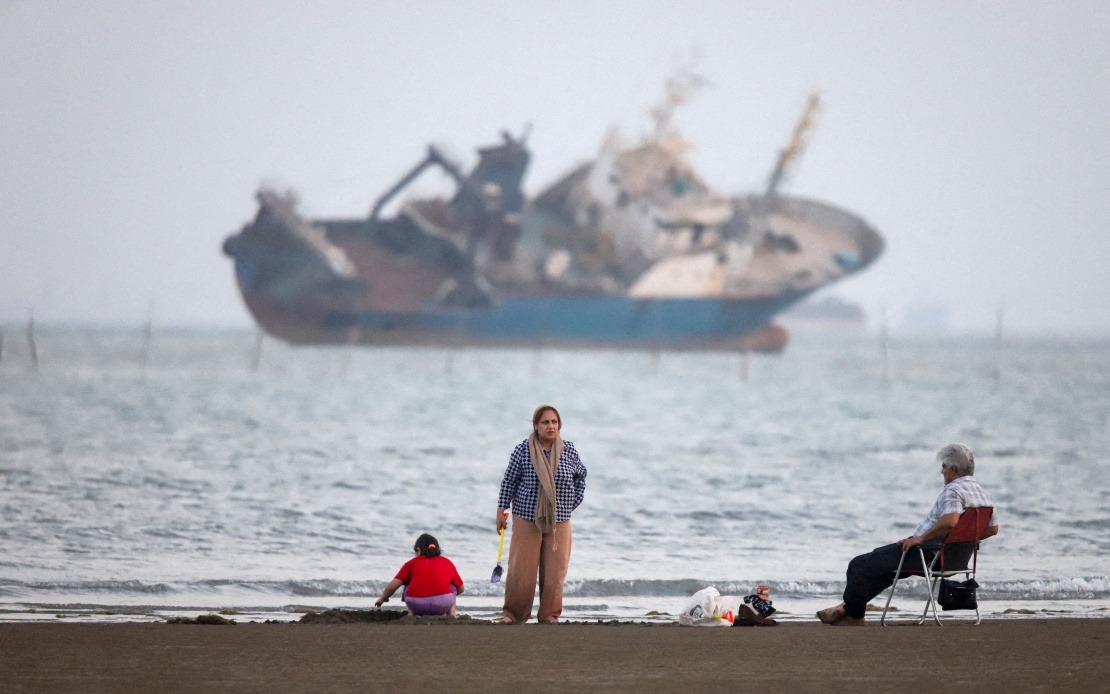
Escalating tensions in one of the world's most strategically important shipping corridors prompted the United States Treasury Department to announce sweeping financial sanctions on Friday targeting entities it alleges maintain close ties to Iran's senior leadership. The action came in response to what Washington characterised as Iranian attacks on commercial vessels transiting the Strait of Hormuz, a waterway through which roughly one-third of global maritime petroleum passes and which holds outsized importance for Southeast Asian energy security and trade flows.
The Office of Foreign Assets Control, the Treasury's sanctions enforcement arm, added several individuals and organisations to its Specially Designated Nationals List, effectively freezing any assets they may hold in US jurisdictions and prohibiting American companies from conducting business with them. Among those targeted was Ali Ansari, described by OFAC as maintaining direct connections to Mojtaba Khamenei, the Supreme Leader's son, and holding significant influence within Iran's Islamic Revolutionary Guard Corps, the state's primary security and military apparatus.
Beyond individual designations, the sanctions targeted three entities operating as shadow exchange houses from Iranian cities. The Mohammad Darbani and Partners Exchange, the Mohsen Khandan and Partners Exchange, and the Lavasani and Partners Exchange all operate as general partnerships based in Iran and function outside formal banking channels, according to US assessments. These informal financial networks have long attracted regulatory scrutiny from Western authorities, who contend they facilitate money laundering, sanctions evasion, and transfers of wealth that benefit entities under international restrictions.
The Treasury also designated Smart Global Limited, a holding company incorporated in Saint Kitts and Nevis in the Caribbean. US officials characterised the entity as a vehicle through which Ansari and associated networks conduct international financial operations, leveraging offshore registration structures to obscure beneficial ownership and complicate enforcement efforts by sanctions regimes.
Iran's Foreign Minister Seyed Abbas Araghchi swiftly rejected the sanctions announcement, arguing that the United States had violated commitments made through a memorandum of understanding. In a statement posted to X, the platform formerly known as Twitter, Araghchi asserted that Iran had upheld its obligations while Washington had repeatedly breached the agreement's terms. The Iranian diplomat's public rebuttal underscores the deteriorating diplomatic engagement between the two nations and the breakdown in mechanisms designed to manage escalation.
Araghchi's reference to paragraph nine of an unnamed memorandum appears to allude to specific commitments regarding sanctions policy, though the precise nature of those obligations remains opaque from public statements. His invocation of "mutual compliance" suggests Iran views recent American actions as unilateral violations of negotiated arrangements, a framing that reflects Tehran's broader narrative about Western nations failing to honour international agreements.
The incident highlights deepening friction over maritime security in the Persian Gulf and adjoining waters. The Strait of Hormuz represents not merely a geographical chokepoint but a focal point for geopolitical competition between the United States, its regional allies including Saudi Arabia and the United Arab Emirates, and Iran. For Malaysia and other Southeast Asian nations reliant on Middle Eastern energy supplies and dependent on unobstructed passage through the strait, such escalations threaten economic stability and reliable access to crude oil and liquefied natural gas.
Shadow exchange houses like those targeted in Friday's sanctions have proliferated across Iran as a mechanism to circumvent international financial isolation. Operating through informal networks of money changers and traders, they enable cross-border transactions without the transparency required of licensed banking institutions. US and international authorities have increasingly focused enforcement efforts on dismantling these networks, recognising their centrality to Iran's ability to sustain economic activity under comprehensive sanctions regimes.
The designation of Smart Global Limited illustrates the globalised dimension of sanctions enforcement. By targeting offshore entities in third countries, the Treasury seeks to close pathways through which sanctioned Iranian actors might otherwise access international financial systems. However, such measures often prove difficult to enforce against shell companies operating in jurisdictions with weak regulatory frameworks, and entities frequently reconstitute themselves under new corporate identities to evade designations.
The timing of these sanctions amid renewed maritime incidents suggests Washington views financial pressure as a complement to broader containment strategy. By targeting the financial infrastructure underpinning Iranian state activities, the Treasury aims to constrain Tehran's capacity to sustain military operations, support proxy forces, and maintain its domestic economy. The simultaneous occurrence of shipping incidents and sanctions announcements reflects the interconnected nature of American Iran policy, combining security responses with economic coercion.
For Malaysian policymakers and regional observers, these developments underscore the fragility of stability in crucial shipping lanes and the extent to which great power competition between the United States and Iran reverberates through global energy markets and maritime commerce. The relentless application of sanctions, coupled with periodic military confrontations, creates persistent uncertainty for commercial operators and energy consumers throughout Southeast Asia who depend on reliable Gulf supplies.
The breakdown in diplomatic channels evident from Iran's immediate rejection of the sanctions announcement raises questions about the feasibility of renewed negotiations or conflict de-escalation mechanisms. Regional powers, including Malaysia's fellow ASEAN members, have historically advocated for restraint and dialogue, yet their influence over events in the Gulf remains limited. The trajectory of US-Iran tensions will thus continue shaping energy prices, shipping insurance costs, and broader regional security dynamics regardless of Southeast Asian preferences for stability.

