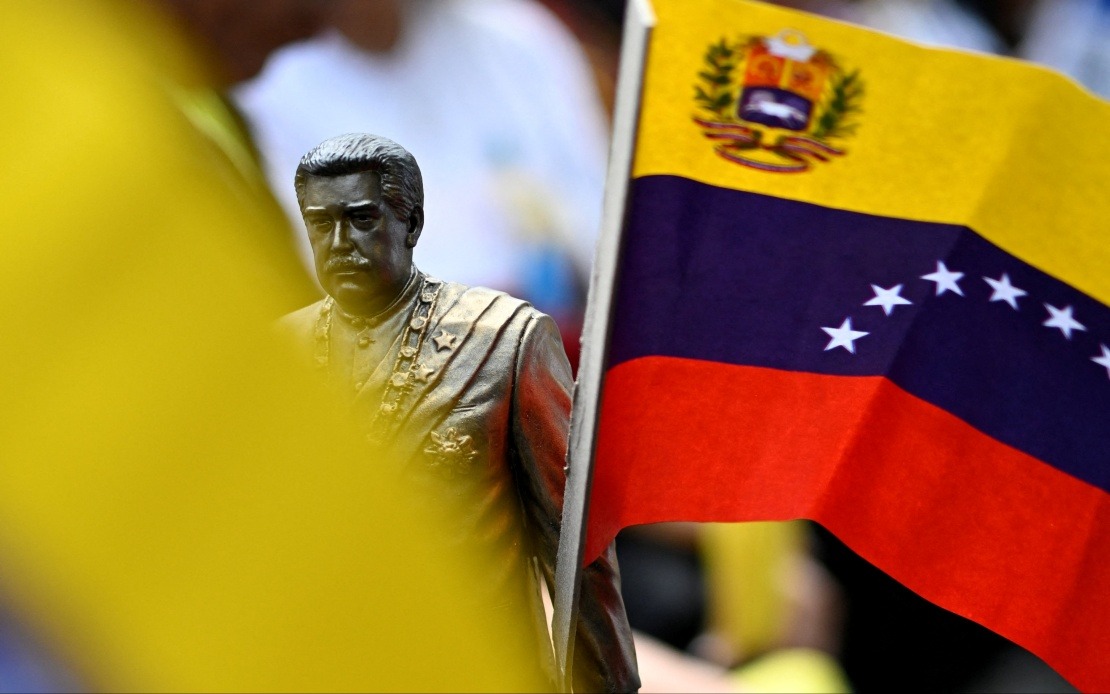
A New York federal judge has set a trial date of June 1, 2027, for Venezuelan President Nicolás Maduro and his wife Cilia Flores following their arraignment this week on narcotics and weapons-related offences. The couple, who have entered not guilty pleas, appeared before Judge Alvin Hellerstein for their third court hearing since the extraordinary circumstances of their detention began in early January, when US military personnel forcibly removed them from Caracas and transported them to New York for prosecution.
The timeline for bringing the Venezuelan leader to trial represents a significant development in a controversy that has roiled international relations and raised fundamental questions about the boundaries of national sovereignty and military intervention. The case itself sits at the intersection of anti-drug enforcement efforts and geopolitical tension between Washington and Caracas, themes that resonate deeply across the Caribbean and Latin American region and carry implications for smaller nations concerned about their own security and independence.
Maduro's legal defence team, led by attorney Barry Pollack, has signalled an aggressive strategy focused on challenging the foundational legitimacy of the prosecution. The defence intends to argue that Maduro, as a sitting head of state, enjoys sovereign immunity from US jurisdiction and therefore cannot be prosecuted in American courts. Should this argument succeed, it would effectively terminate the entire legal proceeding without requiring the Venezuelan leader to mount a defence on the underlying charges. This constitutional argument touches on established international law principles that have long shielded sitting leaders from foreign prosecution.
The circumstances surrounding Maduro's seizure have proven deeply controversial globally. The January 3 military operation, characterised by US authorities as a targeted enforcement action, involved American forces launching what witnesses described as a large-scale strike on Venezuelan territory. The forcible removal of a foreign nation's elected leader from his own country has generated stark criticism from international observers, human rights advocates, and governments that view the operation as a precedent-setting violation of accepted norms governing state conduct.
Since their capture, Maduro and Flores have been held at the Metropolitan Detention Centre in Brooklyn, where they remain incarcerated pending trial. Their legal status as detainees awaiting trial in a foreign jurisdiction has become a lightning rod for protests both within the United States and internationally. The prolonged detention of a sitting president in custody for nearly seven months—effectively confined while facing charges in a legal system he views as neither neutral nor impartial—has amplified accusations that the prosecution serves political rather than purely judicial objectives.
Ouside the Manhattan courthouse during Wednesday's brief hearing, hundreds of demonstrators gathered to voice opposition to both the military operation and the subsequent legal proceedings. The protesters, representing various anti-war and solidarity organisations, held signs and chanted slogans rejecting what they characterised as American imperialism masquerading as law enforcement. Allison Gunderson, a protester from Minneapolis, articulated a widely held concern among activists that the prosecution fundamentally represents an unlawful kidnapping dressed in juridical language—the seizure of a foreign leader through military force followed by trial in the captor's courts.
Tom Burke, representing the Anti-War Action Network's steering committee, drew parallels between the Maduro operation and broader patterns of American military intervention across the globe. He explicitly framed the abduction, detention, and trial as violations of international law, comparing the military seizure to armed robbery and emphasising that international observers worldwide have grown increasingly distrustful of American governmental conduct. His comments reflected a perception, particularly acute among Global South nations, that powerful countries operate according to different rules than those applied to weaker states.
Political analyst Sara Flounders emphasised the temporal dimension of the case, noting that Wednesday marked the two-hundredth day since Maduro's initial seizure. For activists and solidarity movements, this numerical milestone symbolises both the prolonged nature of the detention and the broader pattern of US overseas military operations. Flounders connected the Venezuelan situation to American interventions in Iran and Cuba, suggesting a historical continuity of US efforts to dominate the Caribbean and Latin America through military and legal mechanisms.
The June 2027 trial date represents a compromise between the defence team's desire for expedited proceedings to resolve the sovereign immunity question and prosecutors' evident preference for a more extended timeline. The judge's decision to set the trial nearly three years in the future provides ample time for both sides to conduct discovery, file motions, and develop their arguments. For observers in Southeast Asia and the Pacific, the case carries instructive value regarding how powerful nations might attempt to prosecute leaders from smaller or ideologically opposed states, raising questions about the reliability of international legal institutions when great power interests intersect with formal justice processes.
The charges themselves centre on allegations that Maduro and associated Venezuelan officials engaged in international narcotics trafficking and weapons smuggling. US authorities contend that Venezuela became a transhipment point for cocaine destined for North American markets and that the Venezuelan government profited from these operations. However, the credibility of these charges is complicated by the manner of Maduro's capture, which many international observers view as invalidating the entire prosecution regardless of the strength of evidence. Questions persist about whether evidence obtained through military seizure of a foreign leader can ethically and legally support prosecution in any legitimate forum.
For Malaysia and other Southeast Asian nations, the Maduro case presents a cautionary example of how contemporary power disparities can manifest in legal proceedings. The precedent of a major power unilaterally removing a foreign leader through military force and then prosecuting that leader in its own courts challenges assumptions about international law and the principle of sovereign equality. If accepted as legitimate, such procedures could theoretically be replicated by other powerful nations against disfavoured leaders, creating an unstable international order where military capability rather than law determines outcomes.
The three-year wait until trial will likely see sustained international debate about the legal and ethical foundations of the case. Advocacy groups, legal scholars, and governments will undoubtedly continue contesting whether American courts possess legitimate jurisdiction, whether sovereign immunity applies, and whether the military seizure fundamentally corrupted the entire proceeding. The trial promises to become a flashpoint for broader arguments about imperialism, sovereignty, and the selectively applied nature of international justice in an era of American military dominance.

