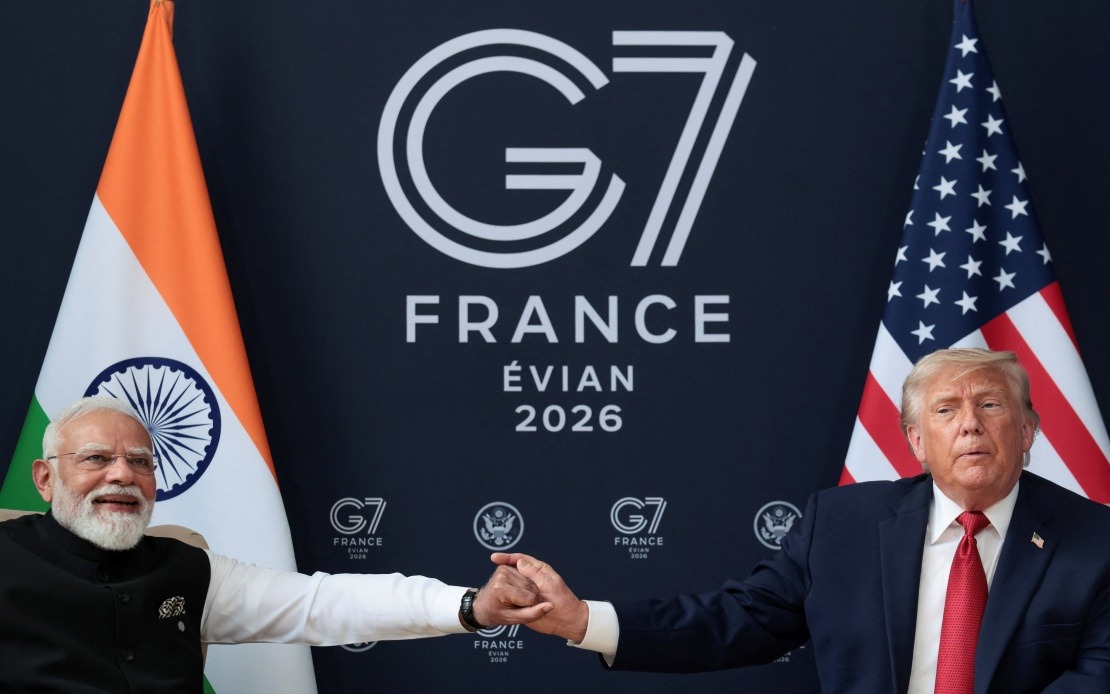
Negotiations between the United States and India have reached a watershed moment, with officials from both countries announcing meaningful headway toward resolving a trade dispute that has simmered for years. Prime Minister Narendra Modi and President Donald Trump, meeting on the sidelines of the Group of Seven summit in Evian, France, on Wednesday, acknowledged the breakthrough and directed their negotiating teams to capitalise on the momentum. The announcement represents a potential turning point in a relationship that has been strained by competing economic interests and tariff disputes.
According to India's External Affairs Ministry, the two leaders expressed particular satisfaction with progress made in discussions concerning an interim bilateral trade agreement. Rather than seek a comprehensive accord immediately, both nations appear willing to pursue a phased approach, establishing interim measures while continuing negotiations toward a broader and more substantial long-term arrangement. This pragmatic strategy allows both economies to ease tensions while securing commercially meaningful gains without demanding concessions either side views as existentially threatening.
The visit by US Trade Representative Jamieson Greer scheduled for next week underscores the urgency and seriousness with which both governments are treating these negotiations. Greer's presence in India signals that senior American trade officials will engage directly with their Indian counterparts to translate the political consensus reached by Modi and Trump into concrete agreements and tariff schedules. This high-level engagement typically precedes finalised deals and suggests negotiators are moving beyond exploratory discussions into substantive bargaining over specific product categories and tariff rates.
Trump characterised Modi as an exceptionally skilled negotiator, employing colourful language to describe the Indian Prime Minister's approach to dealmaking. The American president's comments, which acknowledged Modi as "one of the toughest" negotiators he has encountered, reflected both respect and a degree of healthy competition in the talks. Trump's observation that Modi looks like "an angel" but negotiates "as tough as a killer" captured the intensity and strategic focus Modi brings to advancing India's economic interests.
The context of these negotiations involves significant tariff actions taken by the Trump administration against Indian goods and trade practices. In 2025, the United States imposed 25 per cent tariffs on Indian imports while simultaneously applying an additional 25 per cent penalty specifically targeting India's purchases of Russian oil. These measures reflected broader American concerns about Indian trade policies and geopolitical alignments, particularly New Delhi's continued energy imports from Russia despite Western sanctions. The tariffs created genuine pressure on both the Indian economy and bilateral relations, making the current negotiations critical for reducing economic friction.
Earlier this year, in February, both nations had already reached an interim trade agreement under which the United States reduced certain tariff rates to 18 per cent, down from the punitive levels imposed previously. This initial agreement provided a foundation for the current discussions and demonstrated both sides' willingness to compromise. The reduction from 25 per cent to 18 per cent represented meaningful tariff relief for Indian exporters, though many Indian industries continued pressing the government to secure further concessions on products ranging from textiles and pharmaceuticals to agricultural goods and engineering components.
For Malaysian and Southeast Asian observers, the US-India trade progress carries broader regional implications. A stable and commercially balanced US-India relationship helps maintain equilibrium in the Indo-Pacific region and reduces the likelihood of spillover economic conflicts affecting other nations. India serves as a crucial counterweight to Chinese economic dominance in Asia, and stronger US-India commercial ties reinforce strategic partnerships that shape regional trade patterns and investment flows throughout Southeast Asia.
The interim agreement strategy also signals a pragmatic shift in how both countries approach trade disputes. Rather than insisting on comprehensive, all-or-nothing settlements that often stall negotiations indefinitely, Modi and Trump have embraced a stepping-stone approach that delivers quick wins while leaving space for comprehensive deals later. This methodology has proven successful in other bilateral trade relationships and may offer lessons for other nations seeking to resolve long-standing trade disagreements without destabilising entire economic relationships.
India's negotiating position reflects its complex economic challenges and strategic priorities. New Delhi must balance its substantial agricultural sector and manufacturing industries, which benefit from protection against American competition, against its growing services sector and technology companies, which thrive on open market access and foreign investment. The interim agreement approach allows the Modi government to claim victory on multiple fronts simultaneously, securing tariff relief for politically important sectors while demonstrating responsiveness to American concerns about fair trade practices and currency manipulation allegations.
The American perspective similarly involves multiple considerations beyond pure economic calculation. The Trump administration has consistently prioritised reducing the bilateral trade deficit with India while seeking commitments on intellectual property protection and digital trade practices. The agreement structure enables the United States to claim victories on these fronts without imposing tariff rates so severe that they destabilise India's economy or push New Delhi further toward closer economic cooperation with Russia and China.
Looking ahead, the trajectory of these negotiations will significantly influence global trade patterns and the shape of economic relationships in the Indo-Pacific region. A successful US-India trade accord would enhance both nations' economic stability and likely encourage other countries to pursue bilateral agreements with either or both parties. Conversely, any breakdown in negotiations could intensify tariff escalations and create spillover effects affecting regional trading partners throughout Southeast Asia.