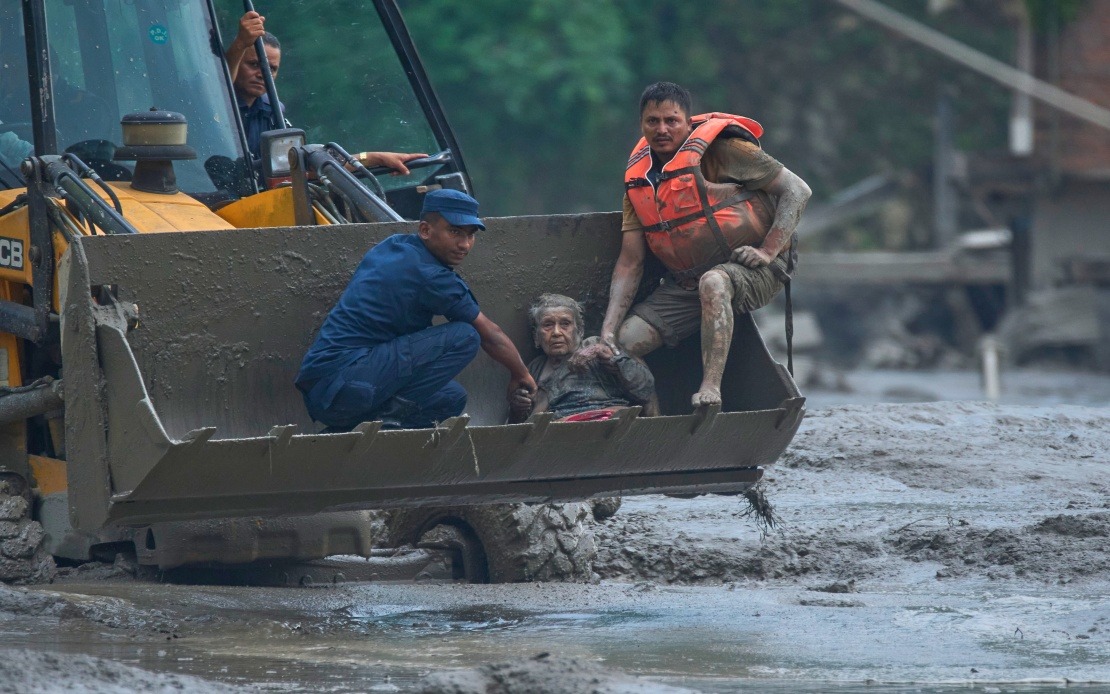
Nepal faces a humanitarian crisis of staggering proportions following devastating flash floods and mudslides that swept through regions bordering China, prompting both the United States and Canada to announce their readiness to provide urgent emergency aid. The twin natural disasters have already claimed at least 160 lives whilst leaving more than 680 people unaccounted for, making this among the deadliest flooding events to strike the Himalayan nation in recent memory. Both Western nations have mobilised their diplomatic machinery to signal support for Kathmandu as rescue and recovery operations continue amid difficult mountain terrain and ongoing risk from secondary hazards.
US Secretary of State Marco Rubio expressed Washington's commitment to assisting Nepal's government with essential humanitarian relief, publishing his statement of solidarity on social media platforms to underscore the gravity with which American leadership views the crisis. The explicit mention of American support carries particular significance given that at least 47 US citizens remain missing following the floods, numbers that underscore the direct human cost affecting the American community on the ground. Rubio's language emphasised spiritual solidarity alongside material support, framing the disaster as one that affects not merely Nepal but the broader international community with whom the country shares bonds of mutual concern and responsibility.
Canada's position mirrors this diplomatic posture, with Prime Minister Mark Carney characterising the disaster as "absolutely devastating" in substance and tone. The Canadian leader appealed to the emotional dimensions of the crisis, acknowledging that Canadians are thinking of those directly affected—including the 24 Canadian citizens currently unaccounted for—as well as those grieving losses and awaiting news from rescue teams. This empathetic framing, combined with Ottawa's explicit readiness to provide support, signals that Canada views this as a moment demanding not merely expressions of sympathy but tangible action and resource commitment.
The scale of infrastructure damage compounds the human tragedy and complicates recovery prospects significantly. According to estimates from Nepal's government, the floods have destroyed 13 hydropower projects—devastating for a nation that relies heavily on hydroelectricity for domestic consumption and regional energy exports. Additionally, approximately 40 kilometres of roadways have been rendered unusable, with around 200 trucks and 19 bridges swept away by the force of water and mud. This infrastructure destruction threatens to create secondary humanitarian challenges, as damaged roads impede supply chains and rescue operations whilst destroyed power facilities will strain Nepal's ability to operate hospitals, water treatment facilities, and other critical infrastructure essential to disaster response.
Neither Washington nor Ottawa has independently verified the casualty figures released by Nepalese authorities, a cautious approach typical in international disaster response where communication channels from affected zones may be compromised and preliminary figures often require revision as clearer information emerges. The 47 missing Americans and 24 missing Canadians represent a significant foreign national presence in the disaster zone, suggesting that the affected regions likely hosted tourists, trekkers, or development workers—populations drawn to Nepal's mountainous terrain and cultural attractions. The uncertainty surrounding the fates of these individuals amplifies international concern and may accelerate the mobilisation of search and rescue assets.
For Southeast Asia and the broader region, this disaster carries implications that extend beyond Nepal's borders. The Hindu Kush-Himalayan mountain range that triggers these periodic catastrophic floods forms the hydrological backbone of South and Southeast Asia, with rivers originating in these mountains—including the Mekong, which flows through Vietnam, Cambodia, Laos, and Thailand—crucial to the survival of hundreds of millions of people downstream. Extreme weather patterns that generate such devastating floods in Nepal may signal shifting climatic conditions with consequences for agricultural production, water security, and disaster preparedness across the region. Malaysia and other ASEAN nations monitor such developments given shared vulnerability to climate-related hazards and the interconnected nature of regional environmental systems.
The coordinated international response from the US and Canada reflects established protocols within the global humanitarian system whereby wealthy nations offer rapid technical and financial assistance following major disasters. Such support typically encompasses search and rescue teams, medical personnel, funding for relief organisations, and logistical coordination. The timeliness of these offers matters considerably in mountainous terrain where windows for locating survivors narrow dramatically within days of initial impact. Both nations' explicit readiness to assist reflects not only humanitarian principle but also pragmatic recognition that Nepal's own government and local resources, whilst substantial, may require external supplementation to manage a crisis of this magnitude.
The disaster unfolding in Nepal serves as a reminder of the vulnerability that mountainous nations face to hydrological extremes, and the speed with which modern disaster can overwhelm local capacity even in contexts with experience managing such emergencies. For regional governments including Malaysia's, the Nepali catastrophe offers lessons about disaster preparedness infrastructure, international coordination mechanisms, and the importance of maintaining bilateral channels through which rapid assistance can flow when crisis strikes. The pledges from Washington and Ottawa demonstrate that despite geopolitical competition between major powers, humanitarian emergencies can still mobilise coordinated international action grounded in shared human values.

