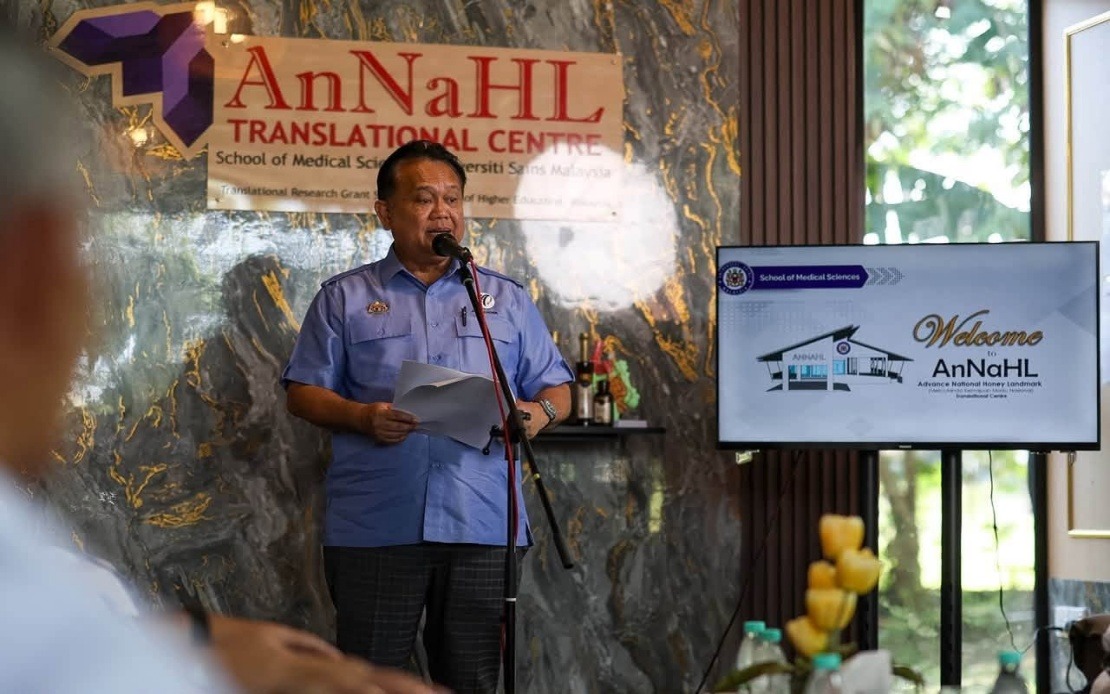
The Upper Rajang Development Agency (URDA) is pursuing an ambitious recalibration of rural economic strategy in Sarawak, announcing plans to deepen partnerships with universities, development agencies, and grassroots communities as it shifts away from commodity-dependent models toward innovation-led growth. Speaking during a visit to the Advanced National Honey Landmark (AnNaHL) Translational Centre at Universiti Sains Malaysia's Health Campus in Kubang Kerian, Kelantan, URDA chairman Datuk Seri Alexander Nanta Linggi articulated a vision in which rural prosperity hinges less on extracting raw materials and more on constructing resilient value chains that equip communities with modern tools and market reach.
The philosophical departure matters considerably for a region like Upper Rajang, where traditional reliance on timber, agriculture, and fishing has often left communities vulnerable to commodity price volatility. By pivoting toward technology-enabled production and high-margin goods, URDA aims to insulate rural economies from external shocks while creating durable employment. Nanta's remarks underscore a growing recognition across Malaysia's development corridors that long-term prosperity demands knowledge transfer and capacity building rather than simple resource extraction.
Central to this strategic reorientation is URDA's High Impact Community Projects (HICP) scheme, which has already demonstrated measurable returns. Participating communities have achieved average income increases exceeding 25 per cent—a result that Nanta attributes directly to investments in research, innovation, and systematic knowledge transfer. This empirical track record lends credibility to the agency's claim that structured partnerships between academics and practitioners can generate real economic transformation rather than merely theoretical advancement.
Universities occupy a central position in URDA's emerging framework, reframed not as ivory towers removed from community concerns but as strategic economic partners capable of translating research into livelihood opportunities. The rationale is straightforward: when academic research addresses genuine community needs and receives coordinated backing from government and implementing bodies, the outcome transcends laboratory discovery to yield commercially viable enterprises. This alignment between research priorities and grassroots economic realities represents a departure from earlier models where university output rarely translated into rural income streams.
The visit to AnNaHL's Translational Centre at USM exemplifies this collaborative ethos in practice. The facility functions as a processing, marketing, and training hub for value-added honey products derived from stingless bee cultivation—a venture already identified for implementation across multiple locations within the Kapit parliamentary constituency. This model demonstrates how indigenous or underutilised resources can be upgraded into premium offerings commanding higher margins than raw commodity sales.
Capacity building emerges as the linchpin in URDA's development philosophy. Rather than parachuting external solutions, the agency stresses community skill acquisition across knowledge domains, technological competency, and market navigation. This approach recognises that sustainable income generation requires local ownership and capability rather than dependency on government handouts or external operators. Communities must possess the agency to manage their enterprises, troubleshoot problems, and respond to market signals independently.
For Malaysian policymakers observing rural development trajectories across the nation, URDA's pivot carries broader implications. The agency's emphasis on technology adoption and value-chain integration mirrors national priorities articulated in successive Malaysia Plans, yet its ground-level execution through university partnerships offers a replicable template. Similar models could benefit rural economies in Peninsular Malaysia, Sabah, and other Sarawakian divisions where commodity dependency constrains growth prospects.
The timing of URDA's strategic repositioning aligns with regional economic pressures. Southeast Asian rural communities increasingly compete in global markets, where consumers demand traceability, quality certification, and sustainability credentials—attributes achieved through research-backed production methods and professional standards. By anchoring rural enterprises to university-led research and development, URDA positions Kapit and Upper Rajang communities to meet these elevating expectations.
Nanta's dual role as Kapit Member of Parliament and Works Minister positions him to facilitate the infrastructure investments necessary for innovation-driven rural economies. Rural digital connectivity, processing facilities, cold-chain logistics, and transportation networks represent foundational prerequisites for communities transitioning toward higher-value production. His ministerial portfolio enables coordination across government agencies to address these enabling factors.
The collaboration framework extends beyond a single agency's remit; the joint delegation involving both URDA and the Regional Corridor Development Authority (RECODA) signals institutional coordination aimed at maximising synergies across development initiatives. RECODA's mandate to coordinate economic development across regional growth corridors aligns naturally with URDA's localized implementation, creating potential for scaled impact across Sarawak.
Yet translating strategic ambitions into sustained community prosperity requires navigating substantial practical challenges. Knowledge transfer between universities and rural practitioners often encounters language barriers, differing operational rhythms, and capacity constraints within communities. Success stories like HICP's 25 per cent income gains must be replicated consistently across diverse community contexts and commodities to constitute genuine paradigm shift rather than isolated successes.
The stingless bee initiative within Kapit represents an instructive case study. If successfully scaled, it could demonstrate how indigenous knowledge combined with scientific upgrading and professional marketing infrastructure creates competitive advantages in premium global markets. Conversely, if adoption remains uneven or markets prove difficult to access, it would reveal the limitations of innovation-focused strategies without corresponding investments in distribution networks and buyer relationships.
Ultimately, URDA's repositioning reflects confidence that Sarawak's rural communities possess latent productive capacity awaiting activation through knowledge, technology, and market access. The agency's willingness to position universities as primary development partners, rather than peripheral stakeholders, represents a meaningful institutional evolution. Whether this approach generates the promised transformation across Upper Rajang will depend on sustained commitment, resource allocation, and the agency's capacity to maintain momentum amid competing development priorities.

