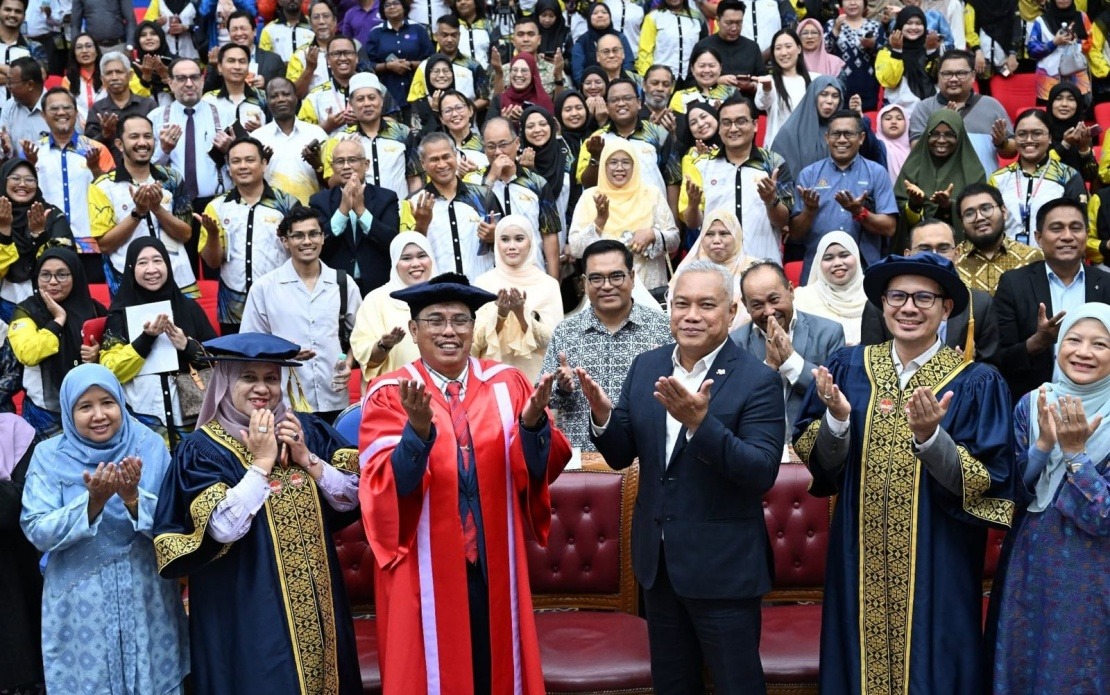
Universiti Pendidikan Sultan Idris (UPSI) is actively pursuing plans to establish a private specialist hospital within its Tanjong Malim campus, marking an ambitious expansion of its support infrastructure beyond traditional academic offerings. Vice-Chancellor Prof Datuk Dr Md Amin Md Taff outlined the initiative as a cornerstone of the institution's long-term vision to transform Tanjong Malim into a comprehensive knowledge city ecosystem capable of meeting contemporary healthcare and living standards. The proposal reflects growing recognition among Malaysian universities that comprehensive campus facilities can enhance their competitiveness for international talent and foster sustainable community development.
The primary motivation driving this initiative stems from the escalating healthcare demands of UPSI's expanding international student population and staff cohort. Rather than relying exclusively on public healthcare infrastructure in the surrounding area, the university has determined that establishing in-house specialist medical facilities would provide more responsive and tailored services to its diverse campus community. This aligns with global trends among research-intensive universities in Asia-Pacific region, where on-campus healthcare has become an expected amenity for attracting premium international enrolments.
Prof Md Amin emphasised that UPSI is currently in exploratory discussions with potential private healthcare operators, carefully evaluating various business models and operational structures that could facilitate the hospital's establishment. The university is open to partnerships where private sector expertise and capital could be leveraged while maintaining institutional oversight of service quality and accessibility standards. This pragmatic approach acknowledges that UPSI alone may lack the specialised medical management experience and capital required to operate such a facility independently, making collaborative frameworks essential.
The hospital project forms part of UPSI's broader strategic planning initiative designed to position Tanjong Malim as a destination rather than merely a university town. By developing high-quality support facilities—healthcare being paramount—the institution aims to create an integrated living and learning environment that justifies extended stays by international students and staff. This holistic development strategy recognises that educational institutions increasingly function as anchors for regional economic and social development, particularly in tier-two cities seeking to establish competitive advantage.
Beyond immediate healthcare provision, UPSI's vision extends to complementary facilities that would deepen the university's role in community infrastructure development. The institution is simultaneously exploring retirement facilities specifically designed for former UPSI employees, envisioning a retirement resort model that would allow long-serving faculty and staff to maintain meaningful connections with the campus community post-retirement. Such initiatives demonstrate sophisticated understanding that universities can architect multi-generational ecosystems serving evolving needs across life stages.
The retirement component carries particular significance for Malaysia's ageing academic workforce. By creating purposefully designed communities for retired scholars, UPSI would facilitate knowledge transfer, mentorship opportunities, and institutional memory preservation—intangible assets with substantial value. Retired academics often serve as intellectual reserves for consulting, research collaboration, and institutional governance, making their continued proximity to campus operationally advantageous. Such facilities also demonstrate institutional appreciation for long-term service, strengthening employee loyalty and institutional culture.
For Tanjong Malim specifically, UPSI's infrastructure ambitions represent substantial economic opportunity and enhanced service availability. The region, situated between Kuala Lumpur and Ipoh, has historically functioned as a relatively quiet educational enclave. A private specialist hospital coupled with retirement facilities would meaningfully elevate the area's service profile, potentially attracting complementary commercial and professional services. Healthcare facilities, in particular, generate employment across clinical, administrative, and support categories while serving populations beyond the immediate campus.
The timing of this initiative reflects evolving priorities within Malaysian higher education policy, which increasingly emphasises universities' roles as anchors for regional development and innovation ecosystems. Government encouragement for universities to commercialise assets and generate revenue streams through appropriate partnerships has created policy space for ventures like private hospitals. UPSI's approach—seeking private partners rather than relying on government capital—demonstrates institutional adaptation to constrained public budgets while maintaining mission integrity.
Implementation challenges remain substantial. Regulatory approval from healthcare authorities, securing appropriate financing, identifying experienced operator partners, and managing complex operational interfaces between academic and medical functions will require careful navigation. Malaysian medical device and pharmaceutical procurement regulations, accreditation standards, and professional licensing requirements will frame operational parameters. Nevertheless, UPSI's senior leadership commitment suggests serious institutional intent rather than aspirational speculation.
For international students considering Malaysian higher education, such developments may prove decisive. Comprehensive on-campus healthcare provision substantially reduces anxiety around medical emergencies or chronic condition management in unfamiliar healthcare systems. Combined with quality accommodation and retirement options for long-term residents, UPSI increasingly resembles residential university models prominent in established international education destinations, potentially strengthening recruitment competitiveness.
The specialist hospital initiative ultimately reflects how contemporary universities must transcend traditional teaching and research functions to remain attractive to international constituents and competitive regionally. By consciously building comprehensive campus ecosystems addressing healthcare, housing, and lifestyle needs across career stages, UPSI positions itself as an institution committed to sustained stakeholder wellbeing rather than transactional educational service provision. Success would validate a replicable model for other Malaysian universities pursuing enhanced international profile and regional development leadership.

