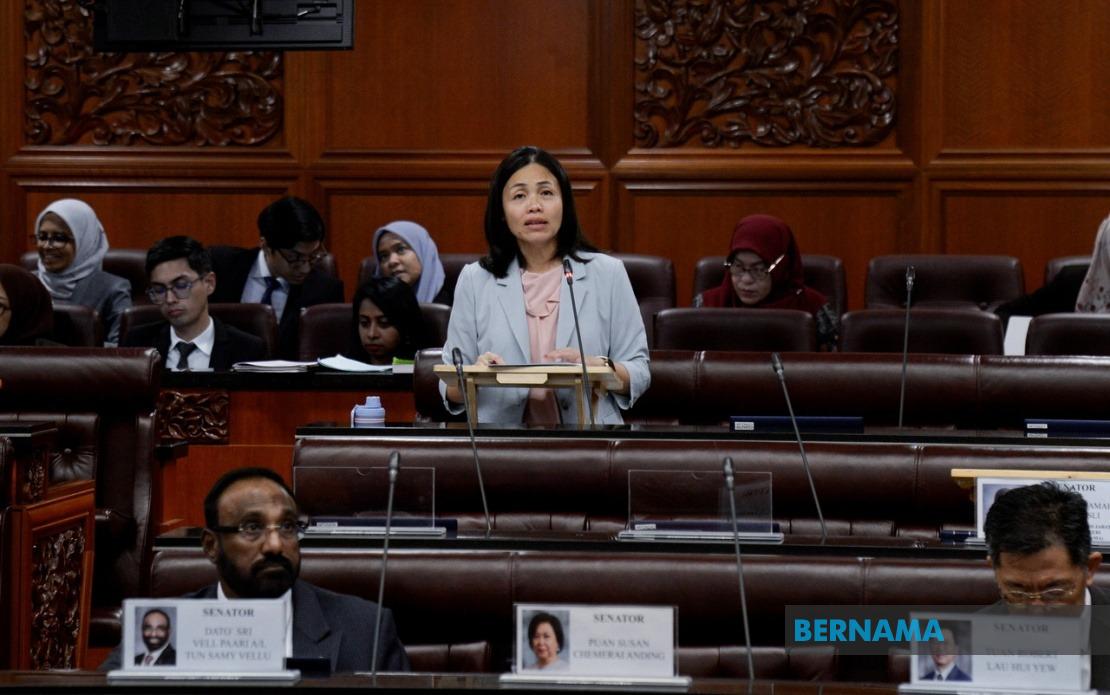
Malaysia's Dewan Negara has endorsed the Communications and Multimedia Commission (Amendment) Bill 2026, marking a significant step in overhauling how the country's critical digital infrastructure is governed and regulated. The upper house passed the legislation following deliberations from 11 senators, with the vote demonstrating parliamentary support for structural changes aimed at bolstering the MCMC's operational effectiveness and insulating it from political influence.
Deputy Minister of Communications Teo Nie Ching highlighted the tangible impact of MCMC's enforcement work during the debate winding-up remarks, presenting data that underscored accelerating action against illegal online gambling. In just the first seven months of 2026, the commission had coordinated the removal of more than 222,000 pieces of gambling-related content, a figure that reflects both the scale of the problem and the intensity of digital policing efforts increasingly deployed across platforms. This achievement represents a dramatic progression from earlier years, when removal efforts were negligible by comparison.
The trajectory of content removal demonstrates how digital enforcement has intensified as regulators and platforms develop better coordination mechanisms. In 2022, only two pieces of gambling content were taken down across social media platforms. This jumped to 18,814 instances in 2023, then accelerated to 189,484 in 2024 and 289,486 in 2025. The pattern illustrates not simply greater vigilance, but rather a fundamental shift in how platforms comply with removal requests and how systematically the MCMC identifies prohibited material. For Malaysian internet users and parents concerned about exposure to gambling promotions, this escalation suggests tangible progress against a phenomenon that had previously flourished with minimal intervention.
Paralleling content removal efforts, authorities have pursued infrastructure-level responses. Between 2022 and late July 2026, regulators blocked access to 6,982 gambling websites in total, targeting the underlying technical architecture through which illegal operators reach Malaysian audiences. Teo clarified that while the MCMC provides technical enforcement capabilities—including digital forensics and access blocking—gambling investigations generally fall under the jurisdiction of the Royal Malaysia Police. This division of labour allows specialised agencies to concentrate on their respective strengths while preventing regulatory overlap.
Beyond gambling enforcement, the amendment addresses governance structures that reformers argue have created vulnerabilities to political capture. A central innovation prohibits sitting members of Parliament and state assemblies from serving as MCMC chairman, a restriction designed to prevent legislative figures from leveraging the position for political advantage or wielding regulatory authority while simultaneously answerable to voters. Teo underscored the government's intention to constrain ministerial appointment powers by requiring demonstrated qualification and competence. This safeguard acknowledges international experiences where regulators lacking operational independence have struggled to enforce rules consistently or push back against political pressure.
Senator Datuk Abdul Halim Suleiman contextualised the amendment within Malaysia's evolving strategic landscape, characterising communications and multimedia infrastructure no longer primarily as an economic sector but as critical national infrastructure comparable in importance to power grids or water systems. This framing reflects the reality that digital networks now underpin everything from financial transactions to government services to emergency communications. Disruptions to these systems carry consequences extending far beyond individual companies or market competition, justifying stronger regulatory oversight and institutional independence.
The amendment encompasses 17 clauses, with revisions to Section 16 of Act 589 clarifying the MCMC's functions in developing and regulating digital infrastructure and platform standards. These textual changes provide explicit legal grounding for regulatory action on emerging issues that may not have been contemplated when the original legislation was drafted. As digital markets and technologies evolve faster than statutory frameworks can accommodate, clearer foundational language allows regulators flexibility to respond to new challenges without constantly returning to Parliament for clarification.
Senator Muhammad Hasbie Muda cautioned that empowering the MCMC with expanded functions and authority would only translate to effective governance if the commission simultaneously demonstrated transparency, accountability, and merit-based appointments. His intervention highlighted a concern that resonates throughout Southeast Asia: regulatory reform on paper often diverges from implementation reality. Building institutional capacity, recruiting talented professionals, establishing clear decision-making processes, and fostering public trust require sustained effort beyond legislative amendments. This perspective acknowledges that the MCMC's success depends not merely on legal powers but on organisational culture and management commitment.
The bill had already passed the Dewan Rakyat on July 15, positioning this Dewan Negara approval as the final legislative hurdle before the amendments become operative. For Malaysian residents, industry stakeholders, and regional observers monitoring Malaysia's regulatory trajectory, the passage signals that governance institutions are gradually adapting to digital-age challenges. The emphasis on independence and professional competence aligns Malaysia with international best practices observed in countries with effective communications regulators, though implementation and consistency remain critical variables determining ultimate impact.
Regionally, Malaysia's approach to MCMC reform carries implications for other Southeast Asian nations wrestling with similar questions about how to regulate digital markets while protecting consumers and maintaining infrastructure resilience. The explicit prohibition on political interference, the commitment to merit-based appointments, and the emphasis on transparent accountability offer a model that neighbouring countries may observe or emulate as they consider their own institutional frameworks.

