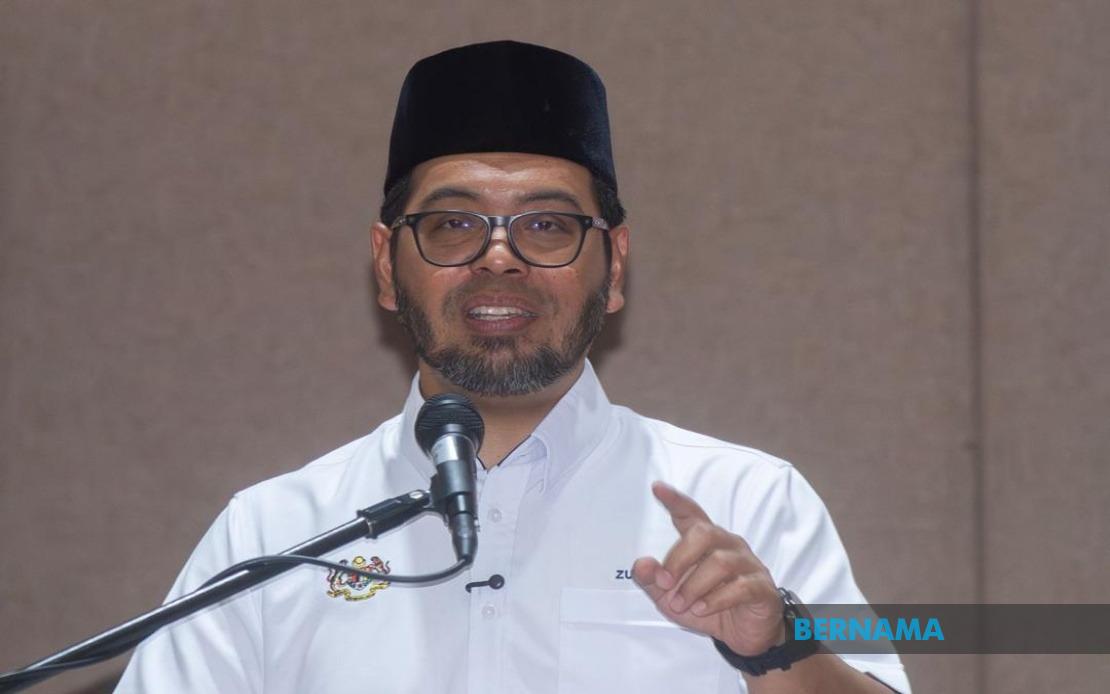
Dr Zulkifli Hasan, Minister in the Prime Minister's Department (Religious Affairs), has highlighted the profound consequences that unregistered marriages pose for children's welfare and family stability, warning that many Malaysian couples continue to live in marital unions without formal legal recognition. Speaking at the launch of the 2026 Federal Territories Syariah Law Literacy Programme in Labuan, Dr Zulkifli underscored how the failure to register marriages within the proper framework—as outlined in the Islamic Family Law (Federal Territories) Act 1984 (Act 303)—extends far beyond administrative convenience to affect fundamental human rights and access to essential services.
The immediate impact on children born to unregistered couples manifests in tangible barriers to obtaining birth certificates, a foundational document required for accessing education, healthcare facilities, and establishing legal identity. Without formal marriage documentation, children may face obstacles when enrolling in schools or accessing medical services, as authorities typically require certified proof of parentage and marital status. The vulnerability is particularly acute in cases where couples have married outside their designated jurisdictions or through unauthorised marriage registrars who have circumvented the legal procedures mandated by federal law, leaving families without recourse should disputes arise.
Dr Zulkifli emphasised that the consequences extend into identity and citizenship matters, creating uncertainty about a child's legal status and lineage. This ambiguity can have lasting repercussions when children reach adulthood and attempt to secure employment, obtain passports, or participate in civic processes that require verified identity documentation. The situation is compounded when questions about parentage and legitimacy arise, as the absence of official marriage registration creates room for doubt and potential legal challenges to a child's inheritance rights and social standing within their community.
For spouses themselves, particularly women, unregistered marriages create significant vulnerabilities regarding financial security and legal entitlements. Wives may encounter severe difficulties in claiming maintenance payments (nafkah) or muah compensation following separation or divorce, as courts lack the documentary evidence required to establish the existence of a valid marital contract. These women may find themselves without recourse to the legal protections and financial safeguards that registered marriages provide under Islamic family law, leaving them economically disadvantaged and socially exposed.
The complexities multiply substantially when inheritance and faraid distribution become relevant following a spouse's death. Without registered marriage documentation, disputes over inheritance can escalate into protracted family conflicts, particularly when extended family members contest the deceased's intended distribution of assets. The absence of clear legal recognition means that surviving spouses and children may struggle to establish their claims to the estate, potentially losing significant financial security at an already vulnerable moment. These disputes can fracture families for generations and consume resources in costly legal proceedings that could have been entirely prevented through timely registration.
Dr Zulkifli noted that the government's approach prioritises assistance and reconciliation rather than punitive measures against those with outstanding registration issues. The Federal Territories Syariah Prosecution Department has partnered with multiple agencies—including the Federal Territories Syariah Court, the Islamic Religious Department (JAWI), the Islamic Religious Council (MAIWP), the Legal Aid Department, and Tabung Haji—to create accessible pathways for couples to regularise their marital status. This collaborative framework demonstrates recognition that many unregistered unions stem from ignorance of requirements rather than intentional evasion, and that providing support services is more effective than enforcement alone.
The literacy programme represents a broader strategy to educate residents about their obligations under Islamic family law and the tangible benefits of compliance. By framing marriage registration not as bureaucratic burden but as protective mechanism, officials aim to motivate voluntary participation and reduce the accumulation of unregistered cases. Interactive counters staffed during the programme offer couples personalised guidance on resolving their particular circumstances, removing practical barriers that may have previously prevented formalisation.
For Malaysia's diverse and multiethnic society, particularly in the Federal Territories where multiple legal jurisdictions intersect, the formalisation of marriage registration carries implications beyond individual families. Unregistered marriages create administrative challenges for government agencies attempting to provide services and compile accurate demographic data. They also undermine the rule of law by allowing parallel marital arrangements to exist outside the legal framework, potentially enabling exploitative situations where vulnerable individuals—particularly migrant workers or low-income populations—lack awareness of their rights and protections.
The messaging from Dr Zulkifli reflects a shift toward more nuanced governance approaches that recognise systemic barriers to compliance. Rather than assuming all unregistered marriages result from deliberate non-compliance, this approach acknowledges that some couples have lived together for decades without realising the legal implications, or have married through informal mechanisms in communities with weak institutional infrastructure. By extending assistance without prejudgement, the government signals that rectifying these situations serves everyone's interests.
For Malaysian families, particularly those with young children, the consequences of remaining unregistered warrant immediate action. Parents concerned about their children's access to education, healthcare, and eventually employment should prioritise engaging with the available registration assistance programmes. The Federal Territories Syariah Law Literacy Programme and similar initiatives provide non-threatening environments to address these issues comprehensively. Delaying registration compounds risk—children grow older without official documentation, and the longer a marriage remains unregistered, the more complicated the retrospective verification becomes.
The interconnection between marriage registration and children's welfare highlights how legal formalities, while sometimes viewed as abstract bureaucratic requirements, fundamentally enable or restrict access to concrete goods and services. A child's ability to attend school, receive medical treatment, or eventually claim inheritance depends entirely on the legal recognition of their parents' marriage. This reality elevates marriage registration from a matter of family preference to a matter of social justice and child protection, framing it as essential infrastructure rather than optional administrative procedure.

