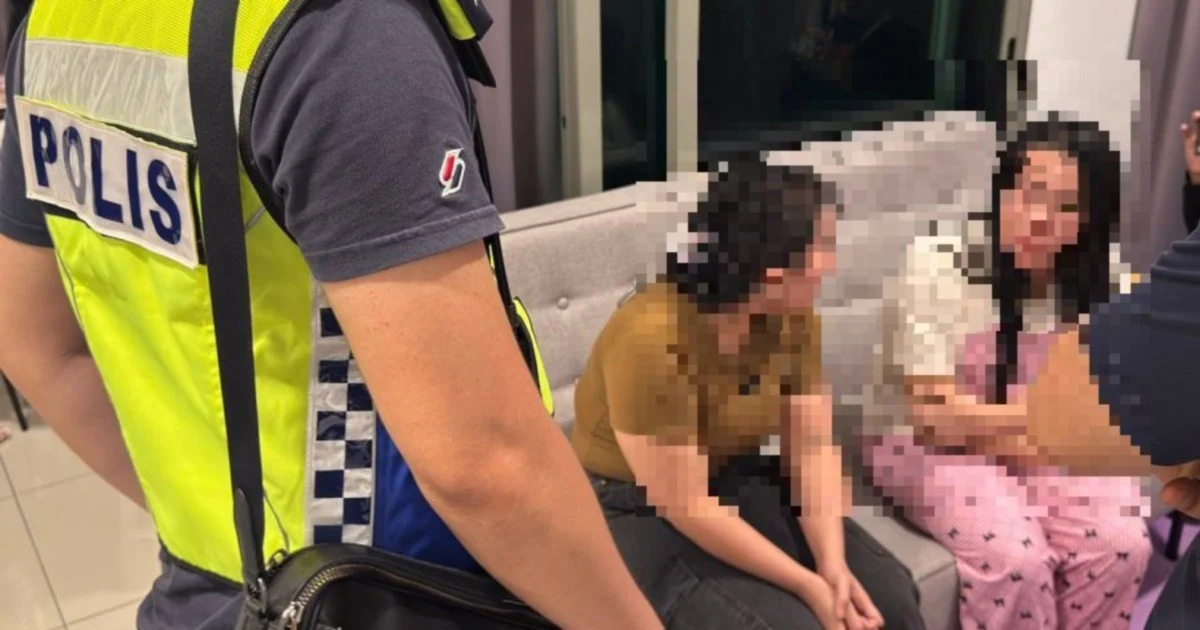
A university student's attempt to earn supplementary income during her semester break resulted in her arrest when police conducted a raid on an apartment unit in Cyberjaya yesterday, according to law enforcement officials investigating alleged prostitution activities in the high-tech corridor.
The operation represents the latest enforcement action against commercial sex work in the Klang Valley region, where authorities have intensified efforts to dismantle networks operating from residential units. Cyberjaya, as a major commercial and residential hub within the Federal Territories, has become a focal point for such investigations as urbanisation and transient populations create conditions that can facilitate illicit activities.
Details surrounding the student's motivation underscore a broader socioeconomic reality facing Malaysian tertiary students. While tuition fees, accommodation costs, and living expenses remain substantial burdens, opportunities for legitimate part-time work during academic breaks remain limited or insufficient for many. The gap between institutional support, family resources, and actual costs has driven some students towards high-risk income-generating activities, a trend that authorities and educational institutions have begun recognising as a secondary public health and social issue rather than purely a criminal matter.
The raid operation itself reflects standard enforcement protocols deployed by the Royal Malaysian Police against suspected vice operations. Officers typically act on intelligence gathered through tip-offs from residents, building management, or ongoing surveillance operations. The decision to move on a specific location usually follows corroborating evidence that activities within exceed what local bylaws and federal law permit, triggering action under relevant legislation governing public morality and human trafficking concerns.
Malaysia's legal framework treats sex work as a criminal offence under multiple statutes, including provisions within the Penal Code and various state-level enactments. Individuals arrested face potential charges carrying prison sentences and substantial fines, with additional consequences extending to educational standing, employment prospects, and social stigmatisation. The consequences proved immediate and severe for the arrested student, whose future trajectory now depends significantly on legal outcomes and institutional responses from her university.
The Cyberjaya operation also highlights law enforcement's simultaneous concern about human trafficking networks that may exploit vulnerable individuals, including students, under false pretences of legitimate employment. Authorities maintain that distinguishing between consensual sex work and trafficking situations requires careful investigation, as perpetrators frequently use financial desperation to recruit victims. This distinction remains legally significant, as trafficking charges carry substantially heavier penalties and activate victim support mechanisms under the Anti-Trafficking in Persons and Anti-Smuggling of Migrants Act 2007.
From an institutional perspective, universities throughout Malaysia have begun grappling with the precarious financial situations many students face. While counselling services exist, their capacity remains limited relative to demonstrated need. Scholarship and bursary schemes, though extensive, contain eligibility criteria that exclude marginal categories of students, creating gaps where financial desperation becomes acute. Some institutions have expanded emergency loan programs and hardship funds, yet awareness and accessibility remain inconsistent across the higher education landscape.
The semester break timing mentioned in reports merits consideration regarding campus rhythms and employment patterns. Breaks between academic sessions create windows where students lose both institutional support structures and any part-time work connected to university operations. International students particularly face constraints, as visa conditions typically restrict off-campus employment, forcing them toward underground economies when funds deplete. Domestic students, though unrestricted legally, often find legitimate opportunities thin on ground during compressed break periods.
Cyberjaya's evolution as a modern planned city with substantial migrant populations and transient residents creates distinct policing challenges. The municipality's mixed-use character, combining residential apartments with commercial operations and hospitality sectors, generates both opportunities for illicit enterprises and complications for enforcement. Building management cooperation varies widely, with some actively partnering with authorities while others prove reluctant to acknowledge problems affecting occupancy rates and rental income.
For Malaysian readers in urban centres, this case functions as a cautionary narrative about the intersection of economic pressure, rapid urbanisation, and insufficient social safety nets. Unlike more prosperous neighbours where student support systems prevent such desperation, Malaysia's reliance on individual family capacity and limited institutional safety nets leaves gaps. The arrested student's situation reflects choices constrained by circumstances rather than freely made preferences, yet the criminal justice system engages primarily with the choice rather than the circumstances that produced it.
Moving forward, the incident invites broader questions about proportionality in enforcement, victim support versus punishment orientation, and preventative measures that address root causes. Progressive jurisdictions have begun exploring decriminalisation or harm-reduction approaches, though Malaysia maintains traditional criminalisatory frameworks. Education Ministry and university leadership responses to students' economic vulnerability will likely determine whether such incidents become more common or diminish across coming academic cycles.

