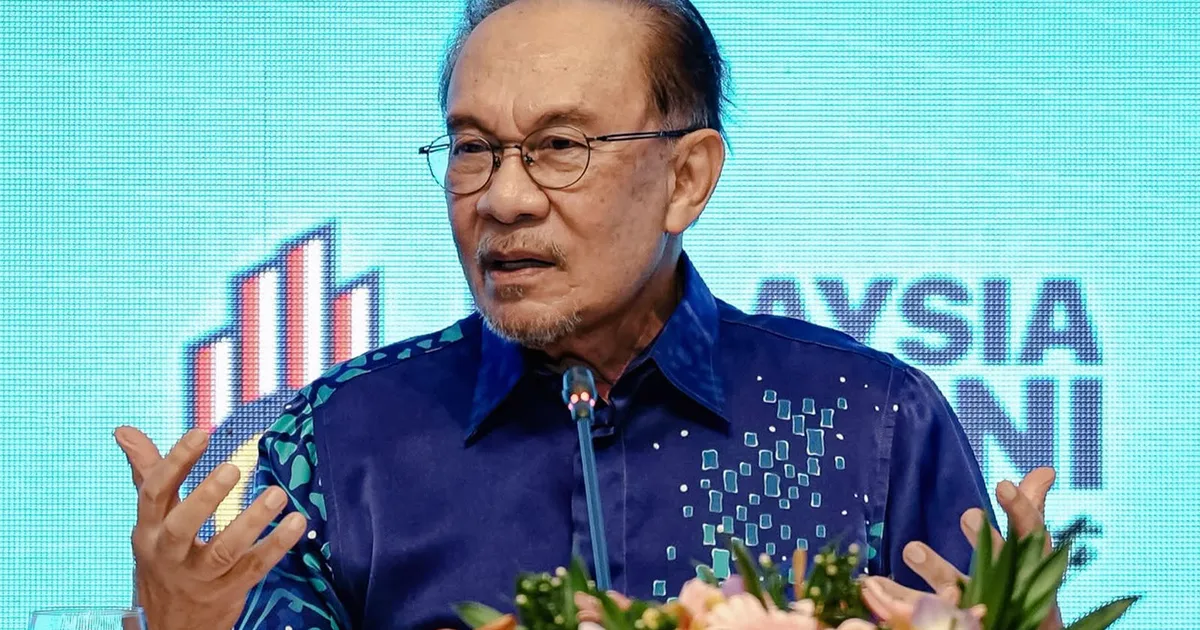
Prime Minister Anwar Ibrahim has called on Malaysian universities to embrace open discourse and protect the intellectual freedom of their students, cautioning against measures that curtail debate or restrict the articulation of diverse viewpoints. The premier's intervention reflects growing concern about the climate for free expression within higher education institutions and suggests government backing for a more permissive approach to student activism and academic discourse.
Anwar's remarks underscore a philosophical shift in how the administration views the role of universities in shaping informed citizens. Rather than positioning campus authorities as guardians tasked with enforcing conformity, he has framed the institution's purpose as nurturing independent minds capable of rigorous analysis and constructive criticism. This stance carries particular weight in Malaysia, where universities have historically operated under tight administrative controls and students have faced warnings or disciplinary action for organising certain types of activities or expressing politically sensitive views.
The Prime Minister's statement appears designed to signal to university administrators that the federal government will not penalise institutions for allowing robust student engagement. This could have immediate practical implications for how varsity authorities approach student unions, campus publications, political clubs, and public forums. It may embolden student leaders to pursue activities that would previously have triggered administrative pushback, though much depends on how consistently and thoroughly the message is transmitted through the higher education bureaucracy.
Malaysian universities operate within a complex regulatory environment. The Universities and University Colleges Act (UUCA) imposes restrictions on political activities by students and staff, a legacy framework that Anwar's previous administration had pledged to reform. While formal amendments have moved slowly, the Prime Minister's latest comments suggest an interpretation favouring maximum latitude within existing rules. This hermeneutical approach may prove more immediately effective than legislative change, as university rectors can adjust administrative practice without awaiting parliamentary action.
The emphasis on critical thinking and fresh ideas resonates with calls from academics, student leaders, and civil society observers who have long argued that Malaysian higher education institutions risk becoming intellectually sterile environments where conformity is prized over curiosity. International university rankings increasingly penalise institutions where academic freedom is compromised, and Malaysian universities seeking to improve their global standing have practical incentives to demonstrate a more open intellectual culture. Anwar's remarks provide cover for administrators considering liberalisation policies that might otherwise face pushback from more conservative quarters.
Context matters significantly here. Malaysia's student movement has deep historical roots, from anti-colonial activism through the tumultuous 1970s and into contemporary struggles around institutional governance and national identity. Successive governments have treated student organising with varying degrees of tolerance, and periods of greater openness have often coincided with broader democratic advancement. Conversely, crackdowns on campus speech have frequently presaged wider restrictions on civil liberties. The Prime Minister's statement thus carries symbolic resonance beyond the immediate university sphere, signalling something about the administration's broader posture toward democratic participation.
For Malaysian student leaders, Anwar's comments offer an opening they may seek to exploit. Campus organisations have grown increasingly sophisticated in leveraging social media and international human rights frameworks to amplify their causes. A genuine relaxation of administrative restrictions would expand their capacity to mobilise peers, organise events, and develop leadership skills—outcomes that benefit both individual students and democratic culture more broadly. However, the risk remains that administrators will ignore or minimise the Prime Minister's exhortation, particularly if central authorities fail to enforce a consistent message or if local officials face pressure from conservative stakeholders.
The question of student expression extends beyond politics to encompass academic inquiry itself. Universities serve as spaces where researchers investigate contentious topics, challenge received wisdom, and explore unconventional ideas. When institutional climates become overly risk-averse, scholars gravitate toward safe, incremental work. Malaysian universities have grappled with this dynamic, with complaints that institutional caution has stunted research in sensitive social and historical domains. By legitimising critical inquiry, Anwar's remarks potentially unlock intellectual energy across multiple disciplines.
Regional dynamics add further complexity. Southeast Asia's university systems operate within diverse regulatory frameworks, from Singapore's tightly controlled environment to more open systems in Thailand and the Philippines. Malaysian policymakers monitor comparative performance, recognising that regional brain drain accelerates when local institutions are perceived as intellectually restrictive. Positioning Malaysian universities as open, dynamic spaces could help retain talented students and faculty who might otherwise seek opportunities abroad. This economic and demographic argument reinforces the principled case for academic freedom.
Impementation challenges remain substantial. University administrations resist pressure from multiple directions simultaneously—from Anwar's office urging openness, from conservative politicians demanding order, from international accreditors expecting freedom, and from anxious parents wanting stability. Rectors must navigate these currents, and without sustained political commitment and explicit institutional reforms, the Prime Minister's rhetoric may dissipate without producing behavioural change. Concrete steps such as appointing pro-liberalisation leaders, revising campus conduct codes, and explicitly protecting student journalism would translate sentiment into action.
Anwar's intervention also reflects his own intellectual formation and political philosophy. Unlike some predecessors, he has positioned himself as committed to democratic norms and institutional pluralism. His repeated emphasis on governance, transparency, and rule of law suggests someone genuinely concerned with creating space for dissent and contestation. Whether this philosophical commitment translates into sustained policy adjustments will determine whether his university remarks represent a genuine turning point or merely another political gesture soon forgotten.
Moving forward, Malaysian universities face a consequential juncture. They can interpret the Prime Minister's words as licence to construct genuinely open intellectual communities, or treat them as rhetorical cover while maintaining restrictive practices in substance. Student advocates, faculty senates, and civil society organisations should hold administrators accountable to Anwar's stated principles, documenting both adherence and violations. Only through consistent pressure and transparent monitoring can rhetoric become reality.

