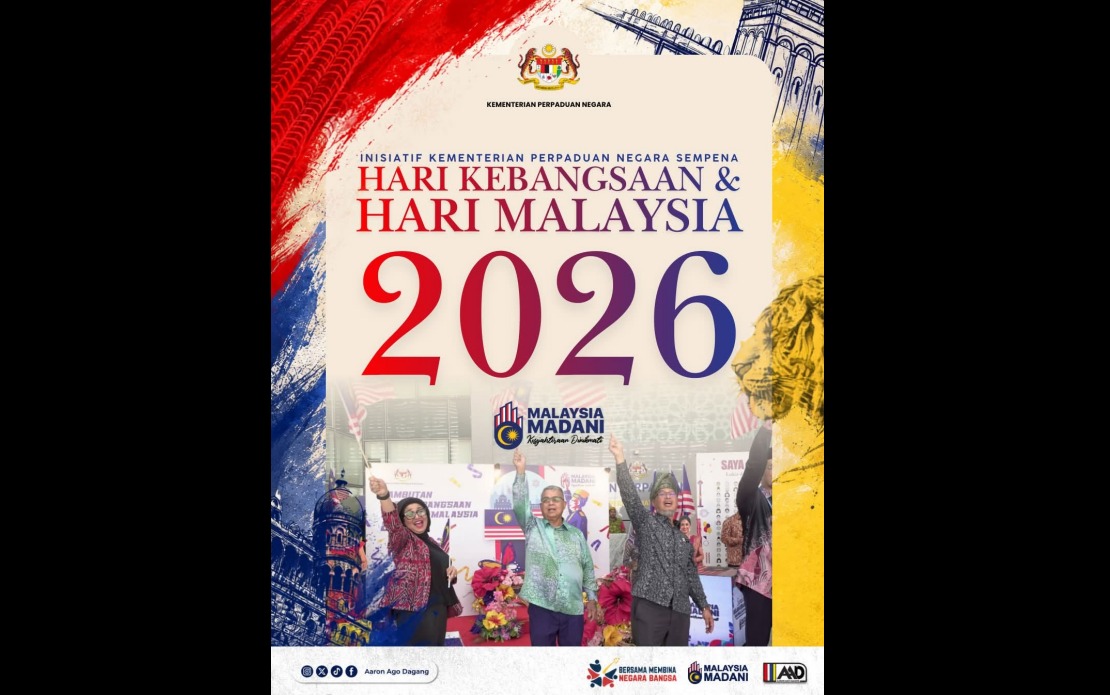
The National Unity Ministry has unveiled an ambitious slate of programmes designed to deepen Malaysians' connection to their nation's history and shared identity as the country prepares for dual independence milestones in 2026. Datuk Aaron Ago Dagang, steering the ministry's efforts, outlined a comprehensive approach spanning cultural exhibitions, youth-focused events and competitive forums that aim to reinvigorate patriotic sentiment across diverse communities nationwide.
The initiative reflects a deliberate strategic pivot towards experiential engagement rather than traditional commemoration methods. By curating eleven distinct programmes, the ministry seeks to create multiple entry points through which citizens of varying ages, backgrounds and interests can participate in nation-building conversations. This multi-faceted approach acknowledges that patriotism and national cohesion cannot be fostered through singular top-down messaging, but rather through layered cultural, historical and educational interventions that resonate across Malaysia's pluralistic landscape.
Central to the 2026 campaign is the National Unity Integration Movement, which appears designed as an umbrella framework consolidating various community engagement efforts. Accompanying this anchor programme is Malaysia's Merdeka Children Celebration, targeting younger generations who represent the custodians of long-term national continuity. By investing in youth-oriented programming, KPN implicitly acknowledges that sustaining unity requires cultivating patriotic values among citizens who will inherit responsibilities for national stewardship in subsequent decades.
Historical commemoration forms another pillar of the strategy. An Exhibition on Independence and a dedicated programme honouring Tun Abdul Razak, Malaysia's first Prime Minister, ground the 2026 celebrations in substantive engagement with the nation's founding narrative. Such retrospective focus carries particular significance in contemporary Malaysia, where competing interpretations of independence, nation-building and foundational principles occasionally create societal friction. By institutionalising exhibitions and commemorative events, the ministry creates space for educational dialogue about how Malaysia achieved independence and the constitutional frameworks upon which modern statehood rests.
The Pesta Bola Merdeka Exhibition introduces a sporting dimension to the unity agenda, recognising that athletic competition and celebration transcend ethnic and religious boundaries in Malaysian society. Football occupies a cherished place in the national consciousness, and leveraging this sport's unifying potential represents pragmatic cultural strategy. Similarly, the Night at the Museum programme invites Malaysians to encounter their heritage in intimate, accessible settings, transforming formal historical institutions into spaces of personal reflection and collective discovery.
The Rukun Negara Oratory Competition directly engages citizens in articulating their understanding of the five foundational pillars—belief in God, loyalty to king and country, upholding the Constitution, rule of law, and good behaviour and morality—that theoretically undergird Malaysian coexistence. By encouraging individuals to publicly defend and explain these principles through competitive oratory, the ministry stimulates critical engagement with philosophical underpinnings of national identity. Such exercises potentially strengthen internalization of shared values beyond rhetorical repetition.
Datuk Aaron Ago Dagang's accompanying statement emphasizes thematic coherence across the eleven initiatives, positioning them collectively as instruments for strengthening national identity, fostering belonging and deepening affection for Malaysia. The language deliberately invokes emotional dimensions of patriotism—love of country, sense of belonging—rather than purely legalistic or institutional frameworks. This rhetorical choice reflects understanding that sustainable unity requires emotional attachment alongside rational commitment to constitutional governance.
The ministry's explicit embrace of Malaysia's ethnic, religious, cultural and regional diversity within its nation-building narrative carries particular resonance amid ongoing discussions about national cohesion. Rather than positing unity as requiring homogeneity, KPN's positioning suggests that celebrating Malaysia's heterogeneity constitutes essential component of patriotic commitment. This framing potentially offers moderate counterweight to divisive rhetoric occasionally deployed in contemporary Malaysian politics, implying that national strength derives from managing and honouring difference rather than suppressing it.
For Malaysian readers and regional observers, the scale and sophistication of KPN's 2026 campaign signals sustained governmental investment in unity-building initiatives. The dual commemoration of National Day and Malaysia Day—marking both Malaya's independence from Britain and Malaysia's formation—provides symbolic opportunity to reaffirm commitment to the constitutional compact binding Peninsular Malaysia, Sabah, Sarawak and the Federal Territories. Success in executing these programmes could meaningfully influence national discourse in coming years; conversely, inadequate implementation or perceived failure to engage peripheral communities might reinforce perceptions that unity initiatives remain confined to urban centres and official circles.
The timing proves significant within Malaysia's broader political context. With federal elections potentially looming and the nation navigating post-pandemic economic recovery, prioritising unity programming suggests leadership determination to emphasise shared national project over narrow partisan advantage. Whether such initiatives can genuinely shift public sentiment or merely represent performative governance remains consequential question that will become clearer as 2026 approaches and implementation proceeds across all eleven planned interventions.

