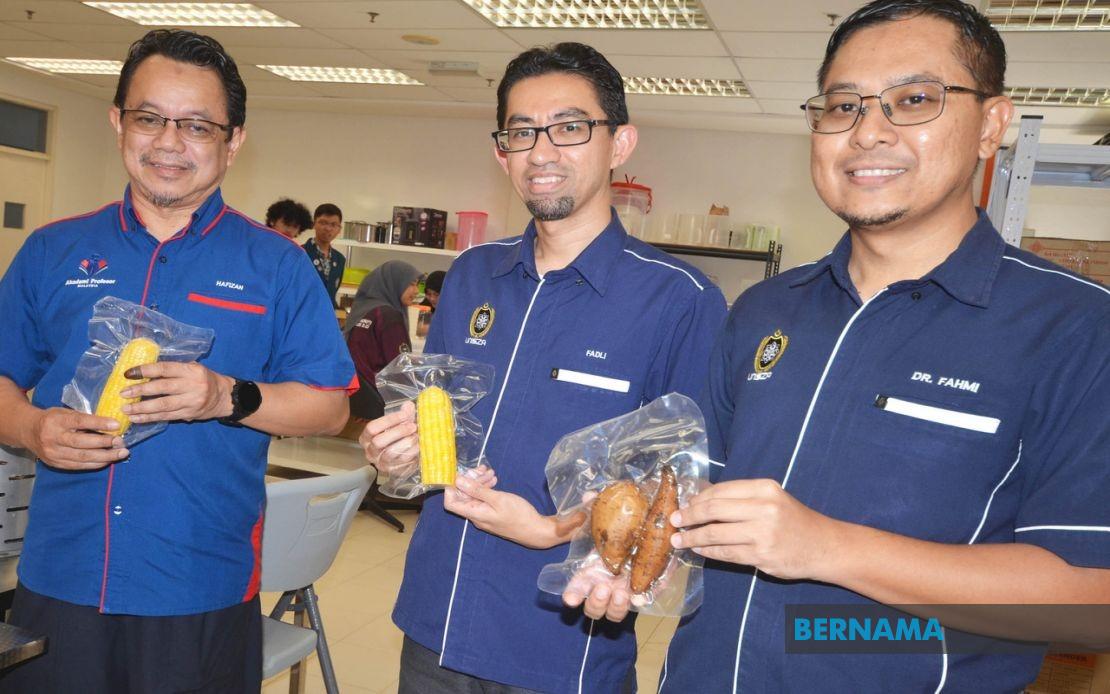
Universiti Sultan Zainal Abidin has launched an innovative response to a persistent challenge facing farmers in Terengganu's Besut district: the inability to monetise their harvest due to marketing obstacles and middleman pressure. The Dapur Komuniti, or Community Kitchen, operates in tandem with the university's Sustainable Community Farm, functioning as both a food innovation hub and an economic revitalisation tool designed to address systemic disadvantages that plague rural agricultural producers across the state.
The core problem facing Besut's farming community reveals deeper structural inequities within Malaysia's agricultural supply chain. According to Prof Dr Hafizan Juahir, dean of the faculty overseeing the initiative, local farmers have historically received depressed prices for their commodities. Sweet potatoes, for instance, previously sold for less than RM2 per kilogramme at the farm gate, yet these same products commanded significantly higher retail prices when transported to major urban markets including Kuantan in Pahang and Klang Valley centres. This price disparity—rooted in logistical constraints, limited access to modern digital marketing infrastructure, and the extractive middleman system—has created a cycle of diminished farm incomes and mounting post-harvest losses.
The university's response transcends simple market intervention. By establishing Dapur Komuniti as a research and development facility, UniSZA has created infrastructure capable of transforming perishable raw agricultural output into shelf-stable value-added products with extended commercial viability. This transformation extends product shelf life from days to over a year, fundamentally altering the economics of small-scale farming in the region. The initiative demonstrates how institutional resources, particularly those within tertiary education, can be deployed to solve concrete community problems while generating usable data about agricultural challenges.
One concrete example illustrates the practical impact: the facility now produces pickled Terengganu Sweet Melon, a value-added product manufactured from lower-grade melons that would otherwise be discarded. This innovation simultaneously addresses two entrenched problems—food waste and farmer income volatility—by creating alternative revenue streams from produce that would otherwise generate zero economic return. The initiative therefore reframes agricultural surplus not as a failure of production but as an untapped raw material for value creation.
Beyond product innovation, Dapur Komuniti serves as a skills development centre offering hands-on food processing training for local residents and farming families. This training component is particularly significant for rural communities with limited access to formal vocational pathways. By embedding practical instruction within an active production environment, the university provides learning opportunities that bridge the gap between theoretical knowledge and real-world industrial application. Participants gain marketable skills while contributing to actual food production operations.
Recognising the value of formalising this training infrastructure, UniSZA is currently negotiating with the Department of Skills Development to establish Dapur Komuniti as an accredited Malaysian Skills Certificate (SKM) training centre specialising in food processing. This accreditation would enable UniSZA students to simultaneously pursue a bachelor's degree while earning an SKM Level 3 qualification, ensuring that graduates enter the workforce with both academic credentials and industry-recognised technical competencies. Such dual qualification pathways have become increasingly valuable in Malaysia's employment landscape, where employers increasingly seek workers with integrated theoretical and practical expertise.
The broader societal implications extend beyond farming communities. Prof Dr Hafizan noted that the initiative will particularly benefit Malaysian Armed Forces veterans transitioning to civilian life. For this demographic, access to income-generating skills can significantly ease the post-service adjustment period, potentially reducing vulnerability and enhancing economic integration. By positioning Dapur Komuniti as a skills incubator for multiple vulnerable populations, the university amplifies the initiative's social impact beyond its primary agricultural focus.
This intervention reflects a growing recognition within Malaysian higher education that universities possess both moral obligation and practical capacity to address regional economic challenges. Rather than operating as isolated institutions confined to campus boundaries, forward-thinking universities increasingly serve as economic development anchors, leveraging research capacity, infrastructure, and human resources to generate solutions for surrounding communities. Terengganu's geographic distance from major urban centres makes such institutional partnerships particularly crucial for rural development.
The Besut agricultural context also carries strategic importance for Malaysia's food security agenda. As the nation seeks to reduce dependency on imported agricultural products and strengthen domestic production capacity, supporting smallholder farmers through improved market access and value-addition capabilities becomes increasingly vital. UniSZA's initiative demonstrates how strategic intervention at the community level contributes to broader national food sovereignty objectives while simultaneously strengthening regional economies.
The transformation of unsold agricultural commodities into processed products also addresses environmental sustainability concerns. Post-harvest losses represent wasted natural resources, squandered water, land, and labour inputs. By reducing waste through value-addition, Dapur Komuniti simultaneously improves economic efficiency and reduces environmental impact. This integration of economic development with sustainability principles reflects contemporary understanding that poverty alleviation and environmental stewardship are complementary rather than competing objectives.
Implementation of such initiatives does require sustained commitment beyond initial launch phases. Success will depend on maintaining farmer engagement, ensuring market access for value-added products, and securing consistent institutional funding. Early evidence suggests strong community receptivity, but scaling operations while maintaining quality and accessibility will present ongoing challenges requiring adaptive management and continuous stakeholder dialogue.
For policymakers across Southeast Asia observing successful agricultural innovation models, Dapur Komuniti offers instructive lessons about leveraging institutional assets for community development. The initiative demonstrates that university-community partnerships, when structured around genuine problem-solving rather than tokenistic engagement, can generate meaningful economic transformation while advancing educational missions. As rural development remains a priority across the region, such integrated approaches warrant broader replication and adaptation to local contexts.

