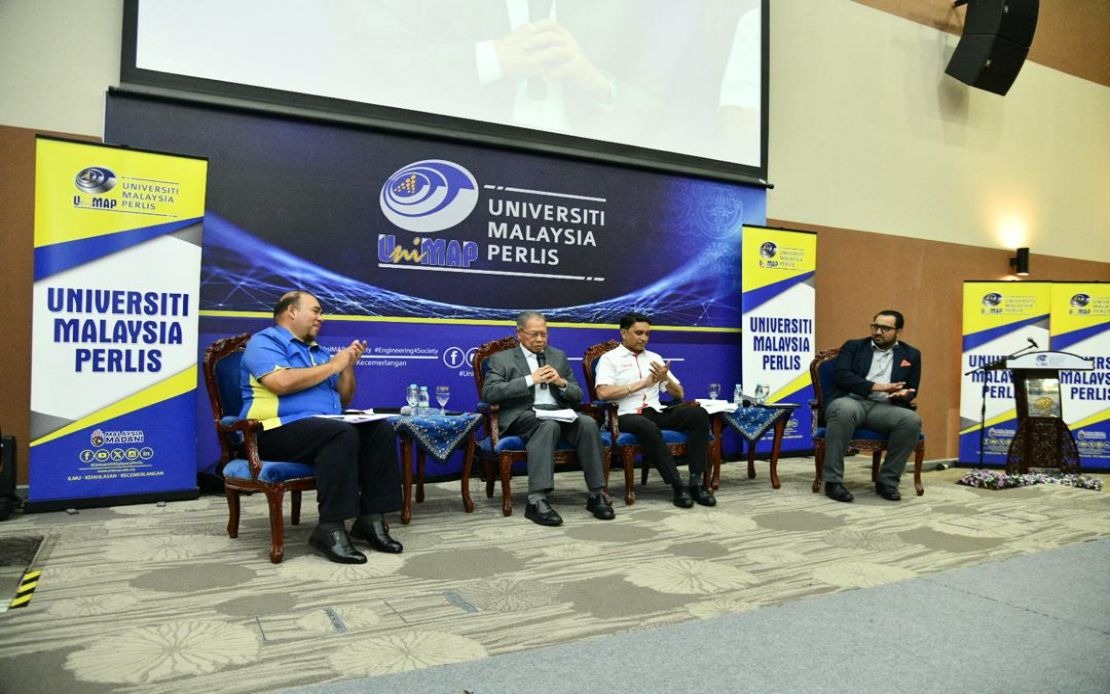
Universiti Malaysia Perlis has emerged as a critical pipeline for developing skilled workers in Malaysia's semiconductor and electronics sectors, churning out nearly 2,000 graduates annually to address growing industry demand. Speaking at a major forum on semiconductor policy in Arau, Vice-Chancellor Datuk Prof Dr Zaliman Sauli underscored the university's strategic role in building human capital for sectors that increasingly define Malaysia's competitive advantage in the global economy.
The university's contribution is particularly timely given Malaysia's ambitious National Semiconductor Strategy, which targets training and deploying 60,000 skilled workers and engineers across the sector by 2030. This target reflects recognition at the highest policy levels that semiconductor expertise represents critical infrastructure for national economic resilience and technological sovereignty. UniMAP's annual output of nearly 2,000 graduates translates to roughly one-third of the workforce growth needed annually to meet this 2030 benchmark—a substantial contribution that positions the institution as fundamental to achieving these objectives.
Recent employment data underscores the relevance of UniMAP's curriculum. Graduate Employability figures for 2024 and 2025 reveal that more than 30 per cent of the university's graduates begin their professional careers directly within the electrical and electronics sector, demonstrating strong alignment between academic offerings and industry hiring patterns. This placement rate suggests that UniMAP graduates possess skills and knowledge that employers actively seek, a critical indicator that the university remains responsive to evolving industry requirements rather than relying on outdated or disconnected academic frameworks.
Malaysia's position within the global semiconductor value chain has shifted substantially over recent decades. The nation now ranks as the world's sixth-largest semiconductor exporter and claims seven per cent of total global chip trade. Within the Assembly, Testing and Packaging segment—a crucial downstream activity in chip production—Malaysia controls approximately 13 per cent of global market share. This commanding position reflects decades of investment, manufacturing expertise, and a relatively sophisticated supply ecosystem. However, maintaining and extending this leadership depends directly on the availability of qualified domestic talent capable of managing increasingly complex technical operations and navigating the transition toward higher-value activities.
Semiconductors have transcended their original role as supporting components for consumer electronics. Today, semiconductor technology underpins virtually every significant technological frontier: artificial intelligence systems that process vast datasets, electric vehicles that require sophisticated power management chips, smartphones that incorporate multiple specialized processors, and the data centres that form the physical foundation of cloud computing and digital services. This expanding technological scope means semiconductor skills command premium salaries and represent critical competitive advantages for any nation seeking to participate in advanced technology sectors.
UniMAP's strategy extends beyond traditional classroom instruction. The university has cultivated multiple pathways designed to embed industry expertise within academic structures. Industry-on-Campus initiatives bring working professionals and real-world project challenges directly into university settings. Industry Advisory Panels ensure curriculum development responds to actual employer needs rather than academic assumptions about what workers should know. The recruitment of International Adjunct Professors introduces global expertise and research frontiers into Malaysian classrooms. Professional certification programmes aligned with industry standards provide graduates with credentials that employers immediately recognize and value, reducing the transition period between graduation and productive employment.
The forum that brought these issues into focus featured prominent voices spanning government, economic development authorities, and multinational industry players. Former International Trade and Industry Minister Datuk Seri Dr Mustapa Mohamed's participation reflects the political priority assigned to semiconductor development within national economic strategy. The Northern Corridor Implementation Authority, represented by Chief Executive Datuk Mohamad Haris Kader Sultan, underscores that semiconductor growth carries particular significance for Malaysia's northern states, where geographic and infrastructure advantages position the region as a potential hub for semiconductor investment and production. Ahmed Zaki Moten, Head of Government and Public Affairs at Micron Technology Inc Malaysia, represents the private sector perspective—multinational corporations evaluating where to invest significant capital and employment depend heavily on local talent availability and educational institutions capable of supplying it.
The emphasis on partnership across government, industry, and universities reflects a fundamental insight: semiconductor sector development cannot succeed through any single institutional actor alone. Universities generate knowledge and train workers; government establishes enabling policies, infrastructure, and strategic frameworks; industry provides practical requirements, employment, and capital. Malaysia's historical success in semiconductors derived partly from this collaborative approach, and maintaining global competitiveness requires deepening and modernizing these connections rather than allowing them to atrophy.
For Malaysia, the stakes of semiconductor sector development extend beyond immediate economic metrics. The sector represents a pathway toward technological sophistication and industrial upgrading. Countries that control semiconductor design, advanced manufacturing, and testing capabilities accumulate intellectual property, technical expertise, and the ability to set standards. As global chip supply chains undergo reshaping due to geopolitical tensions and diversification efforts, Malaysia possesses genuine opportunities to attract investment and expand its role. However, realizing these opportunities depends absolutely on availability of appropriately skilled workers—the constraint that institutions like UniMAP directly address.
Looking forward, UniMAP's commitment to expanding semiconductor workforce development through enhanced industry partnerships positions the university to meet evolving demands. The trajectory of semiconductor technology suggests that skill requirements will continue intensifying rather than stabilizing. Artificial intelligence, quantum computing, and next-generation wireless technologies will demand workers capable of engaging with increasingly abstract and mathematically demanding concepts. Universities that develop educational pathways preparing graduates for these challenges will prove essential to their nations' competitive positioning.
For Malaysian policymakers and industry leaders, UniMAP's trajectory represents both accomplishment and direction. The university is successfully connecting Malaysian talent with sector opportunities; simultaneously, the expansion of UniMAP's semiconductor-focused programmes signals confidence in Malaysia's long-term role within global semiconductor networks. Whether Malaysia sustains and expands its position as a significant semiconductor economy depends substantially on ensuring that institutions like UniMAP possess the resources, partnerships, and strategic support necessary to continue scaling their contribution.

