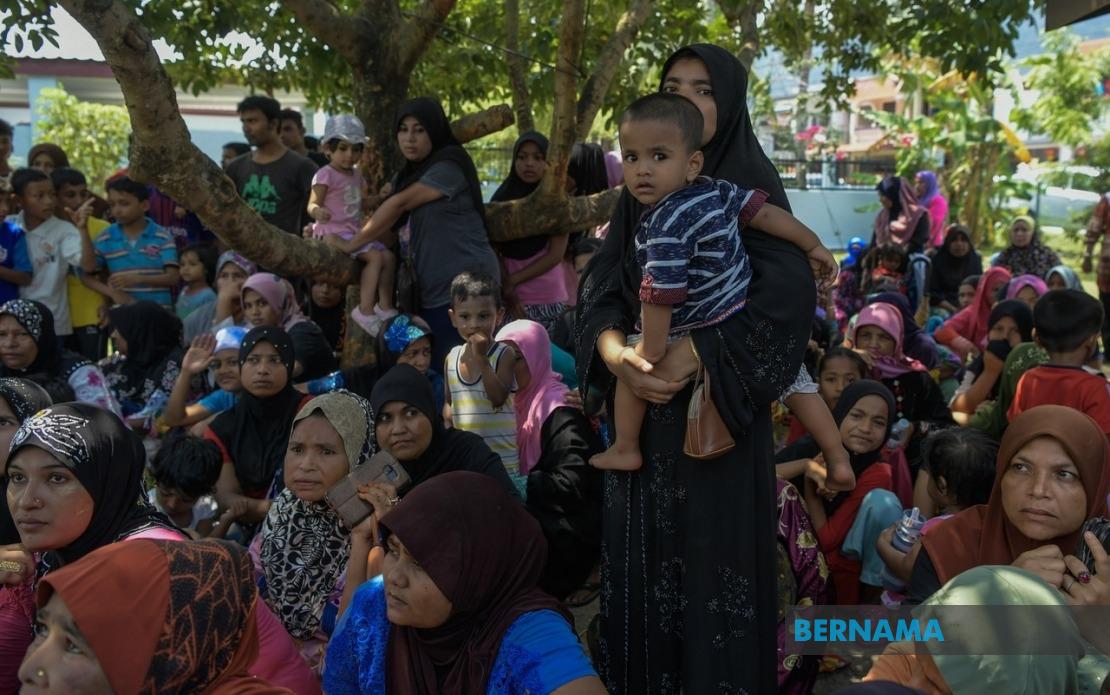
Malaysia's Economy Minister Datuk Akmal Nasrullah Mohd Nasir has made clear that possession of a United Nations High Commissioner for Refugees (UNHCR) card does not exempt holders from Malaysian jurisdiction or provide protection from legal consequences. Speaking during a Global Supply Crisis Briefing streamed on the Ministry of Economy's Facebook page on July 13, the minister stressed that individuals committing criminal acts will be subject to full investigation and prosecution under the country's existing legislative framework, regardless of their refugee status or documentation.
The minister's statement addresses growing public concern about how Malaysia manages its refugee population and the attendant security implications. The clarification became necessary following widespread misunderstanding about the nature and scope of UNHCR documentation, particularly amid heightened awareness of how such protection gaps might be exploited by criminal networks. Akmal Nasrullah emphasised that the government recognises the distinction between providing humanitarian assistance and safeguarding the country's internal security.
This pronouncement followed a presentation by the Home Ministry to the National Economic Action Council (MTEN) at its meeting chaired by Prime Minister Datuk Seri Anwar Ibrahim at the Parliament building. The Home Ministry outlined escalating concerns regarding refugee management, specifically focusing on documentation integrity, the activities of human trafficking organisations, and their implications for community safety across Malaysia. These issues have taken on increased urgency as Malaysian authorities grapple with balancing international humanitarian obligations with domestic security imperatives.
Through its Immigration Department, the Home Ministry is rolling out the Refugee Registration Document (DPP) Programme, a comprehensive initiative designed to establish proper identification systems for refugee populations within Malaysian territory. The programme incorporates biometric registration mechanisms, security screening procedures, population control measures, and active enforcement operations. This systematic approach represents a significant upgrade to Malaysia's capacity to track and manage refugee movements and ensure that documentation cannot be misused for illegal purposes.
Border enforcement and counter-trafficking operations are receiving particular attention under the new strategy. Malaysian authorities plan to intensify coordinated operations targeting smuggling networks, human trafficking syndicates, document fraud, and unauthorised border crossings. The government will deploy advanced data analytics and monitoring technologies to detect potential security threats and support law enforcement agencies in making informed operational decisions. This technological infrastructure aims to create a more sophisticated border management system than previously available.
The financial commitment to these initiatives is substantial. The government has allocated RM1.2 billion across multiple agencies for projects centred on border security and control measures. This investment reflects the seriousness with which authorities are treating the intersection of refugee management and national security. The funding will support both immediate operational needs and longer-term infrastructure development.
Expanding the operational scope of the Malaysian Border Control and Protection Agency represents another key element of this strategy. Authorities are accelerating the expansion process to enable the agency to manage borders more effectively and enforce regulations more comprehensively. By strengthening this agency's capabilities and jurisdiction, the government aims to create a more unified and efficient approach to securing Malaysia's international boundaries against irregular migration and associated criminal activities.
For Malaysian policymakers and citizens, this clarification carries important implications. The message signals that humanitarian support for refugees does not come at the expense of law and order, and that the country maintains clear boundaries regarding who enjoys legal protection and immunity. This stance seeks to reassure the public that security concerns are being taken seriously while maintaining Malaysia's international commitments to refugee protection under United Nations protocols.
The timing of this statement also reflects broader regional migration pressures affecting Southeast Asia. Malaysia, as a relatively developed economy with established infrastructure, remains an attractive destination for displaced persons and migrants from surrounding countries experiencing conflict, persecution, or economic hardship. The government's multifaceted approach—combining humanitarian registration with robust enforcement—represents an attempt to manage these flows in ways that protect both vulnerable populations and local residents.
Beyond refugee issues, the National Economic Action Council meeting addressed other pressing matters including food security challenges and the resilience of Malaysia's manufacturing sector amid global supply chain disruptions. These discussions underscore how refugee management intersects with broader economic policy and demonstrates the government's holistic approach to complex policy challenges affecting national stability and prosperity.
The minister's explicit statement that UNHCR documentation does not override Malaysian legal authority should clarify misconceptions that may have circulated among both refugee communities and the general public. Clear communication about the nature and limitations of protection documents is essential for maintaining public confidence in both refugee management systems and law enforcement capacity. As Malaysia continues developing its refugee framework, maintaining this clarity between humanitarian obligations and legal sovereignty will remain crucial for policy credibility.

