The US Open women's singles draw, which gets underway on Sunday at Flushing Meadows, presents a rare landscape of vulnerability among its highest-ranked competitors, potentially reshuffling the narrative that has dominated the year's tennis calendar and opening unexpected pathways for previous champions. Top seed Aryna Sabalenka's puzzling dip in performance since her dominant start to the season, combined with second seed Elena Rybakina's nagging leg injury sustained in Cincinnati, has fundamentally altered the contours of what many expected to be a straightforward championship race.
Sabalenka's quest to become only the third woman in the Open Era to capture three consecutive US Open titles has been derailed by her abysmal second half of the season. Since winning the Australian Open and Miami's Sunshine Double earlier this year, the Belarusian star has conspicuously failed to reach another final, a significant departure from her typically dominant form. Her struggles have extended to the crucial moments of matches, where former world number four Mary Joe Fernandez notes that Sabalenka has repeatedly surrendered commanding leads in recent events. Were she to overcome these mental hurdles and capture a third crown, she would join only Serena Williams, who achieved the feat between 2012 and 2014, in that exclusive achievement, with the added pressure of maintaining her position atop the world rankings as she approaches 100 consecutive weeks at number one.
Rybakina's physical concerns compound the disruption to the seeding hierarchy. Her withdrawal from Cincinnati due to a leg injury has cast genuine doubt over whether the Kazakhstani player can summon full fitness and focus during a gruelling two-week major championship. The injury raises questions about her capacity to string together the consecutive victories required to win a Grand Slam, particularly when facing the kind of physical and tactical demands that Flushing Meadows imposes on its competitors.
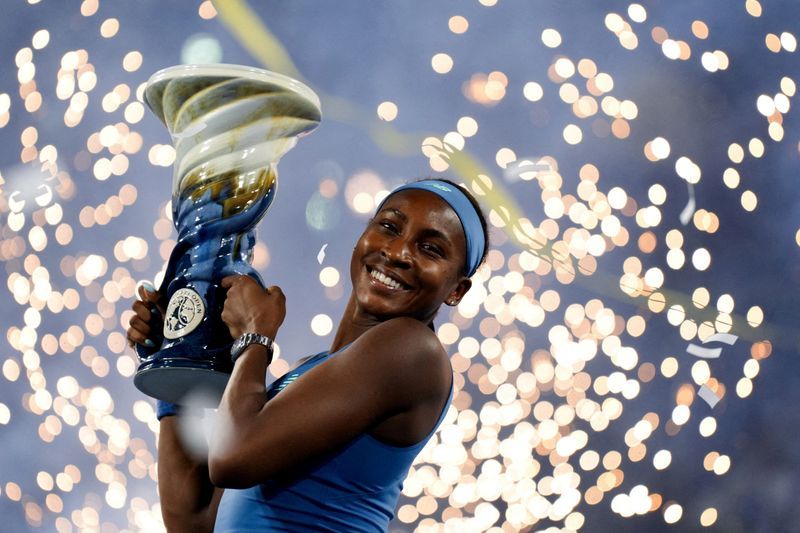
In stark contrast to these circumstances, Coco Gauff has emerged as the genuine form player heading into the tournament. The 2023 champion, who previously won at Flushing Meadows, has orchestrated a remarkable turnaround in her professional trajectory, particularly through her long-maligned service motion. Her performances in Toronto and Cincinnati, where she captured her maiden title of the season with a confidence-laden display, suggest that Gauff has finally synthesised the technical and mental elements that constitute elite tennis. Fernandez has observed that Gauff is presently delivering the most convincing brand of tennis among all contenders, a sentiment echoed across the commentary landscape as the tournament approaches.
Gauff's connection to the Flushing Meadows environment and American spectators provides another considerable advantage. As a perennial favourite among New York's vociferous crowds, she derives genuine energy from the partisan support that materialises during her matches. This home advantage, combined with her elevated form and the psychological lift that comes from a title victory in Cincinnati just days before the Open begins, positions her as a formidable challenger despite her fourth-ranked seeding.
The resurgence of Iga Swiatek, the Polish six-time major champion, represents another compelling storyline in an unusually open women's field. After enduring a season marked by considerable inconsistency and domestic criticism, Swiatek reanimated her campaign by winning the Toronto title earlier this month, demonstrating that her peak form remains accessible. Her journey through the year has been demonstrably turbulent, with quarter-final exits at all three prior majors suggesting that her game required recalibration and psychological restoration before she could operate at championship-winning levels again.
Swiatek's candid reflection on her seasonal struggles, acknowledging that her impatience and hunger occasionally outpaced her actual capabilities, suggests a player who has learned vital lessons about the rhythm and patience required to peak at precisely the right moment. The eighth-ranked Pole's victory over Rybakina in Toronto carried particular significance, effectively announcing her return to contention and vindicating her decision to persevere through the difficult middle stages of her campaign. By the time the US Open commences, her trajectory places her among the genuine candidates for the trophy.
American interests in the women's draw extend beyond Gauff. Fourth-ranked Jessica Pegula, representing the United States alongside Gauff, carries the weight of national expectation as the American contingent attempts to break a streak of title droughts at the first three majors this year. Neither American has advanced to a final at the Australian Open, French Open, or Wimbledon in 2024, establishing a hunger and motivation that could propel Pegula deeper into the New York fortnight than her seeding might suggest.
Yet the field remains sufficiently competitive that multiple pathways to the championship exist. Russian teenager Mirra Andreeva, who announced herself as a major-tournament winner by capturing her maiden Grand Slam title at Roland Garros, possesses the kind of fearlessness and rising trajectory that has historically disrupted seemingly predetermined tournament scripts. Czech player Linda Noskova, whose breakthrough Wimbledon triumph last month demonstrated her readiness for the highest stage, brings fresh momentum into New York. Alexandra Eala of the Philippines has captured the sport's attention through her emphatic victory in the WTA 500 event in Washington, notably eliminating four-time major winner Naomi Osaka and Pegula in succession, an accomplishment that signals the emergence of a genuinely dangerous competitor.
Osaka, the two-time US Open champion from 2018 and 2020, remains a threat despite her extended absence during maternity leave in 2023. Her return to competitive tennis has produced sufficient evidence of her capacity to compete at the highest level, including a final appearance at Bad Homburg in June and a semi-final run at the US Open itself last year. The New York crowd's customary adoration of Osaka creates an additional psychological boost, though her five-year championship drought, stretching back to the 2021 Australian Open, indicates that translating recent form into major-championship victories remains elusive.
Observers of the women's game acknowledge that the tournament landscape has fundamentally shifted from what appeared inevitable mere weeks ago. ESPN commentator Patrick McEnroe has suggested that as many as six to eight players possess the capability to claim the title, a democratisation of possibility that renders predictions hazardous. The absence of absolute dominance from the seeded players, combined with the peaking form of Gauff and Swiatek alongside the emergence of younger players, has produced a genuinely competitive championship environment where the outcome will likely depend upon which player executes most effectively during the crucial moments.

