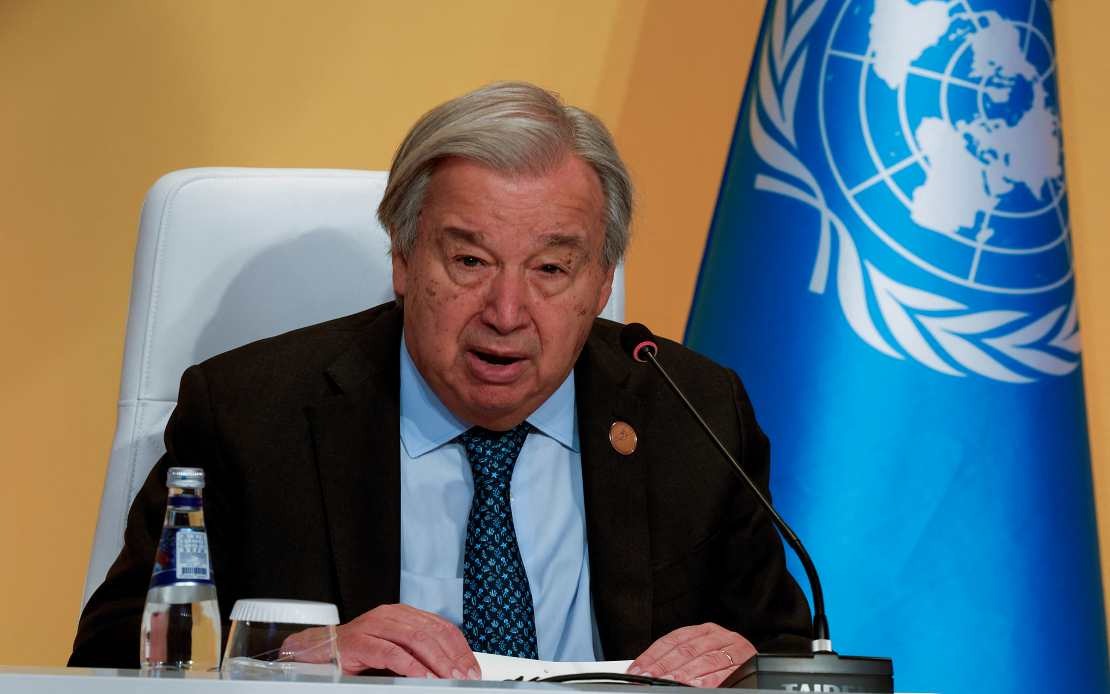
The United Nations has raised the alarm over deteriorating security conditions in the Persian Gulf region, with Secretary-General Antonio Guterres expressing grave apprehension at the pattern of military escalation unfolding across one of the world's most strategically crucial waterways. In a statement issued through his official spokesperson on Sunday, Guterres underscored the severity of recent incidents involving Iranian operations against commercial shipping in the Strait of Hormuz, retaliatory American military strikes against Iranian targets, and Iranian attacks affecting neighbouring states in the region.
The escalating cycle of military confrontations threatens to spiral beyond the immediate participants and create far-reaching consequences that extend well beyond the Middle East. Guterres emphasised that a return to large-scale armed conflict in the Gulf would trigger catastrophic repercussions for the civilian populations living throughout the region, destabilising fragile communities and displacing millions. The humanitarian cost alone would be staggering, with infrastructure destruction, refugee crises, and prolonged regional instability creating generational challenges for Gulf nations seeking to rebuild.
Beyond humanitarian concerns, the UN chief drew explicit attention to the threat posed to international peace and security architecture. The Gulf region occupies a central position in global geopolitics, and uncontrolled escalation could draw in external powers, transform bilateral tensions into broader conflicts, and undermine the international legal frameworks that have governed maritime conduct for decades. This deterioration would weaken multilateral institutions and embolden other actors globally who might interpret such chaos as evidence that international law cannot restrain powerful states.
The economic implications of continued tensions carry particular weight in the secretary-general's warning. The Strait of Hormuz serves as a critical chokepoint through which approximately one-third of global maritime oil trade passes daily. Disruptions to shipping lanes, increased insurance costs for vessels, and uncertainty surrounding energy supplies create ripple effects throughout the world economy. For Malaysia and other Southeast Asian economies heavily dependent on stable energy prices and uninterrupted trade flows, any extended crisis in the Gulf directly translates into higher costs, supply chain disruptions, and reduced economic growth prospects.
Guterres called upon all involved parties to demonstrate maximum restraint and refrain from taking further actions that would deepen the confrontation. This appeal was directed particularly at the immediate combatants but implicitly extended to regional allies and supporters who might consider joining the conflict or providing military assistance. The secretary-general's language reflected an understanding that military momentum, once established, becomes increasingly difficult to control, and that window-shopping for compromise narrows rapidly once forces become engaged in active hostilities.
The statement explicitly reaffirmed the critical importance of maintaining freedom of navigation through the Strait of Hormuz, a principle enshrined in international maritime law and essential to global commerce. Any sustained campaign to restrict shipping or make navigation prohibitively expensive would constitute a challenge to the rules-based international order that underpins global trade. The UN position here reflects consensus among maritime nations that the strait must remain open and accessible to vessels of all nations under international law.
Recognising that military confrontation, once initiated, develops its own logic and momentum, Guterres directed a specific appeal to Iran and the United States to resume diplomatic negotiations without delay. This plea acknowledged that despite mutual hostility and divergent strategic interests, dialogue remains the only mechanism through which outstanding disputes can be resolved without further bloodshed. The secretary-general's emphasis on urgency conveyed understanding that the current situation represents a critical juncture where diplomacy can still succeed before events spiral completely beyond control.
The spokesman's statement highlighted the secretary-general's conviction that addressing the root causes of tension requires engaging in substantive negotiations addressing the substantive grievances and security concerns motivating each party. Neither military posturing nor rhetorical confrontation can substitute for genuine diplomatic engagement aimed at finding solutions that accommodate legitimate interests on both sides. The complexity of longstanding regional disputes requires patient negotiation and creative problem-solving rather than military displays of strength.
For Southeast Asian nations including Malaysia, these developments warrant close monitoring and thoughtful policy consideration. The region's prosperity depends fundamentally on stable energy supplies and uninterrupted maritime commerce. Any extended Gulf crisis would pressure Southeast Asian economies through higher energy costs, reduced export opportunities, and diminished investor confidence. Malaysia's strategic location along major shipping lanes creates additional vulnerability to any disruption in global trade patterns or regional instability that might encourage piracy or maritime security complications affecting Southeast Asian waters.
The UN position essentially articulated what most regional and international actors recognise but struggle to enforce: that military solutions to the underlying tensions prove inherently temporary and costly, while sustained diplomatic engagement, though difficult and often frustrating, remains the only viable path toward durable peace. The secretary-general's intervention aimed to mobilise international opinion in favour of de-escalation while the window for negotiated resolution remains open, before military logic overwhelms political calculation.

