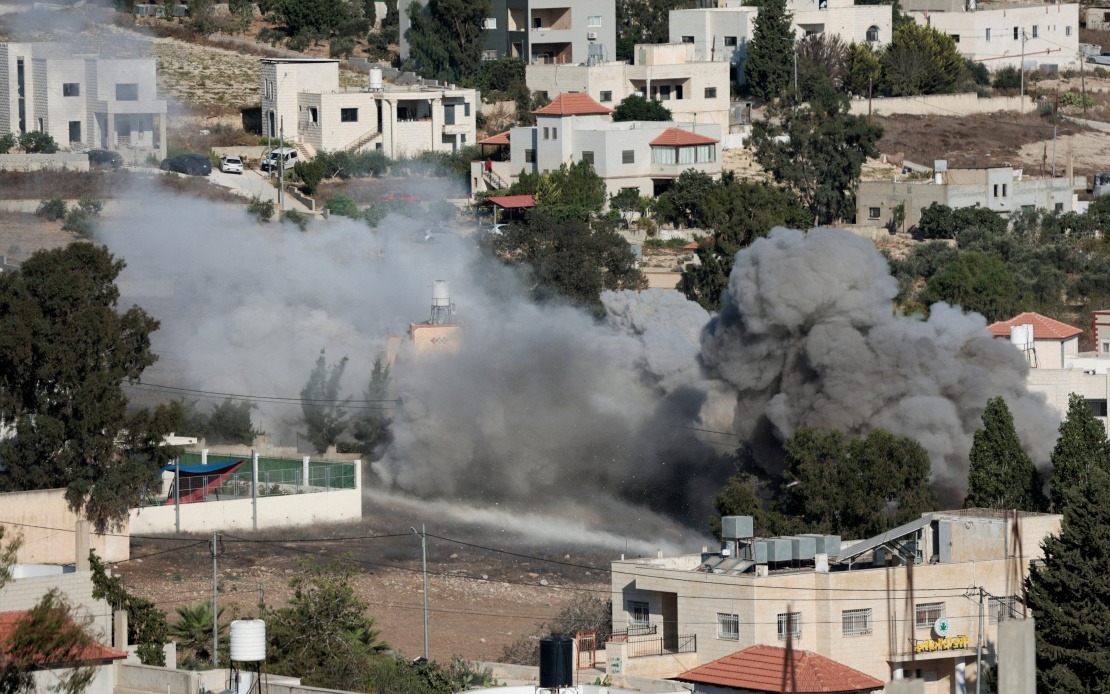
The United Nations Human Rights Office operating in the Occupied Palestinian Territory has issued a stark warning about the severity of settler violence targeting Palestinian communities, characterising the situation as having reached unacceptable proportions. Speaking through an official statement released on Thursday, the office detailed a pattern of systematic abuse that it says Israeli authorities have failed to adequately address or prevent.
The UN body has specifically called on the Israeli government to take decisive action by removing settlers engaged in violent campaigns against Palestinian civilians. Beyond simply withdrawing the settlers themselves, the office demands that authorities halt the ongoing seizure of Palestinian lands and cease the expansion of Israeli colonial outposts throughout the territory. This multilayered approach reflects the complexity of the problem, which the UN frames not merely as individual criminal acts but as a structural issue involving territorial control and demographic engineering.
A particularly illuminating case study involves Qusra, a village south of Nablus where settlers established an outpost in November 2025. Following this establishment, the pattern escalated dramatically. Settlers proceeded to take control of areas adjacent to the village and initiated an intensifying campaign of harassment against local residents. The documented abuses span a disturbing range of tactics: forced entry into homes, physical beatings, destruction of property, theft of belongings, and arson attacks. The office specifically noted an assault on a local mosque, suggesting a deliberate targeting of community institutions and religious sites.
The most egregious recent incident occurred in the Ras al-Ain area of Qusra during July, when settlers cut off water and electricity supplies to three Palestinian homes in a coordinated operation. This wasn't a momentary disruption but part of an escalating siege-like campaign. By August 9, the settlers had barricaded all gates and entryways to the homes and erected structures that physically prevented residents from leaving the area. The consequences for those trapped inside were severe: approximately 15 people, including at least two children, found themselves essentially imprisoned within their own residences. They were unable to access fresh water, electricity, or basic necessities, living under conditions of confinement and fear.
What distinguishes this case in the UN's assessment is the apparent abandonment by Israeli security forces. When Palestinian residents appealed to Israeli military personnel stationed at the location, their pleas went unanswered. In what amounts to a systematic prevention of assistance, Israeli forces also blocked access by medical personnel, humanitarian workers, and journalists attempting to reach the affected families. This apparent coordination between settlers and security forces transforms what might otherwise appear as vigilante violence into something more systematic.
The blockade persisted even after Israeli soldiers removed the tent settlers had erected on August 12. Critically, the soldiers did not remove the settlers themselves, who continued their encirclement of the homes through the period of the UN's investigation. This half-measure—removing the visible obstruction while leaving the perpetrators in place—suggests either an unwillingness or inability on the part of Israeli authorities to fully confront the settler movement.
The UN Human Rights Office frames these incidents within a broader interpretive framework: it contends that settler violence, occurring with what it characterises as either active support or deliberate indifference from Israeli authorities, constitutes a deliberate strategy to render Palestinian life untenable and force displacement from ancestral lands. The office emphasises that the window for preventing a forced eviction of these families is narrowing, adding urgency to its appeal for intervention.
Internationally, the office invokes the January 2024 ruling by the International Court of Justice, which determined that all Israeli colonies in occupied territory violate international law and that Israel bears an obligation to end its colonial activities, withdraw all settlers, and terminate its unlawful occupation of the West Bank. The office notes with evident frustration that despite this binding determination, the situation on the ground continues to deteriorate, with settlements expanding and violence escalating.
For Malaysian observers and policymakers, this situation carries particular resonance. Malaysia, as a nation that has consistently supported Palestinian self-determination and independence through various international forums, views settler expansion and violence as fundamental obstacles to a sustainable peace settlement. The pattern documented here—of incremental territorial conquest through violence, demographic alteration, and displacement—mirrors concerns that regional governments have repeatedly raised in United Nations bodies and other multilateral venues.
The UN's assessment also underscores the enforcement gap between international legal pronouncements and ground-level reality. Despite clear rulings from the International Court of Justice, the UN says Israel has failed to comply with obligations under international humanitarian law to protect civilians under occupation, investigate attacks by non-state actors (the settlers), and hold perpetrators accountable. The office emphasises that these are not optional commitments but binding legal duties incumbent upon any occupying power.
Looking forward, the UN Human Rights Office has identified what it views as essential prerequisites for change. Israel must prevent attacks by settlers, thoroughly investigate incidents, and ensure proportionate accountability through its own judicial system. The office's language suggests frustration that such fundamental measures of law enforcement remain absent. For the international community, including Southeast Asian nations, this represents a test of whether international legal frameworks can constrain state behaviour or whether power dynamics ultimately determine outcomes in protracted conflicts.
The situation in Qusra and similar locations has become emblematic of what critics describe as structural violence embedded within the occupation itself. The UN's statement, while formally directed at the Israeli government, carries an implicit message to the international community: without external pressure and accountability mechanisms, the trajectory points toward further displacement and territorial loss for Palestinian communities.

