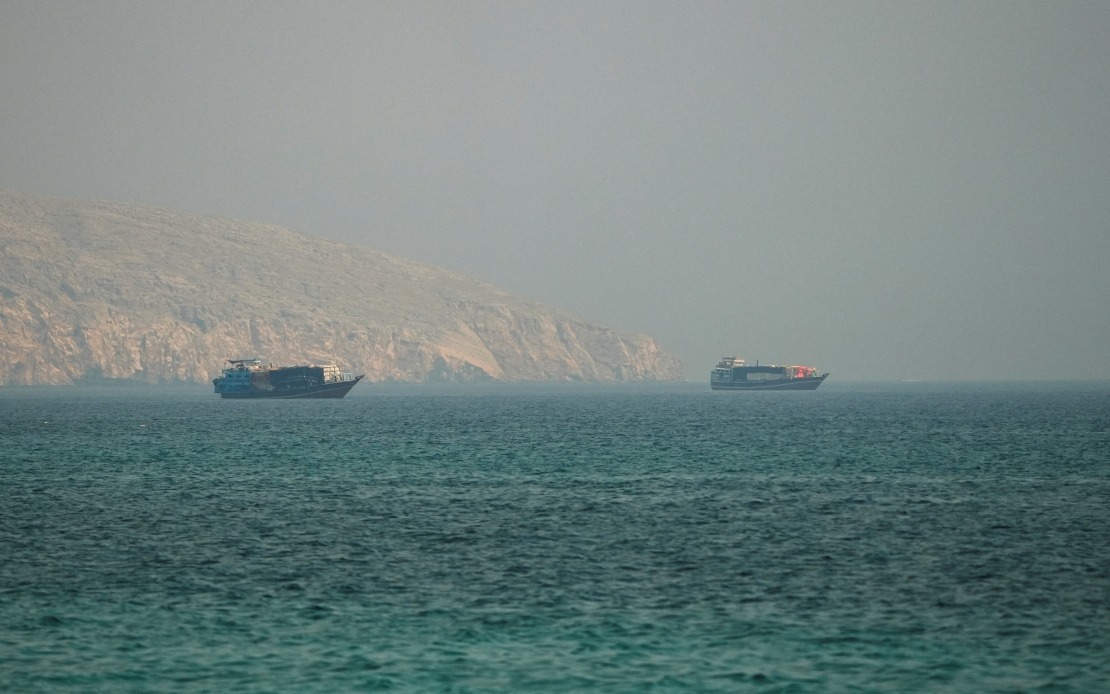
The United Nations' top official has sounded an urgent alarm over the deteriorating security situation in the Persian Gulf, warning that further military confrontation threatens not only regional stability but the broader framework of international peace and the health of the global economy. In a statement issued from Istanbul on Sunday, UN Secretary-General Antonio Guterres conveyed through his spokesperson Stephane Dujarric that the organisation remains deeply troubled by the cycle of escalating attacks involving Iranian naval strikes against commercial shipping in the Strait of Hormuz, coordinated US military operations against Iranian targets, and Iranian retaliatory strikes directed at objectives in surrounding territories.
The mounting tensions reflect a dangerous breakdown in the strategic understanding that once governed relations between Washington and Tehran, particularly following the collapse of the Joint Comprehensive Plan of Action in 2018. For Southeast Asian nations, including Malaysia, the deterioration of Gulf security carries profound implications. The region serves as a vital artery for global maritime commerce, with approximately one-third of all seaborne oil passing through the Strait of Hormuz annually. Any sustained disruption to navigation through these waters would immediately ripple across Asian economies dependent on stable energy supplies and predictable shipping routes, potentially driving up commodity prices and increasing operational costs for regional industries.
Guterres has explicitly called upon all parties involved in the dispute to demonstrate maximum restraint and to actively work towards de-escalation rather than further provocations. This appeal represents the international community's baseline position: that military posturing and tit-for-tat strikes, however limited in their current scope, risk triggering an uncontrolled spiral that could rapidly evolve into full-scale conventional warfare. The UN chief has articulated with particular clarity the catastrophic nature of such an outcome, emphasising that a return to comprehensive hostilities would devastate the civilian populations living across the Gulf region while simultaneously undermining the stability of global markets and international security frameworks that depend on freedom of passage and peaceful resolution of disputes.
Central to the UN's diplomatic approach is the insistence that both Iran and the United States must prioritise dialogue over military action. The Strait of Hormuz, through which roughly 30 percent of the world's traded oil transits daily, remains one of the planet's most strategically significant chokepoints. Guterres has underscored the absolute necessity of restoring and maintaining complete freedom of navigation through these waters, recognising that any prolonged restrictions on shipping would constitute a form of economic warfare affecting nations far beyond the immediate region. Malaysian shipping and logistics companies, which maintain substantial operations throughout the Indian Ocean and beyond, face increased insurance costs and routing complications whenever Gulf tensions escalate, effectively imposing a tax on regional commerce.
The UN Secretary-General's emphasis on the need to restore full freedom of navigation addresses a critical concern that extends beyond military considerations into the realm of international law and commercial rights. The Strait of Hormuz remains international waters, and freedom of passage there constitutes a recognised principle enshrined in the United Nations Convention on the Law of the Sea. When either party engages in actions that restrict or threaten shipping, they undermine this foundational principle and create precedents that could be exploited elsewhere, potentially affecting navigation through other critical waterways in Southeast Asian waters.
Guterres has specifically urged Tehran and Washington to engage urgently in direct negotiations aimed at resolving the outstanding issues that have poisoned their relationship. These outstanding matters are multifaceted and deeply entrenched, encompassing nuclear capabilities, sanctions regimes, regional proxy conflicts, and fundamental questions about the proper balance of power in the Middle East. The pathway back to the negotiating table requires both sides to demonstrate flexibility and acknowledge the legitimate security concerns of the other party, a delicate diplomatic exercise that requires skillful mediation and genuine willingness to compromise from both sides.
For Malaysia and other non-aligned Southeast Asian nations, the escalation in the Gulf presents a strategic dilemma. These countries have historically maintained pragmatic relationships with both Western powers and Iran, understanding that each plays important roles in regional and global affairs. The risk of the dispute becoming more entrenched could force smaller nations to take sides, undermining the principle of non-alignment that has long characterised the Association of Southeast Asian Nations' approach to major power competition. Additionally, any wider conflict would almost certainly disrupt the delicate balance that allows ASEAN to maintain productive relations with multiple great powers simultaneously.
The economic implications for Malaysian businesses and consumers cannot be overstated. Higher oil prices resulting from supply disruptions would increase production costs across numerous industries, from petrochemicals to shipping. Consumer inflation would likely follow, affecting purchasing power and economic growth. The uncertainty alone creates challenges for long-term planning and investment decisions across the Malaysian economy, as businesses must account for volatile energy price scenarios in their strategic calculations.
Guterres' intervention reflects the UN's traditional role as a voice for caution and restraint during periods of heightened international tension. While the Secretary-General possesses limited enforcement mechanisms, the moral authority of the office and the institutional weight of the United Nations can sometimes influence decision-making at the highest levels. The UN chief's appeal carries particular weight because it articulates not simply the interests of one faction, but rather the shared interests of the international community in preventing further escalation.
The question now facing both Iran and the United States is whether the mutual costs of continued confrontation will eventually outweigh the perceived benefits of maintaining a hardline position. For Malaysia and the broader Southeast Asian region, the answer to this question carries enormous consequences. A return to serious diplomacy between these two powers would reduce uncertainty, stabilise energy markets, and allow regional economies to focus on growth rather than managing the fallout from geopolitical turbulence. The stakes in this diplomatic effort extend far beyond the Gulf itself, touching the prosperity and security of nations across Asia and beyond.

