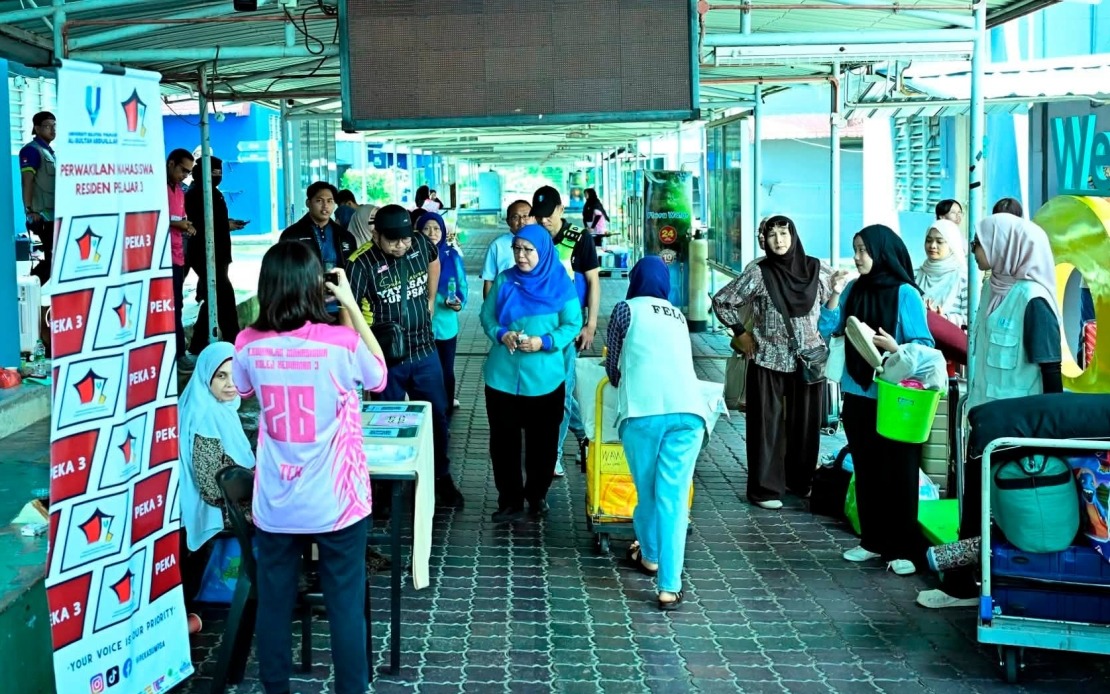
Universiti Malaysia Pahang Al-Sultan Abdullah (UMPSA) is intensifying efforts to ensure that financial constraints do not prevent talented but economically disadvantaged students from accessing tertiary education. Vice-Chancellor Prof Dr Yatimah Alias underlined this institutional priority during the university's latest student registration exercise in Kuantan on July 19, signalling that welfare support remains central to UMPSA's mission as the institution experiences robust growth.
The commitment comes at a significant moment for the Pahang-based university. A record 1,045 new diploma students enrolled for the 2026/2027 academic session on registration day, marking the highest intake since UMPSA's inception. This expansion reflects growing confidence in the institution's academic programmes and increased accessibility efforts, yet also raises questions about whether support infrastructure can scale proportionately with student numbers. Prof Dr Yatimah engaged directly with newly registered students during the day, demonstrating the university leadership's hands-on approach to understanding student needs and concerns.
Recognising the direct correlation between financial stability and academic success, UMPSA has broadened its scholarship offerings. During registration, 20 students received scholarships that comprehensively cover tuition fees alongside monthly living allowances, addressing two critical barriers that often force disadvantaged students to withdraw from studies or work excessively while studying. The scholarship scheme represents more than symbolic support—it addresses the reality that Malaysian students from low-income households frequently cite affordability as the primary obstacle to degree completion.
Beyond traditional scholarships, UMPSA has introduced targeted interventions through its foundation arm. An Early Education Incentive programme provided RM1,000 payments to students identified as facing financial hardship, funded through the UMPSA Foundation. This modest but meaningful assistance can cover essential costs including textbooks, accommodation deposits, or technology requirements that disproportionately burden disadvantaged cohorts. The tiered approach—combining comprehensive scholarships with supplementary emergency assistance—demonstrates strategic thinking about how different students experience financial precarity at different points in their academic journey.
The university's holistic strategy extends beyond mere financial transfers. Prof Dr Yatimah emphasised that UMPSA provides academic support services alongside monetary assistance, recognising that disadvantaged students often arrive at university with uneven preparation and require pedagogical scaffolding beyond what wealthier peers might need. This dual commitment to financial and academic support reflects international best practice in widening participation in higher education, particularly relevant in the Malaysian context where socioeconomic status remains the strongest predictor of tertiary education access.
UMPSA's priorities align with Malaysia's broader national agenda of ensuring equitable access to higher education. As the country seeks to develop human capital across all demographic groups, public universities play a crucial role in breaking cycles of intergenerational poverty. By prioritising disadvantaged students, UMPSA contributes to this larger project while simultaneously strengthening its own student population through diversity and expanded talent recruitment from communities that might otherwise remain excluded from university education.
The scale of UMPSA's current enrolment expansion—1,045 new diploma students representing an all-time high—suggests the university is experiencing rapid institutional growth. This trajectory creates both opportunities and pressures. The integration of record numbers of new students, particularly those requiring financial and academic support, tests institutional capacity. However, it also indicates that UMPSA's access initiatives are succeeding in attracting and enrolling students who previously might have considered university unattainable. The highest intake since establishment signals that the university's reputation for supporting disadvantaged cohorts is spreading through communities that historically face barriers to higher education.
For Malaysian readers, UMPSA's emphasis on disadvantaged student welfare carries particular significance given ongoing national debates about equitable access to quality education. As Malaysia competes regionally and globally for talent, demographic shifts mean the country cannot afford to exclude capable students on grounds of economic status. Universities that systematically support disadvantaged cohorts effectively expand Malaysia's talent pool and enhance long-term economic competitiveness by developing human resources across all income levels.
The sustainability of these support initiatives depends partly on ongoing resource allocation. UMPSA Foundation funding for emergency assistance and comprehensive scholarship schemes requires institutional commitment beyond the registration period captured in Prof Dr Yatimah's statement. Observers will watch whether the university maintains and expands these programmes as the larger student population materialises through subsequent semesters, or whether support narrows as administrative and financial pressures emerge from managing rapid growth.
Looking forward, UMPSA's approach offers a model potentially replicable across Malaysia's public university system. The combination of full-cost scholarships for selected students, supplementary emergency payments through foundation mechanisms, and integrated academic support creates a comprehensive safety net. As other institutions face their own enrolment pressures and equity mandates, learning from UMPSA's execution of support programmes could help strengthen access initiatives across the sector. Prof Dr Yatimah's public commitment suggests UMPSA leadership views disadvantaged student support not as peripheral charity but as fundamental to institutional mission and identity.

