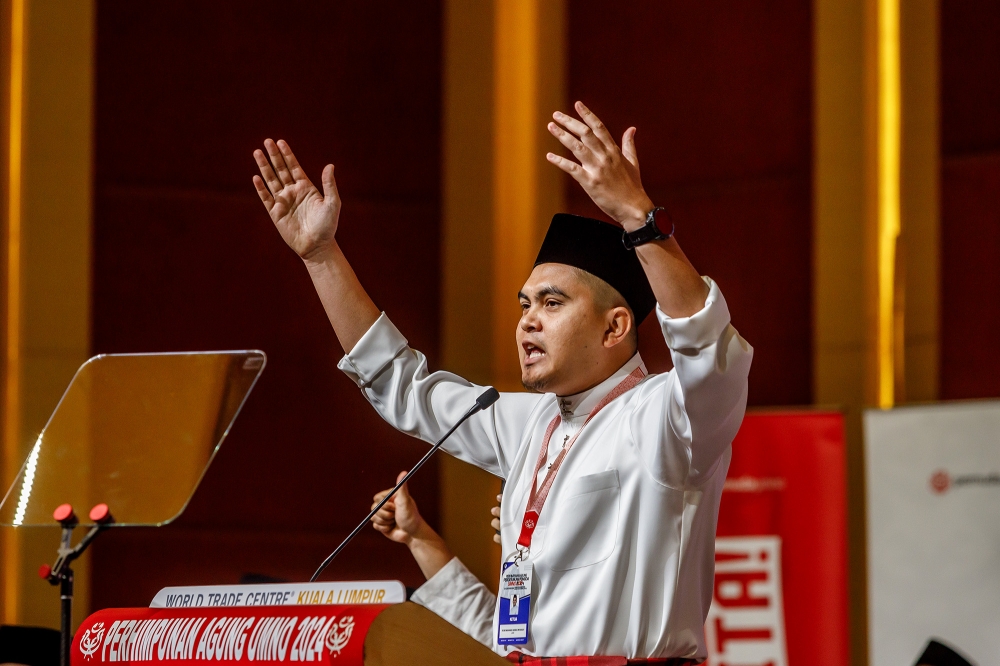
Kuala Lumpur — The friction within Malaysia's governing coalition has taken a sharper rhetorical turn, with Umno Youth chief Datuk Dr Akmal Saleh directly questioning the logic behind calls for Barisan Nasional to exit government over disagreements regarding electoral alliance formations. Speaking in the capital, Saleh presented what he framed as a challenge to the youth wing of Pakatan Harapan, suggesting that demands for BN's withdrawal appear asymmetrical and reflect a double standard in how coalition partners are treated.
The confrontation highlights escalating tensions within the unity government established following the 2022 general election, when BN and PH agreed to govern jointly following neither bloc's ability to secure a decisive parliamentary majority. That arrangement, meant to signal political maturity and shared governance, has increasingly been tested by disagreements over how both coalitions should approach future electoral contests. The underlying dispute centres on whether BN and PH should contest elections as separate entities or explore greater coordination in candidate selection and alliance structures.
Datuk Dr Akmal Saleh's intervention reflects Umno's frustration at what party leaders perceive as one-sided pressure. By directly questioning why only BN faces ultimatums rather than PH, the Umno Youth chief has articulated a complaint many within the older coalition believe has been inadequately voiced at senior levels. This rhetorical move signals that rank-and-file Umno members increasingly feel defensive about their party's position within the government and view criticism as unfairly targeted.
The electoral alliance question carries profound implications for Malaysian politics. For decades, BN operated as Malaysia's dominant governing coalition, maintaining supermajority control through predictable election cycles. The 2022 outcome fundamentally altered that reality, forcing both major coalitions into an unprecedented power-sharing arrangement. This structural change means neither bloc possesses the luxury of unilateral decision-making on electoral strategy, creating friction that periodic government crises merely symptomise.
Pakatan Harapan, despite leading the government and holding the Prime Minister's position, remains institutionally fragile. The coalition comprises ideologically diverse parties spanning from conservative Islamic movements to progressive secular forces. Within this context, some PH leaders likely view pressure on BN as a means of consolidating coalition unity by positioning themselves as principled custodians of the shared governance arrangement. Conversely, Umno and other BN components may interpret such pressure as PH attempting to impose terms that favour opposition parties and marginalise traditional power structures.
The timing of Akmal Saleh's challenge carries weight within Malaysia's political calendar. As the next general election approaches, questions about electoral pacts become increasingly urgent and high-stakes. BN's traditional electoral machinery and organisational capacity represent genuine advantages that any governing coalition would prefer to retain, while PH's popular mandate and claim to represent reform cannot be dismissed. These competing strengths create an inherent negotiating tension that no consensus appears yet capable of resolving.
For Malaysian voters and regional observers, this dispute reflects deeper questions about whether power-sharing arrangements can survive successive election cycles or whether institutional design inevitably succumbs to coalition members' self-interest. The unity government was presented as evidence of Malaysian democracy maturing beyond zero-sum partisan conflict, yet internal discussions about electoral strategy suggest that underlying competitive instincts remain largely dormant rather than resolved. When election season arrives, those instincts will inevitably resurface.
Umno Youth's public challenge to Pakatan Harapan Youth also signals changing internal party dynamics. Younger party members, less constrained by senior leadership's commitment to coalition stability, appear increasingly willing to articulate grievances that older party figures might suppress for diplomatic reasons. This generational friction could complicate efforts by party presidents and senior ministers to maintain unity government discipline, particularly as they navigate delicate negotiations about future electoral arrangements.
The substance of Akmal Saleh's argument possesses undeniable logical force. If electoral alliance disagreements represent grounds for government dissolution, then reciprocal demands should theoretically apply equally. Yet political logic rarely follows mathematical symmetry. PH's current control of the government and the Prime Minister's office means pressure on BN carries different weight than pressure on PH components, who possess institutional leverage through executive authority. This asymmetry explains the differential pressure, even if it appears formally unjust.
Regional context amplifies these tensions. Across Southeast Asia, coalition governments consistently struggle to survive for extended periods, as competing partners inevitably prioritise factional interests over collective governance. Malaysia's unity government will succeed only if both major coalitions accept some constraints on their electoral ambitions, a sacrifice that appears increasingly difficult as competition intensifies. Umno Youth's public intervention suggests rank-and-file frustration with such restraint may be reaching critical thresholds.
Moving forward, whether Malaysian leaders can address electoral alliance questions through negotiation rather than ultimatum will determine the unity government's longevity. Continued public sparring between coalition youth wings risks escalating political tensions in ways that senior leadership struggles to contain. Akmal Saleh's challenge therefore represents not merely a rhetorical point but a warning that patience with power-sharing arrangements may be eroding faster than official statements suggest.

