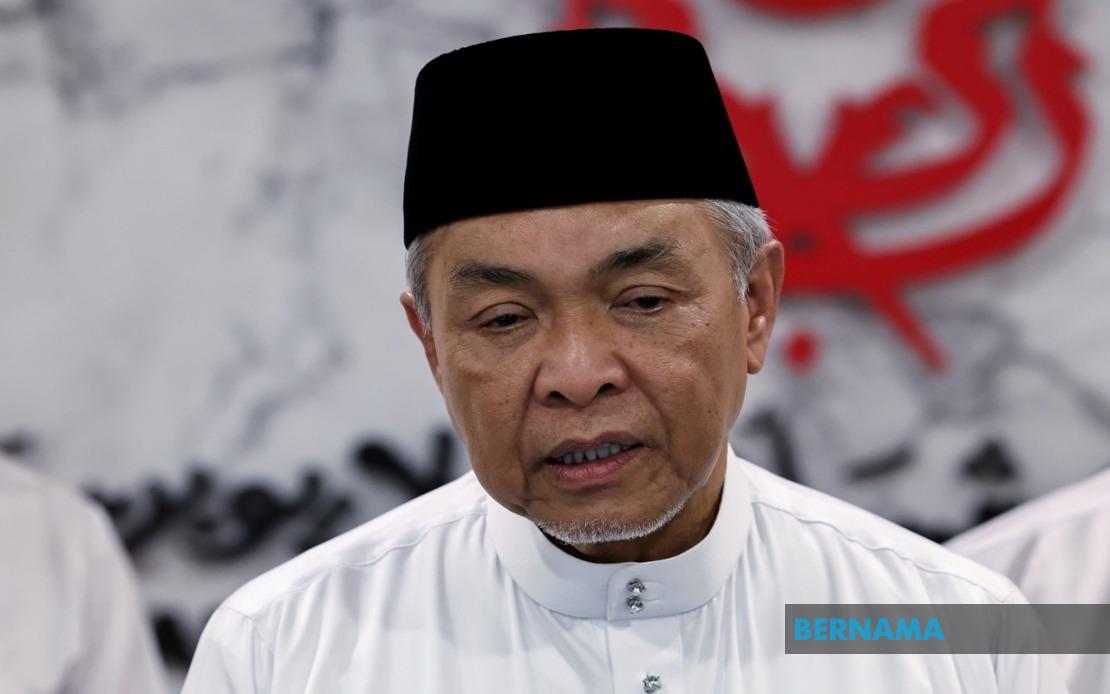
UMNO has signalled it will withhold formal coalition negotiations for the upcoming Melaka state election until after the state legislative assembly is officially dissolved, according to party president Datuk Seri Dr Ahmad Zahid Hamidi. The decision reflects a calculated approach by Malaysia's largest Bumiputera political party, which has entrusted Melaka Chief Minister Datuk Seri Ab Rauf Yusoh with leading any discussions once the dissolution formally occurs. This timing represents a strategic choice to separate preliminary soundings from substantive political negotiations, underlining UMNO's intention to maintain flexibility until the formal electoral process commences.
The Deputy Prime Minister's remarks came in response to questions regarding potential cooperation between UMNO and Perikatan Nasional (PN) in the state contest. While he acknowledged that informal discussions may already be occurring among party figures and allied politicians, Ahmad Zahid stressed that any structured negotiation framework would only materialise following the assembly's dissolution. This distinction between casual dialogue and formal engagement is particularly significant in Malaysian politics, where informal backchannel communications frequently precede official coalition arrangements. Such preliminary conversations often involve sounding out potential partners, understanding their demands, and assessing electoral viability without the political costs associated with public commitment.
The appointment of Ab Rauf Yusoh as UMNO's lead negotiator for coalition discussions places a seasoned administrator at the centre of potential political alignments. As Melaka's chief minister, Ab Rauf represents UMNO's incumbent state administration and brings direct knowledge of the state's political dynamics, demographic composition, and specific governance challenges. His negotiating role also reflects UMNO's confidence in the current state leadership and suggests the party expects the chief minister to emerge from any electoral contest in a position of continued authority or expanded coalition influence. The specificity of this delegation indicates that UMNO has already begun strategic planning despite the formal postponement of negotiations.
Ahmad Zahid's explanation reveals that UMNO has undertaken substantial groundwork beyond formal coalition discussions. The party conducted comprehensive preparations through its state political bureau, which compiled detailed electoral data and strategic assessments. These materials were subsequently presented to the UMNO Supreme Council (MKT), the party's highest decision-making body, enabling senior leadership to engage in granular discussion of Melaka's political landscape. This multi-layered preparation suggests UMNO is approaching the state election with methodical analysis rather than reactive positioning, gathering intelligence on voter preferences, opposition strategies, and potential coalition configurations before entering binding discussions.
The potential cooperation with Perikatan Nasional carries particular significance given the fluid state of Malaysian coalition politics. Perikatan Nasional has emerged as an increasingly influential force in state and federal political calculations, drawing support in certain regions while remaining contested in others. For UMNO, assessing cooperation with PN requires careful evaluation of electoral mathematics in Melaka, where the party's dominant position could be leveraged in coalition negotiations or risked in competitive primary contests. The strategic question facing UMNO is whether absorbing PN as a coalition partner enhances or diminishes the party's capacity to retain and expand its seat count, a calculation that can only be refined as formal dissolution approaches and negotiations commence.
Melaka's electoral context adds complexity to UMNO's cautious approach. The state has witnessed considerable political volatility in recent years, with coalition arrangements and government composition shifting following various political developments and elections. UMNO's current administration maintains significant grassroots presence and institutional advantages, yet the opposition remains competitive in certain constituencies. Any coalition agreement must navigate these local dynamics while remaining consistent with broader national political positioning by both UMNO and potential partners. The state thus serves as a microcosm of Malaysian politics, where local contests become proxies for testing national configurations.
The timing of Ahmad Zahid's public statement also carries tactical implications. By announcing that formal talks will occur only after dissolution, UMNO signals to both potential coalition partners and internal party members that decisions have not been predetermined. This stance preserves UMNO's negotiating leverage, allowing the party to assess options without appearing desperate or committed to any specific partner. For UMNO members and supporters in Melaka, the message suggests their party remains independently positioned rather than already subordinated within a broader alliance. Conversely, other political actors receive notice that UMNO's doors remain open to various arrangements, preventing premature foreclosure of options.
The distinction between informal and formal negotiations reflects established practices in Malaysian politics where preliminary discussions establish frameworks and identify potential areas of agreement before public announcements. Informal conversations allow parties to express reservations, explore bottom-line demands, and test compatibility without triggering the scrutiny and political costs attached to formal negotiations. These preliminary exchanges often determine whether formal talks prove productive or merely serve symbolic functions. By explicitly acknowledging this reality, Ahmad Zahid demonstrates transparency regarding political processes that often remain opaque to public observation, though this transparency itself serves strategic purposes.
UMNO's approach to the Melaka election also relates to broader questions about coalition stability within Malaysia's political system. The party must balance cooperation with potential partners against maintaining its own identity and autonomy. Over-dependence on coalition partners in state elections can constrain a party's flexibility in subsequent political developments, while excessive independence risks isolation in an era where most state governments operate through coalition arrangements. Melaka, where UMNO enjoys relatively strong positioning, provides an opportunity to negotiate coalition terms from a position of relative strength rather than desperation, a luxury unavailable to weaker partners.
For Malaysian and Southeast Asian observers, UMNO's measured approach illuminates how major political parties navigate coalition politics in democratic systems. Rather than rushing toward arrangements or making public commitments before necessary groundwork, UMNO is methodically building information advantages and strategic flexibility. This reflects political maturity and long-term thinking, though critics might argue it delays clarity for voters and other stakeholders. The coming weeks will reveal whether UMNO's strategic patience translates into advantageous coalition terms or whether postponing formal negotiations creates unexpected complications when the assembly eventually dissolves and negotiations formally commence.

