UMNO's leadership faces a critical juncture in determining how to approach the forthcoming Melaka state election, with the party's Supreme Council set to convene on August 28 to deliberate on its coalition strategy and electoral positioning. Party president Datuk Seri Dr Ahmad Zahid Hamidi will preside over the meeting, which promises to settle lingering questions about whether Barisan Nasional will maintain its current governing arrangement, pursue fresh political partnerships, or contest the contest as an autonomous force.
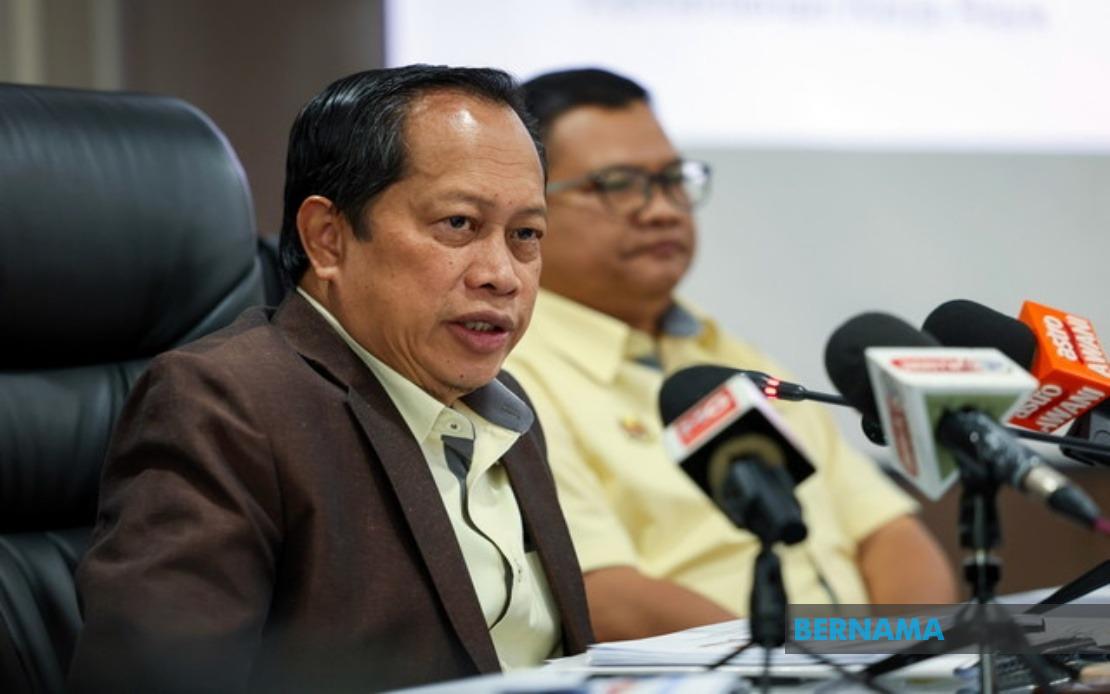
Speaking to journalists in Melaka on August 20, UMNO Supreme Council member Datuk Seri Dr Ahmad Maslan, who also serves as Deputy Works Minister, emphasised that no definitive determination has yet been reached on the coalition's direction for the state-level contest. He underscored the significance of allowing the formal party machinery to reach consensus rather than permitting unofficial commentary to drive strategic decisions, noting that various interpretations and proposals have circulated through media channels and statements from party representatives at different administrative levels.
The Deputy Works Minister highlighted the reality that discussions within UMNO and across the broader political landscape have encompassed multiple potential scenarios. These include a continuation of Barisan Nasional's existing collaboration with Pakatan Harapan, an alternative alignment with Perikatan Nasional, or possibly a recalibrated partnership configuration. He cautioned that meaningful conclusions require comprehensive deliberation at the highest party echelon rather than conclusions drawn from individual remarks or preliminary positioning by various UMNO figures in the state.
A fundamental principle guiding UMNO's coalition calculus, according to Dr Ahmad Maslan, is the necessity for party discipline and unity around whatever direction the Supreme Council ultimately endorses. He stressed that Barisan Nasional must calibrate its political approach with sensitivity to each state's unique circumstances, demographic composition, and electoral dynamics rather than applying a uniform strategy across all territories. This nuanced stance reflects the evolving complexity of Malaysian politics, where state-level contexts often diverge substantially from national-level coalition arrangements.
The timing of this decision carries particular significance given that Melaka's state government mandate terminates on December 31, creating a definitive deadline for electoral proceedings. The current administration emerged from the 15th state election with Barisan Nasional securing 21 of the 28 state assembly seats, establishing a commanding majority. Pakatan Harapan captured five seats, while Perikatan Nasional obtained two, reflecting broader patterns evident across multiple state contests in recent years.
Notably, the present state executive council composition includes assemblymen representing Pakatan Harapan, a structural arrangement that mirrors the federal Unity Government configuration established following the 15th general election. This existing cooperation has created institutional familiarity and demonstrated the feasibility of cross-coalition governance at the state level, potentially influencing deliberations within UMNO's upper ranks regarding continuation or modification of this arrangement.
For Malaysian observers and political analysts, this moment encapsulates the ongoing realignment occurring within the country's political ecosystem. The trajectory of Melaka's political direction will carry implications beyond the state borders, signalling either consolidation of the Unity Government model or potential repositioning that could reverberate across other state governments contemplating their own coalition strategies. The decision will also reflect internal UMNO dynamics, particularly regarding the relative influence of different factional viewpoints within the party hierarchy.
The broader regional context cannot be overlooked either. Southeast Asian politics has experienced significant coalitional fluidity over recent years, with traditional ideological alignments increasingly superseded by pragmatic calculations regarding governance capacity and electoral viability. Malaysia's willingness to experiment with cross-coalition governance arrangements at subnational levels positions it as a notable case study within the region for how entrenched adversaries might construct functional collaborative frameworks when electoral mathematics demand accommodation.
Several substantive considerations likely feature prominently in the upcoming Supreme Council deliberations. These encompass assessments of electoral prospects under various coalition permutations, the ideological compatibility of potential partners, the practical mechanics of resource allocation and candidate nomination procedures, and considerations regarding how particular alliance choices might influence voter sentiment beyond Melaka. The party must balance immediate state-level advantages against longer-term strategic positioning and consistency with messaging deployed across other electoral contests.
Until the August 28 meeting concludes, UMNO maintains deliberate ambiguity regarding its preferred trajectory, a posture that permits flexibility while internal consultations continue. The Supreme Council's ultimate pronouncement will crystallise the party's stance and bind the broader Barisan Nasional apparatus to a coherent approach. For component parties within Barisan Nasional, including Malaysian Chinese Association and Malaysian Indian Congress, the outcome will influence their own strategic calculations and resource deployment for the anticipated electoral contest.
The decision framework itself merits attention, as it demonstrates how traditional hierarchical party structures in Malaysia's political ecosystem retain consequential authority despite increasingly decentralised media landscapes and social commentary. By reserving final determinations to formal party institutions, UMNO signals commitment to institutional discipline, even as individual leaders and state-level figures contribute perspectives to the deliberative process. This procedural rigour may prove essential for maintaining coalition cohesion once whatever direction is ultimately chosen.
For voters in Melaka and observers monitoring Malaysian political trajectories more broadly, the August 28 meeting represents a nexus point determining not merely electoral mechanics but also the viability of collaborative governance models in an era of fragmented political alignments. The decision will reveal whether Barisan Nasional views its current arrangement with Pakatan Harapan as strategically valuable beyond the federal tier, whether Perikatan Nasional has sufficiently consolidated its position to present an appealing alternative coalition partner, or whether going independently remains the preferred posture. These calculations extend well beyond Melaka's boundaries, shaping the political landscape across Malaysia throughout the remainder of the year and potentially beyond.

