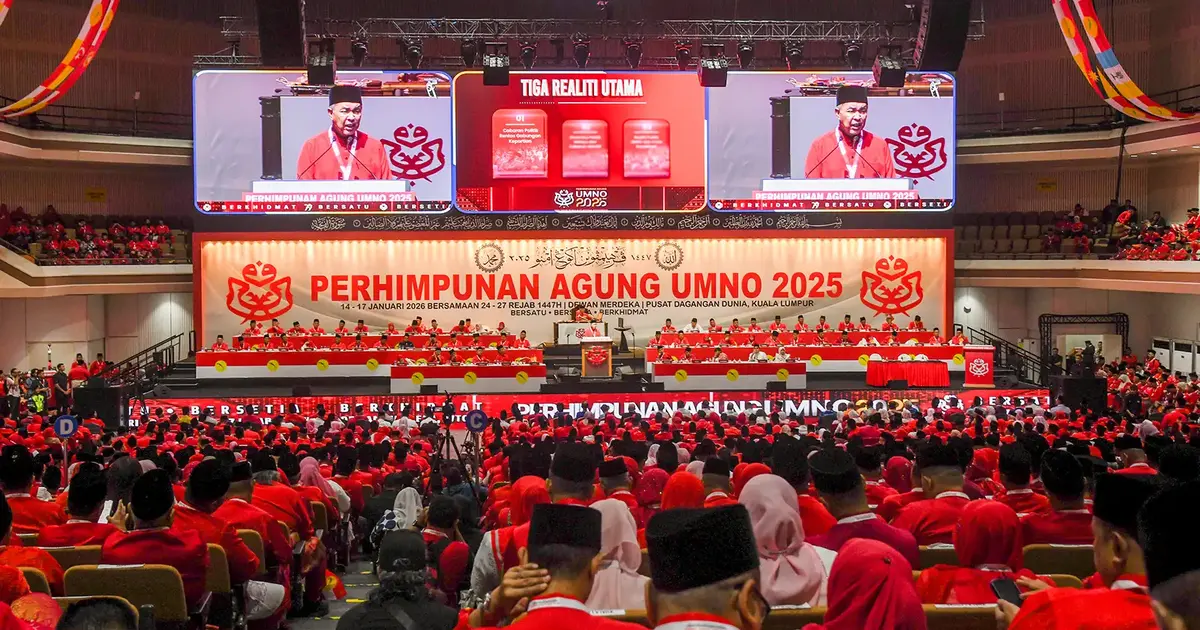
Tensions are simmering within Umno's ranks in Negeri Sembilan following the distribution of state assembly seats to coalition partners under Perikatan Nasional, with grassroots division leaders voicing sharp dissatisfaction at what they perceive as an inequitable arrangement that favours untested political newcomers over the party's own veteran machinery.
The friction centres on the allocation of 11 seats across Negeri Sembilan's state assembly to PN parties, a decision that has stirred resentment among Umno's divisional leadership. According to reports circulating within party circles, the arrangement is being viewed as unfair compensation given Umno's traditional organizational strength in the state and its track record of electoral performance. The grievance reflects a broader challenge facing coalition politics in Malaysia: balancing the interests of established parties with the aspirations of newer political entities seeking rapid seat allocation.
Most contentious is the decision to award four seats to Wawasan, a political party making its electoral debut in this cycle. Division leaders have pointedly questioned the rationale for granting such a substantial allocation to an organization with zero electoral history, no proven voter delivery capacity, and no demonstrable grassroots infrastructure. This allocation is particularly galling to Umno operatives who have invested decades building party machinery across towns and villages throughout Negeri Sembilan, yet find themselves constrained by coalition mathematics that prioritize party diversification over empirical performance metrics.
The Wawasan situation illuminates a strategic tension within PN's coalition approach. While welcoming new parties with claimed influence in specific demographic segments or geographic areas might seem tactically sound, the arrangement risks alienating the coalition's traditional backbone. Umno remains the numerically dominant party within PN, and its grassroots activists form the operational foundation for campaign machinery during elections. Distributing seats to parties without demonstrated capacity to defend them could result in electoral losses if those seats fall to opposition parties lacking the organizational depth to mount effective campaigns.
This discord in Negeri Sembilan carries implications beyond that particular state. The seat allocation precedent established here may shape coalition negotiations in other states where PN operates, potentially triggering similar grumbles from Umno divisions elsewhere. If division-level frustration escalates into organized dissent, it could complicate the party leadership's ability to maintain unity when charting future electoral strategies. Rank-and-file members, particularly those who dedicate considerable personal resources to campaigns, expect reward commensurate with their contributions.
The PN coalition structure itself remains relatively novel in Malaysian politics. Unlike Barisan Nasional, which developed over decades with established protocols for seat-sharing among member parties, PN lacks comparable institutional frameworks for managing internal disputes over resource distribution. Each coalition arrangement must be negotiated with less precedent to guide negotiations, creating opportunities for disagreement about what constitutes fair allocation. The absence of clearly articulated principles means seat distribution often appears arbitrary to those excluded from negotiations.
For Umno's Negeri Sembilan leadership, the frustration is compounded by the state's specific political context. Negeri Sembilan has traditionally been an Umno stronghold, with the party maintaining significant influence over multiple constituencies and ethnic-Malay voter segments that form the coalition's core support base. Reducing Umno's seat share while simultaneously gifting seats to a new party signals to some leaders that their state's political inheritance is being redistributed without their input. This touches on fundamental questions of party autonomy and leadership respect within coalition frameworks.
The emerging discontent also reflects changing expectations among party activists. Younger generation Umno members increasingly demand transparent criteria for seat allocation rather than relying on back-room agreements reached by senior leaders. Division meetings where such allocations are announced have become forums where frustration surfaces, particularly when decisions appear to contradict members' efforts on the ground. Internal party democracy, while limited in Malaysia's hierarchical party structures, still permits division leaders to voice objections that eventually reach national leadership.
Wawasan's specific positioning within Malaysian politics adds another layer to the controversy. The party is relatively new to the political landscape, and its entry into electoral competition through seat allocation rather than through grass-roots mobilization and candidate selection raises questions about the sustainability of its political presence. Umno veterans worry that their party's resources will effectively campaign for Wawasan candidates who lack established voter relationships, risking seat losses if Wawasan fails to consolidate voter support despite machine-driven campaigns.
The situation highlights the inherent tensions within multi-party coalitions operating in Malaysia's federal system. While PN's leadership presumably calculated that incorporating Wawasan and distributing seats strategically would strengthen coalition prospects, such decisions inevitably create localized discontent among parties that believe their contributions are undervalued. The challenge for PN's central leadership involves validating Umno's role as coalition anchor while simultaneously accommodating new parties within existing political space.
Looking forward, Umno's divisional grievances may influence how party leadership approaches coalition negotiations for future electoral cycles. If dissatisfaction festers without satisfactory explanation or remedy from national party leaders, it could undermine party unity when most needed during campaign periods. Conversely, if national Umno leadership can articulate compelling strategic rationale for the allocation decisions—demonstrating how Wawasan's incorporation serves broader coalition interests—grassroots resistance might be moderated through improved internal communications and confidence-building measures.
The Negeri Sembilan situation ultimately reflects the evolving nature of Malaysian coalition politics, where traditional power structures encounter pressures to accommodate new entrants while maintaining the commitment of core party machines. How PN's leadership navigates these tensions will significantly influence the coalition's cohesion and electoral effectiveness in forthcoming contests throughout the country.

