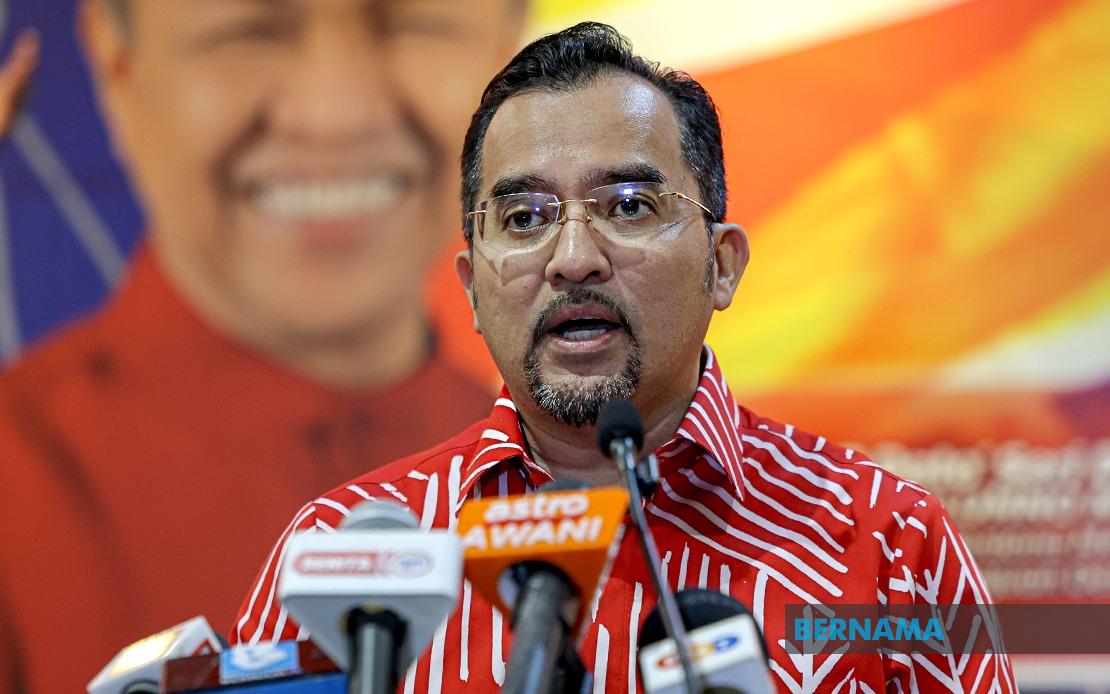
UMNO has formally delegated authority to its state-level leadership to engage in negotiations and exploratory discussions with any political organization seeking to establish electoral cooperation ahead of the next nationwide polls. The decision, approved during a Supreme Council meeting chaired by president Datuk Seri Dr Ahmad Zahid Hamidi on August 28, represents a significant broadening of the party's negotiating flexibility and reflects UMNO's strategic positioning as Malaysia's largest Malay-dominant political organization seeks to secure its hold on power through coalition-building.
According to UMNO secretary-general Datuk Dr Asyraf Wajdi Dusuki, who briefed reporters after the evening session at Menara Dato' Onn in Kuala Lumpur, the party leadership has established clear parameters governing these discussions. Negotiations undertaken by state leaders must be grounded in authentic sincerity and mutual confidence between participating organizations, explicitly rejecting any framework built upon intimidation, coercion, or pressure tactics. This stipulation underscores UMNO's desire to portray itself as a principled actor in coalition politics, emphasizing voluntary partnership over compulsion.
The move carries substantial implications for Malaysia's political landscape, particularly given UMNO's traditional dominance within the Barisan Nasional coalition and its ongoing negotiations with other potential partners. By distributing negotiating authority downward to state chapters, UMNO acknowledges the regional variations in political dynamics across Malaysia's thirteen states, where local political calculations, inter-party dynamics, and voter preferences differ markedly from federal patterns. State leaders possess granular understanding of ground-level political chemistry that may prove invaluable in forging sustainable alliances.
Significantly, the Supreme Council also resolved to extend a formal invitation to PAS leadership to participate in UMNO's 2026 General Assembly, scheduled for September 9-12. This diplomatic overture toward the Islamist party carries symbolic weight, suggesting that despite historical rivalries and periodic tensions between Malaysia's two largest Malay-Muslim parties, UMNO remains open to closer collaboration. For Malaysian observers, such gestures indicate the contours of potential realignment as the 2026 general election approaches, though the extent of practical cooperation remains subject to ongoing negotiations between rival factions.
Alongside the general assembly, UMNO has programmed three major events for September 8, including the 2026 Malay Education Convention, the Malaysian Islamic Scholars Convention, and Laman Wanita Kreatif. These gatherings suggest UMNO's intention to mobilize key constituencies—educationalists, religious intellectuals, and women—by placing their concerns at the center of party discourse. Such programming reflects competitive pressures within Malay-Muslim politics, where both UMNO and PAS continually vie to demonstrate superior commitment to Islamic principles and Malay interests.
Dr Asyraf Wajdi additionally emphasized UMNO's commitment to upholding the rule of law and due process, a statement carrying implications given the party's historical entanglement with corruption allegations affecting several senior figures. By reiterating that no person should be deemed culpable absent formal court conviction, UMNO positions itself as a defender of legal propriety while simultaneously messaging that internal party discipline shall not preempt judicial proceedings. This rhetorical stance attempts to navigate tensions between accountability demands and party solidarity.
The secretary-general's remarks concerning legal principles also signal UMNO's position in ongoing debates about political accountability and institutional independence. By insisting that all party members and leaders, regardless of rank, must submit to formal justice processes rather than face informal party sanctions, UMNO attempts to project institutional maturity and commitment to constitutional governance. However, this framing sidesteps thornier questions about internal party discipline mechanisms that traditionally operate independently of criminal courts.
For Southeast Asian political observers, UMNO's move toward decentralized negotiating authority reflects broader trends across the region whereby established dominant parties attempt to retain relevance through flexible coalition arrangements. As the 2026 election horizon approaches, UMNO faces competitive pressures from an increasingly fragmented political marketplace featuring rising youth disengagement, religious-conservative mobilization through PAS, and urban-professional constituencies attracted to reform-oriented opposition alternatives. Coalition flexibility represents UMNO's adaptive response to these structural pressures.
The authorization granted to state branches also carries implications for federal-state relations and power distribution within UMNO's organizational hierarchy. Historically, UMNO's Supreme Council in Kuala Lumpur maintained tight control over high-stakes political negotiations, particularly those affecting Barisan Nasional's overall positioning. Devolving such authority acknowledges both the practical necessity of incorporating local knowledge and a potential weakening of central coordination. State branches now possess expanded scope to pursue arrangements that may conflict with federal party preferences, potentially creating internal tensions.
Looking forward, this decision sets parameters for the critical period between now and 2026, during which Malaysia's political alignments will crystallize substantially. UMNO's emphasis on negotiation rather than conflict, coupled with explicit openness to PAS engagement, suggests the party leadership anticipates a challenging electoral environment requiring broader-based support than Barisan Nasional's traditional core constituencies can provide. Whether state-level autonomy in negotiations yields enhanced electoral performance or instead produces incoherent and contradictory positioning across different regions remains uncertain, reflecting the inherent risks of distributing strategic decision-making authority downward.

