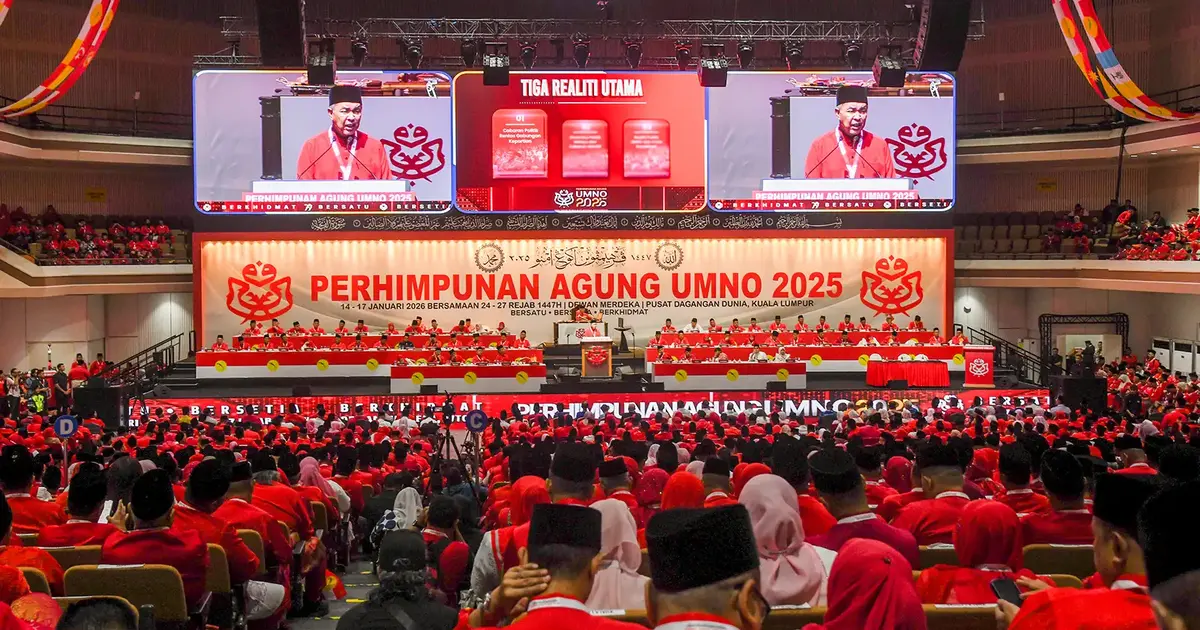
Tensions have surfaced within UMNO's grassroots hierarchy following the distribution of parliamentary seats to coalition partners, with division-level leaders registering complaints about what they perceive as an unfair division of electoral opportunities. The discontent centres on the assignment of 11 seats to Perikatan Nasional as part of ongoing coalition arrangements, raising questions about how resources are being allocated across the broader political alliance.
The allocation decision has proven particularly controversial when applied to Wawasan, the newest entrant to the coalition equation. Despite this being Wawasan's inaugural electoral contest, the party has been granted four parliamentary seats, a generosity that has not escaped criticism from UMNO's organisational base. Division leaders argue that this dispensation appears excessive given that Wawasan lacks a track record of electoral performance or established grassroots infrastructure, positioning it at a considerable advantage relative to parties with longer histories of organisational investment.
This internal grumbling reflects broader anxieties within UMNO about the party's strategic position within Malaysian politics. The party, which has dominated the political landscape for decades, finds itself navigating complex coalition mathematics where new partners receive significant allocations. Such arrangements can create the perception among mid-tier party functionaries that their years of organisational work and electoral slogging are being undervalued in favour of expedient political marriages designed to secure governing majorities.
The seat allocation process in Malaysian politics operates within a carefully calibrated system where negotiations between coalition partners hinge on perceived electoral strength, bargaining power, and strategic value. When contentious divisions emerge, they typically signal either genuine concerns about fairness or anxiety about how electoral prospects are being evaluated. In this case, UMNO's division leaders appear to harbour both varieties of concern, suggesting cracks in the coalition facade that merit attention.
Wawasan's inclusion in coalition discussions itself represents a significant development in Malaysian political architecture. As a relatively new political entity, its rapid elevation to receiving four parliamentary seats indicates that either its leadership has secured significant concessions during negotiations, or there are strategic calculations regarding its role in securing specific constituencies or demographic groups. Whatever the reasoning, UMNO grassroots activists feel their party's contributions to the coalition are not being appropriately recognised.
The timing of these complaints is significant. Coalition arrangements remain fluid in Malaysian politics, and divisions over seat allocation can either be smoothed over through dialogue and adjusted expectations, or they can fester and undermine party unity heading into elections. UMNO's capacity to manage these internal disputes while maintaining coalition discipline will likely determine whether this allocation arrangement proves sustainable or becomes a focal point for broader coalition tensions.
For Malaysian voters and political observers, this internal discord highlights an important reality about coalition politics in the country. Parties must balance the need to maintain broader alliance stability against the expectations of their own membership and supporters. When grassroots members perceive inequitable treatment, it can translate into reduced enthusiasm during campaign periods or a weakening of the organisational machinery that typically delivers votes on election day.
The controversy also underscores questions about how fairly representation is distributed across coalition partners. Established parties with significant membership bases may reasonably expect proportional recognition, yet in contemporary Malaysian politics, newer actors sometimes receive outsized consideration in exchange for their perceived ability to mobilise specific voter blocs or occupy strategic electoral territory. These calculations rarely satisfy everyone and frequently generate the sort of resentment now evident among UMNO's division leaders.
UMNO's internal management of this situation will prove consequential. Party leadership must either justify the allocation decisions to restless grassroots members or engage in further negotiations with coalition partners to adjust the arrangements. Failure to do so could result in diminished morale among the party workers who provide the essential infrastructure for any successful electoral campaign. In Malaysian politics, where ground-level organisation often proves decisive in closely contested seats, the enthusiasm and commitment of division-level activists cannot be taken for granted.
Moving forward, how UMNO and its coalition partners resolve these allocation tensions will likely set the tone for broader coalition cohesion. If grievances regarding seat distribution remain unaddressed, they may contribute to more serious fractures once electoral contests commence and results become clear. Conversely, constructive engagement with these concerns could strengthen coalition bonds and demonstrate responsive leadership to grassroots stakeholders who form the backbone of any political organisation.
The broader implications extend beyond internal UMNO dynamics. Coalition stability directly affects Malaysia's political trajectory and governance prospects. When internal management challenges arise, they can either be contained and resolved through effective communication, or they can metastasise into more significant disruptions. The coming weeks will likely indicate whether UMNO's leadership can successfully address these grievances or whether the seat allocation controversy will continue reverberating through the party's organisational structure, potentially affecting electoral performance and coalition durability.

