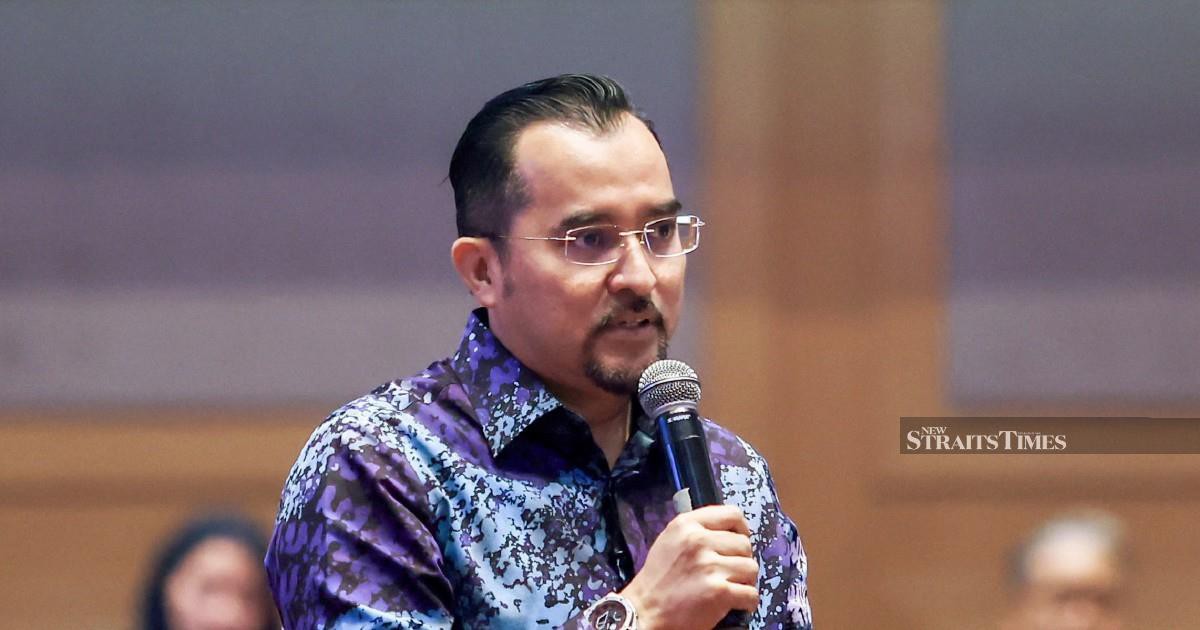
Umno secretary-general Datuk Dr Asyraf Wajdi Dusuki has categorically denied suggestions that the party engineered a political performance designed to deflect accountability from those implicated in financial misconduct at Lembaga Tabung Haji, one of the country's largest pilgrimage savings institutions. The sharp rebuttal comes amid ongoing controversy surrounding the management and governance failures at TH, which has faced mounting scrutiny over how funds entrusted by millions of Malaysian pilgrims were handled.
The Lembaga Tabung Haji scandal represents a significant institutional crisis that has reverberated across Malaysian society, particularly affecting the Muslim community whose savings have been held in trust by the organisation for decades. The controversy has raised fundamental questions about corporate governance, ministerial oversight, and the mechanisms through which major state-linked bodies are held accountable. For many Malaysian pilgrims and their families, TH represents far more than a financial institution—it symbolises a sacred obligation to assist in fulfilling one of Islam's five pillars.
Umno's emphatic rejection of the allegations reflects the delicate political balance surrounding the matter. The party has historically held significant influence over TH's governance and operational direction, given its traditional dominance of Malaysian politics and its close alignment with Islamic institutions. Any suggestion that Umno might be protecting those responsible for financial impropriety would carry damaging implications for the party's credibility, particularly among its core Muslim-majority voter base for whom such matters carry considerable moral weight.
The controversy emerged from revelations that TH had suffered substantial investment losses and engaged in questionable financial practices. Investigations and audits subsequently uncovered governance lapses, inadequate oversight mechanisms, and decisions that appeared to prioritise certain outcomes over prudent stewardship of pilgrim savings. These findings prompted calls for comprehensive reform and accountability measures from civil society groups, concerned citizens, and opposition figures who questioned whether sufficient action was being taken to hold senior management and oversight bodies responsible.
Critiques of the government's handling have centred on whether investigations and corrective measures were robust enough to satisfy public demands for justice. Some observers have suggested that political considerations may have influenced the pace and scope of accountability measures, leading to accusations that the process amounted to political theatre rather than substantive reform. The framing of such concerns as a deliberate Umno-orchestrated "charade" particularly stung given the party's traditional positioning as a custodian of Islamic values and Malay-Muslim interests.
Umno's counterargument appears centred on the notion that the party has genuinely committed to addressing TH's problems rather than concealing them. The party likely contends that any internal party actions regarding TH matters were motivated by legitimate institutional interests rather than a coordinated effort to shield culpable individuals. This framing allows Umno to separate itself from accusations of complicity while maintaining that appropriate processes have been followed.
The TH situation also reflects broader challenges in Malaysian corporate governance, particularly within state-linked enterprises that operate at the intersection of commercial imperatives and public trust obligations. These institutions often face competing pressures: the need to generate financial returns, the expectation of transparent governance, the influence of political patrons, and the complex dynamics of ministerial oversight. When governance failures occur in such contexts, the attribution of responsibility and the determination of appropriate remedies become politically fraught questions.
For ordinary Malaysian pilgrims, the institutional turmoil at TH has created anxiety about the security of their accumulated savings. Many individuals and families have contributed to TH accounts over decades, viewing these funds as designated specifically for the hajj pilgrimage—a once-in-a-lifetime religious obligation for Muslims who are physically and financially able. The loss of confidence in TH's management directly threatens the realisation of this fundamental Islamic aspiration for thousands of Malaysians, adding emotional and spiritual dimensions to what might otherwise be regarded as a purely financial matter.
The accountability question extends beyond simple attribution of blame to encompass systemic reform. Stakeholders across the political spectrum and civil society recognise that TH requires structural changes to governance, enhanced transparency mechanisms, strengthened internal controls, and clearer lines of ministerial accountability. Whether such reforms will be sufficiently comprehensive to restore public confidence remains uncertain, particularly if perceptions persist that political considerations have compromised the process.
Umno's denial also signals the party's attempt to position itself as part of the solution rather than the source of the problem. By rejecting allegations of orchestrated cover-ups, the party seeks to preserve its credibility as a guardian of institutional stability and Muslim interests. However, this defensive posture also reflects the reality that questions about institutional governance at TH continue to demand answers that satisfy not only political stakeholders but also the millions of ordinary Malaysians whose life savings remain at stake.
Moving forward, the effectiveness of any measures to address TH's failures will likely be judged against specific benchmarks: the timeliness and completeness of investigations, the appropriateness of consequences imposed on those found culpable, the substantiveness of governance reforms implemented, and the restoration of pilgrims' confidence in the institution. Public perception of whether these standards have been met will significantly shape broader assessments of the government's commitment to accountability and institutional integrity across the Malaysian public sector.

