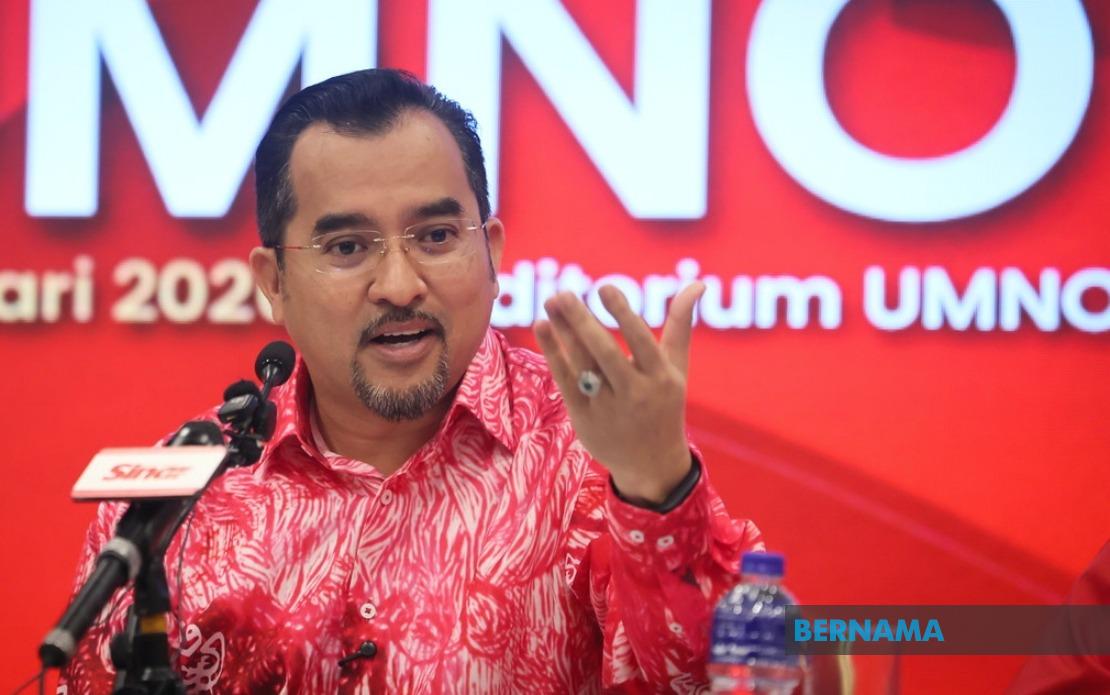
Senior UMNO official Dr Mohd Puad Zarkashi's abrupt departure from the party has been attributed to disappointment over his son's non-selection as a candidate for the Rengit state assembly seat, party secretary-general Datuk Dr Asyraf Wajdi Dusuki revealed on June 25. The disclosure came through a detailed Facebook post in which Asyraf Wajdi provided the party's perspective on Puad's resignation announcement, offering crucial context into what had appeared to be a sudden political exit.
According to Asyraf Wajdi's account, Puad had previously written to him with explicit threats to defect from UMNO and launch public attacks against the party unless the leadership reconsidered his son's candidacy. The secretary-general characterised these communications as leveraging personal demands against party interests, suggesting a pattern of coercive behaviour rather than legitimate policy disagreement. While acknowledging that Puad's son possesses youth and potential for future leadership development, Asyraf Wajdi argued that candidate selection must involve comprehensive considerations extending far beyond any individual's family circumstances.
This is not the first instance of Puad employing such tactics, according to UMNO's account. During Datuk Seri Najib Tun Razak's presidency, Puad allegedly made similar threats regarding his own political future, warning that he would abandon the party if he were not renominated as Member of Parliament for Batu Pahat. The recurring pattern suggests deeper frustrations within Puad regarding his own trajectory and influence within the party hierarchy, issues that have now crystallised around his son's electoral prospects.
Puad's resignation was announced via Facebook on June 25, framed as a voluntary decision enabling greater freedom in expressing his viewpoints. The timing proves significant given that the Johor State Legislative Assembly was dissolved on June 1, setting in motion an election cycle that would culminate in polling on July 11, with nomination day scheduled for June 27. His departure thus occurs at the most consequential moment for party candidate selection, lending weight to the notion that candidate-related grievances triggered his exit.
In defending the party's candidate selection process, Asyraf Wajdi emphasised that UMNO operates as a merit-based organisation rather than a hereditary institution prioritising family dynasties or kinship networks. He articulated a vision of UMNO as a party transcending personal ambitions, where the broader struggle for national interest, racial harmony, and religious values supersedes individual desires or familial claims. This positioning represents a direct rebuke to any suggestion that political parties should function as family enterprises or reward loyalty through automatic advancement of relatives.
Puad's departure also prompted Asyraf Wajdi to address allegations that Johor's palace wielded control over UMNO's state operations and had orchestrated the dissolution of the State Legislative Assembly. The secretary-general categorically dismissed these claims as slanderous, defending both the institution of the monarchy and UMNO's organisational autonomy. Such allegations, if unchallenged, could have undermined party credibility during a critical election period and complicated relationships between political leadership and traditional authority structures in Johor.
The broader implications of this resignation extend beyond internal party mechanics. It reflects underlying tensions within UMNO regarding generational transition, meritocratic advancement, and the balance between honouring senior figures' contributions against maintaining institutional integrity. Puad's stature as a Supreme Council member meant his defection carried symbolic weight, potentially encouraging other dissatisfied figures to reconsider their party membership.
For Malaysian political observers, the incident illustrates persistent challenges within established political parties when managing succession planning and maintaining morale among ambitious senior members whose political trajectories may be stalling. The confrontation between Puad's personal interests and party discipline demonstrates how institutional rules, however logical, can generate resentment when applied to influential personalities accustomed to privileged treatment or special consideration.
Asyraf Wajdi's public response also served strategic electoral purposes, preemptively framing Puad's departure as personality-driven rather than ideologically grounded. By emphasising threats and ultimatums, the secretary-general sought to delegitimise any narrative suggesting principled objections to party direction. This framing attempts to contain reputational damage and prevent other potential defectors from viewing Puad's exit as a justified protest against party leadership decisions.
The Johor state election context remains central to understanding this episode. As UMNO campaigns to maintain strength in a state that has historically served as a crucial power base, any visible discord among senior party figures risks undercutting electoral messaging. The timing of Puad's resignation, occurring within days of nomination submissions, added urgency to party leadership's need to swiftly respond and reclaim narrative control.
Ashraf Wajdi's assertion that UMNO should not yield to pressure from individuals proved particularly resonant given contemporary regional political dynamics, where coalition partners and potential allies closely monitor party cohesion. A party perceived as vulnerable to internal pressure campaigns or susceptible to blackmail tactics could face credibility questions from prospective partners in future coalition negotiations. The secretary-general's stern language thus conveyed resolve beyond the immediate dispute with Puad.
As Malaysia's political landscape continues evolving with frequent electoral cycles and shifting coalition arithmetic, incidents like Puad's departure offer revealing glimpses into how traditional parties navigate tensions between institutional principles and individual ambitions. The Johor election will ultimately test whether UMNO's messaging about meritocratic candidate selection resonates with voters, or whether perceptions of internal favoritism and dynastic positioning persist despite leadership denials.

