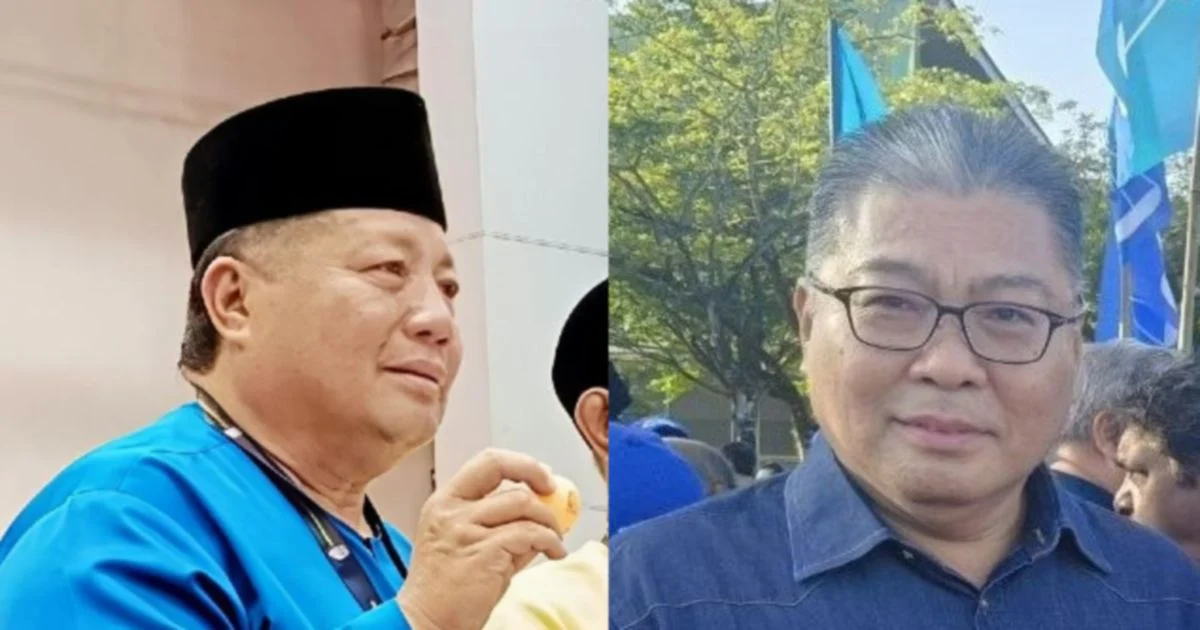
The Kahang constituency election in Johor has become a stage for an unusual family drama that highlights how personal relationships can coexist with competing political ambitions. Datuk Maulizan Bujang, who previously held the position of Tebrau UMNO division chief, has publicly expressed his support and good wishes for his younger brother Mazlan, who is running as a Perikatan Nasional candidate in the same electoral contest. This gesture represents a notable moment in Malaysian politics, where brotherhood has taken precedence over the deep-seated partisan allegiances that normally define electoral campaigns.
The dynamic playing out in Kahang reflects broader patterns of political competition reshaping Johor's electoral landscape. UMNO, which has long dominated the state's political machinery, now faces sustained challenges from the Perikatan Nasional coalition, a grouping that includes BERSATU, PAS, and other component parties. This rivalry between major blocs has intensified in recent electoral cycles, with both formations competing fiercely for rural and semi-urban constituencies where the Kahang seat is situated. The fact that two brothers find themselves on opposing sides underscores the genuine contest taking place and the shifting political preferences among voters, even within families that have traditionally supported one coalition.
Datuk Maulizan's public acknowledgement of his brother's campaign marks a departure from the acrimony that sometimes characterises inter-party contests in Malaysia. Rather than engaging in the usual campaign rhetoric that portrays opposing candidates in unflattering terms, the former division chief chose to emphasise shared family values and mutual respect. This approach is strategically wise for both candidates: Maulizan maintains his dignity and avoids creating an uncomfortable family schism that could alienate voters who value such relationships, while Mazlan benefits from public recognition that his older brother, a figure of some standing in UMNO circles, does not view his PN candidacy as illegitimate or disloyal.
The Tebrau division, which Maulizan previously led, is an important constituency in Johor's political hierarchy. The district has historically been a stronghold for UMNO, reflecting the party's deep organisational roots and support among Malay-Muslim voters in the region. Maulizan's willingness to step back and allow his brother to pursue a PN candidacy suggests either a personal confidence that family bonds matter more than party politics, or perhaps a recognition that the political winds are shifting in ways that demand pragmatism. In some constituencies across Johor, PN has made notable gains precisely by attracting voters who might otherwise have remained with UMNO, often drawing on dissatisfaction with governance or internal party dynamics.
The Perikatan Nasional coalition has made significant inroads into Johor over recent years, particularly among Malay-Muslim voters who might historically have seen UMNO as their natural political home. The coalition's appeal rests partly on messaging that presents itself as an alternative to established political structures, and partly on the grassroots organisational efforts of component parties like PAS, which has substantial presence in many Johor constituencies. Mazlan's candidacy represents the coalition's continued push to widen its footprint, while Maulizan's public support suggests that such candidacies are not universally viewed as threatening by UMNO members or leaders.
Family involvement in politics is commonplace in Malaysia, and the Bujang brothers are by no means unique in competing for electoral advantage. However, most political families attempt to present a unified front or maintain careful distance from one another to avoid creating confusion among voters or appearing to undermine party loyalty. The explicit public acknowledgement of mutual support between brothers on opposite sides represents a more open and perhaps healthier approach to managing political competition within families. It demonstrates that disagreement on which coalition to support need not translate into personal animosity or family rupture.
The Kahang constituency itself carries significance beyond this particular family narrative. Located in Johor, Malaysia's second-most populous state and a crucial swing territory in national politics, the seat represents a microcosm of the broader contest between UMNO-led and PN-led formations. Voters in Kahang will ultimately decide whether traditional allegiances to UMNO hold firm or whether the Perikatan Nasional coalition can continue its expansion into formerly secure BN territory. The outcome will offer insights into voter sentiment across multiple dimensions: satisfaction with incumbent governance, resonance of PN messaging, and the effectiveness of local candidate mobilisation efforts.
The relationship between the two brothers also reflects generational and ideological shifts within Malaysian politics. Maulizan's previous role as a division chief indicates seniority and traditional authority within UMNO structures, yet his apparent comfort with Mazlan's PN candidacy might suggest either evolution in his own thinking or recognition that younger political figures operate within a different strategic environment. The support he has publicly expressed could be interpreted as tacit acknowledgement that multiple pathways to political representation are now legitimate, a significant shift from the monolithic party-system expectations of earlier decades.
This Johor election moment carries implications that extend beyond Kahang itself. The normalisation of cross-coalition family candidacies, if validated through public support rather than suppressed through acrimony, potentially signals a maturation of Malaysian electoral competition. Rather than coalitions demanding total loyalty and viewing rival candidates as enemies to be personally destroyed, there is space for disagreement about which grouping better serves constituents while maintaining personal and familial respect. For Southeast Asian observers watching Malaysian democratic processes, such gestures indicate a political culture willing to accommodate genuine competition without sacrificing civic cohesion or family bonds.

