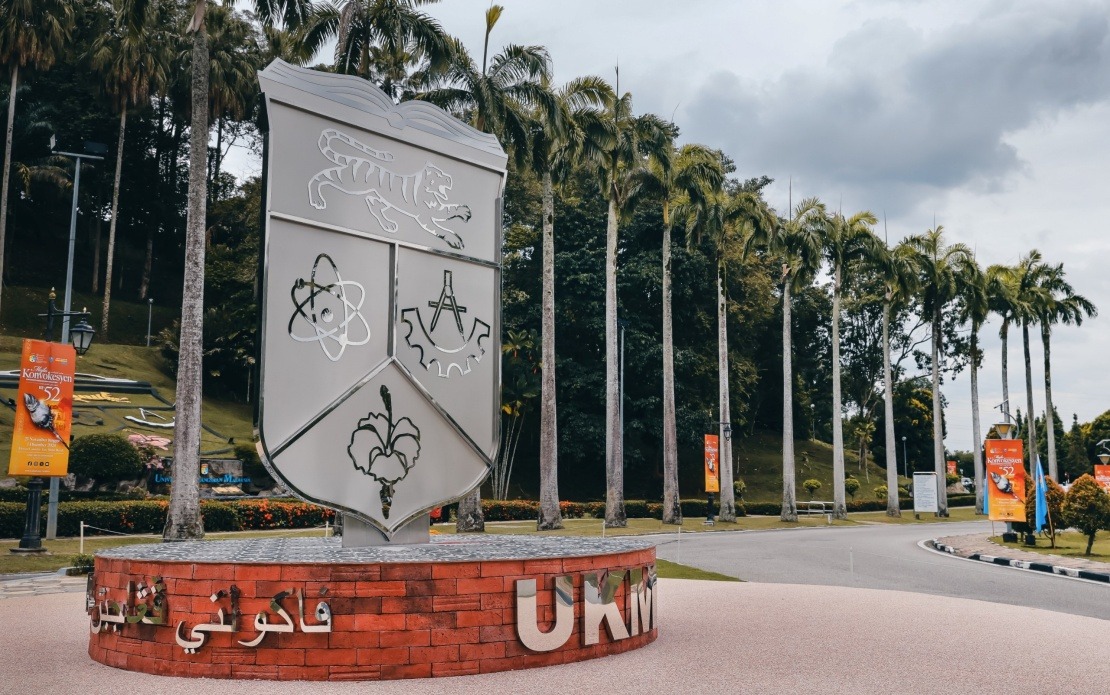
Universiti Kebangsaan Malaysia (UKM) has moved to counter widespread misinformation circulating on social media platforms, issuing a formal denial of claims that the institution prioritises international recruitment over Malaysian student admissions. A video making the rounds has alleged an extraordinarily high ratio of foreign to domestic learners, prompting the university to release detailed data substantiating its actual enrolment composition and reaffirming its commitment to serving the Malaysian higher education sector.
The precise allegation central to the dispute claims a 5:1 proportion of international to local students, a ratio that would fundamentally alter the character of one of Malaysia's premier public universities. Such a claim, if accurate, would represent a dramatic shift away from the institution's historical mission and would likely spark significant public concern about the accessibility of Malaysian universities to local families. UKM's response provides specific figures designed to dispel what university leadership characterises as completely false and potentially damaging representations of campus demographics.
According to data consolidated by UKM's Academic Management Centre and the Centre for Continuing Education and Professional Studies, the university currently maintains a total student body of 46,151 individuals. Within this broader population, international undergraduates account for precisely 3,917 enrolments. These figures establish that foreign undergraduates constitute merely eight percent of the overall student population, yielding an actual ratio of approximately one international student for every 12 learners on campus. The discrepancy between the alleged 5:1 ratio and the documented 1:12 reality underscores the scale of the misrepresentation.
For Malaysian readers concerned about university access and the balance between internationalisation and domestic educational opportunities, these numbers carry significant implications. An eight percent international undergraduate share suggests that UKM maintains a fundamentally local character while still engaging meaningfully with the global academic community. This composition allows the university to serve as a primary avenue for tertiary education for Malaysian students whilst simultaneously fostering cross-cultural interaction and enhancing research collaboration with international scholars. The distinction between the rumoured and actual proportions is not merely semantic; it reflects substantially different institutional philosophies regarding admission priorities.
UKM's statement indicates the university takes such allegations with considerable gravity, viewing them as potential threats to institutional reputation that warrant firm response. The university has explicitly reserved the right to pursue legal remedies against individuals or entities that persist in circulating what it characterises as defamatory or factually inaccurate information. This stance reflects a broader tension in Malaysia's higher education sector, where questions about admission equity, internationalisation, and resource allocation remain sensitive subjects capable of generating heated public debate.
The university has reemphasised that its founding mandate centres on advancing educational opportunities for Malaysians, a principle that reportedly guides admission decisions across all programmes and levels. According to UKM's perspective, the recruitment of international students operates independently from, rather than in competition with, the admission of qualified Malaysian applicants. The university argues that international enrolments complement rather than compromise its domestic mission, creating a diverse learning environment without constraining opportunities for local learners.
UKM frames its international student admissions within the broader policy framework established by the Ministry of Higher Education, which has prioritised internationalisation as a strategic objective for Malaysia's university system. Under this approach, controlled admission of foreign students serves multiple objectives including strengthening Malaysia's position as a regional education hub, diversifying revenue streams for universities, and enhancing research partnerships across borders. The university's characterisation of its admissions process as "controlled" suggests deliberate restraint in international recruitment rather than an uncapped expansion driven purely by financial considerations.
The viral nature of the misleading claim highlights the challenges universities face in the age of rapid social media dissemination. Unverified information can spread widely before institutions have opportunity to respond, potentially influencing public perception and policy discussions. UKM's response attempts to establish a clear record whilst simultaneously appealing to the public to prioritise official sources over unverified content. This approach reflects recognition that institutional credibility depends partly on public willingness to distinguish between authoritative and speculative information.
For Southeast Asian universities more broadly, the incident illuminates recurring tensions surrounding internationalisation. As countries throughout the region seek to position their institutions competitively within global education markets, questions about the appropriate balance between international and domestic enrolments generate legitimate public concern. Governments and taxpayers reasonably expect universities to prioritise citizens' educational access, particularly at public institutions receiving state investment. Yet economic pressures and competitive positioning create incentives for expanded international recruitment, generating friction that requires careful navigation.
UKM's decision to anchor its response in specific numerical data rather than general assurances reflects confidence in its demographic profile. The university implicitly invites scrutiny of its claims, a posture that may strengthen credibility in the eyes of informed observers. However, the incident also suggests that Malaysian universities might benefit from proactively communicating admission statistics and institutional priorities to counteract misinformation before it gains traction. Transparency regarding student composition, recruitment philosophy, and the balance between internationalisation and domestic service could prevent future controversies.

